The Mind-Blowing $10 Billion Vatican Wealth
The mind-blowing $10 billion Vatican wealth – hidden beyond world’s biggest stores and commercial high streets – represents one of the most enigmatic financial portfolios in modern history. While retail behemoths like Walmart and Amazon flaunt their valuations through global supply chains, bustling warehouses, and millions of daily transactions, the Holy See commands an empire of a completely different nature. Its fortune is quiet, centuries in the making, and rooted in sovereign autonomy, prime international property, and strategic global investments.

For decades, popular culture painted the Vatican as an impenetrable vault brimming with Swiss gold bullion, secretive banking ledgers, and untold billions in liquid cash. While some of those claims veer into mythology, the verified financial reality of the Catholic Church's headquarters is astonishing in its own right. Recent financial disclosures, spurred by sweeping transparency reforms, have finally pulled back the heavy velvet curtain on how the Holy See acquired, preserved, and manages its vast riches.
The Mind-Blowing $10 Billion Vatican Wealth – Hidden Beyond World’s Biggest Stores!
Unlike multinational corporations, the Holy See does not generate wealth by selling mass-market consumer goods. Instead, its estimated $10 billion net worth is distributed across a labyrinth of independent entities, sovereign funds, and historical patrimonies. The bulk of this wealth operates beyond the reach of conventional commercial monitoring, making direct comparisons to public companies difficult.
Financial analysts generally divide the Vatican’s operational wealth into three primary buckets:
- The Holy See Balance Sheet: The central administrative body overseeing global ecclesiastical affairs, diplomatic missions, and the Roman Curia.
- The Governorate of Vatican City State: The civil administration responsible for municipal services, the Vatican Museums, the state pharmacy, and commercial concessions.
- The Institute for the Works of Religion (IOR): Commonly referred to as the Vatican Bank, which holds several billion euros in custodial client assets for religious orders, dioceses, and Catholic charities.
When economists aggregate real estate portfolios, gold reserves deposited with the U.S. Federal Reserve and the Swiss National Bank, stock equity, and sovereign debt instruments, the total financial footprint comfortably touches the $10 billion threshold—excluding its priceless, inalienable artistic treasures.
The 1929 Lateran Treaty: The Seed Money of the Modern Empire
To understand the foundation of modern Vatican finances, one must look back to February 11, 1929. Following decades of diplomatic estrangement after Italian unification annexed the historic Papal States, Pope Pius XI signed the Lateran Treaty with the Italian government under Benito Mussolini.
Under the financial convention of the treaty, Italy compensated the Holy See for the loss of its territorial lands with 750 million Italian lire in cash and 1 billion lire in 5% consolidated state bonds. In 1929 terms, this was a staggering sum that instantly transformed the Holy See into a major financial player.
Bernardino Nogara’s Golden Rule
To manage this sudden windfall, the Pope appointed a brilliant layman and civil engineer named Bernardino Nogara. Nogara agreed to run the Vatican’s investment arm, the Special Administration of the Holy See, on one strict condition: he must be free from religious interference and allowed to invest without regard to theological doctrine.
Nogara diversified the capital internationally, buying vast stakes in Italian utilities, banking institutions, and insurance companies. He also funneled substantial capital into gold reserves and prime residential real estate across London, Paris, and Switzerland. By the time Nogara retired in the 1950s, the original treaty payout had grown exponentially, laying the bedrock of the modern portfolio we see today.
Real Estate: Prime Portfolios Across European Capitals
The crown jewel of the Vatican’s tangible assets is its staggering real estate portfolio, managed predominantly by APSA (the Administration of the Patrimony of the Apostolic See). In a historic 2021 transparency report, APSA revealed that it directly owns and manages over 4,000 properties across Italy alone, with an additional 1,100 properties scattered across the most prestigious addresses in Europe.
These international holdings include:

- London: Commercial and high-end residential real estate in wealthy districts such as Mayfair, Kensington, and South Kensington.
- Paris: Historic apartment buildings and commercial spaces along Boulevard Saint-Germain and the 16th arrondissement.
- Rome: Thousands of apartments, commercial storefronts, and office complexes leased to private tenants, commercial enterprises, and diplomatic delegations.
- Switzerland: Residential and office buildings throughout Geneva and Lausanne, traditionally held through offshore holding companies to maintain fiscal privacy.
Unlike ordinary real estate investment trusts (REITs), the Vatican purchased many of these assets decades—sometimes centuries—ago. Consequently, they carry minimal mortgage debt, generating tens of millions of euros in annual rental yields that directly subsidize the Curia's operating deficits.
The Vatican Bank (IOR) vs. Holy See Finances
Widespread confusion exists regarding the role of the Vatican Bank (Istituto per le Opere di Religione). Popular thrillers often depict the IOR as the personal piggy bank of the Pope. In reality, the IOR functions primarily as a private custodial financial institution.
The bank does not issue commercial loans to the public or trade speculative derivatives. Its primary mandate is to safeguard assets for approximately 14,000 authorized clients, including religious congregations, Catholic charities, Holy See employees, and foreign dioceses. The IOR manages roughly $5.5 billion to $6 billion in client assets, while holding independent equity capital of around $700 million. Its annual net profits, typically ranging between $20 million and $40 million, are largely handed over to the Holy See to support charitable initiatives and missionary work.
The Paradox of Riches: Why the Vatican Operates at a Deficit
Despite possessing massive asset backing, the Holy See frequently reports an annual operational deficit, often hovering between $30 million and $80 million. This paradox confuses outsiders who assume a $10 billion institution should be cash-flow positive.
The "€1" Valuation of Priceless Art
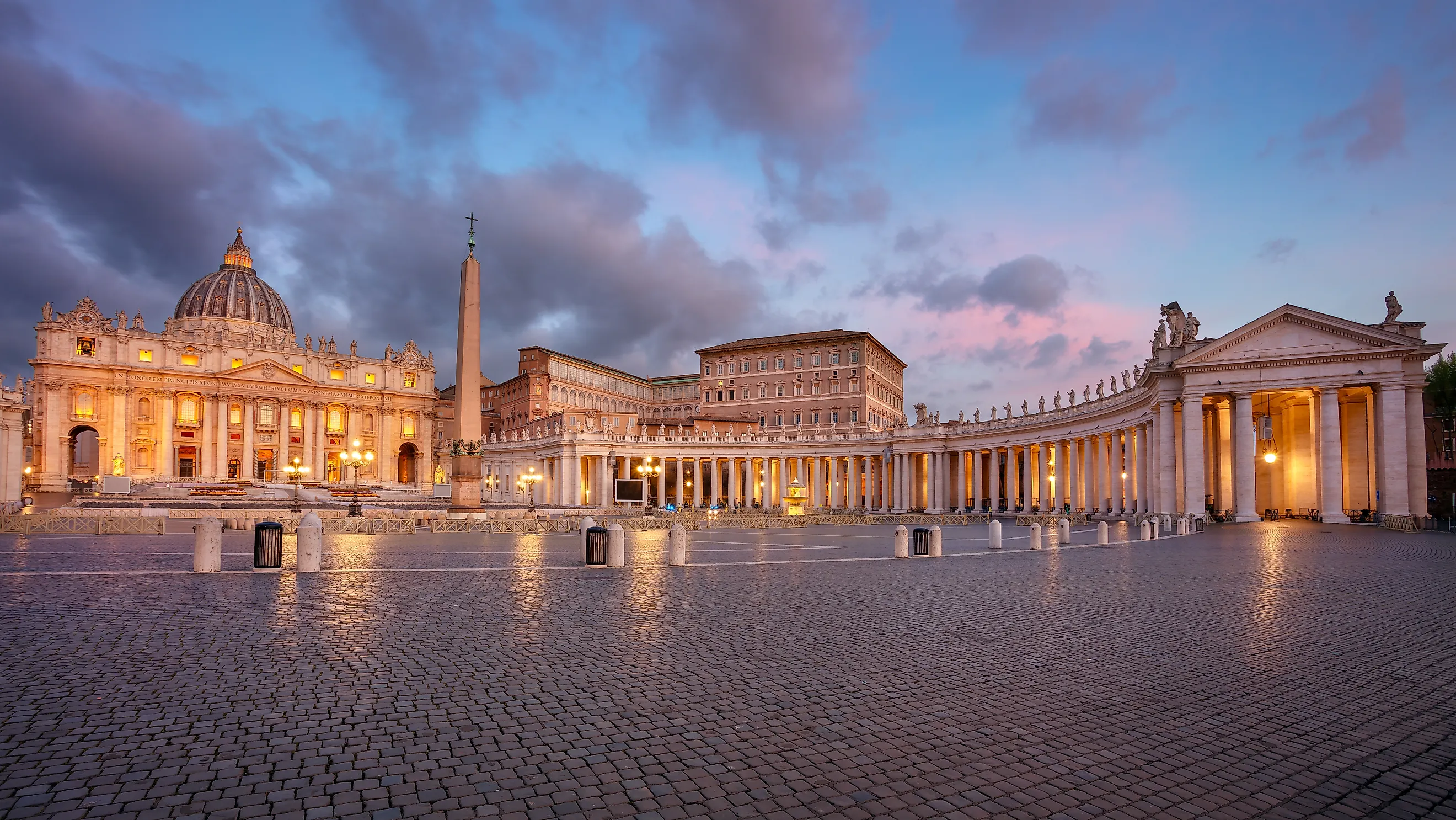
A major reason for this liquidity crunch is the legal and moral status of the Vatican’s cultural assets. St. Peter’s Basilica, the Sistine Chapel, the Vatican Apostolic Library, and masterworks by Michelangelo, Caravaggio, and Raphael are recorded on Vatican financial statements with a symbolic value of exactly €1.
Under canon and international law, these treasures are deemed inalienable cultural heritage held in trust for humanity. The Pope cannot sell the Pietà to cover an administrative shortfall. Instead of generating revenue, these assets demand millions of euros each year in specialized conservation, security, and restoration costs.
Heavy Personnel and Diplomatic Overhead
The Holy See supports a global network of diplomatic embassies (nunciatures) in more than 180 sovereign nations, operates multilingual media channels (Vatican News), and employs over 3,000 lay workers with guaranteed lifetime pensions and healthcare. Unlike a corporation, the Vatican rarely implements mass layoffs during economic downturns, resulting in sticky, long-term operational liabilities.
Transparency Reforms in the Modern Era
Under Pope Francis, the Vatican’s financial ecosystem has undergone the most radical restructuring in half a millennium. Prompted by international anti-money laundering monitors, notably the Council of Europe’s Moneyval committee, the Holy See has implemented sweeping reforms:
- Centralization under the Secretariat for the Economy: Stripping independent departments of autonomous slush funds and consolidating all sovereign investments under APSA.
- External Auditing: Submitting annual budgets to international accounting firms and publishing comprehensive yearly statements to the public.
- Closing Suspicious Accounts: The IOR purged nearly 5,000 dormant or non-compliant accounts between 2013 and 2016, aligning its operations with global compliance benchmarks.
The mind-blowing $10 billion Vatican wealth is not locked away in a fictional golden vault beneath the Tiber; it is woven into the real estate, sovereign debt, and custodial reserves of modern Europe. As the Holy See continues to navigate modern macroeconomic volatility, its financial survival relies not on secrecy, but on the delicate balance between timeless patrimony and modern fiscal discipline.