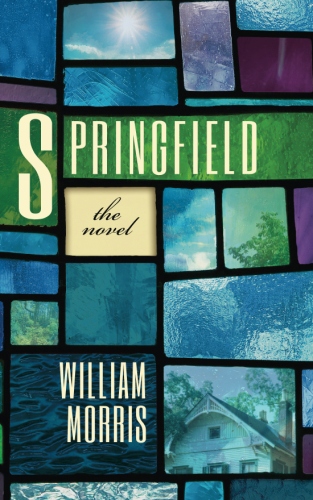
The Moment You Start Reading Springfield
The moment you start reading Springfield, whether through the lens of nineteenth-century political rhetoric, twentieth-century regional poetry, or contemporary Midwestern fiction, an unexpected shift takes place. What initially seems like an archetype of quiet prairie life transforms into something far more intricate: a microcosm of American ambition, contradiction, and resilience. Springfield is rarely just a setting; it operates as an ongoing conversation about what the nation aspires to be and what it frequently struggles to reconcile.

Too often, regional American settings are treated as flat backdrops—pastoral expanses meant to contrast with bustling coastal metropolises. Yet the literature rooted in Springfield, Illinois, defies this simplification. From political manifestos to utopian verse, texts anchored in this historic capital demand an attentive reader who can see past the quiet exterior to the cultural crosscurrents running underneath.
The Architecture of an American Archetype
Every literary geography carries its own gravitational pull. Concord has its transcendentalists, Dublin has its stream-of-consciousness wanderers, and Springfield has its civic moralists. To engage with writing centered on Springfield is to confront a landscape defined by prairie light, legislative corridors, and an abiding sense of civic duty.
Geographically positioned along the Sangamon River basin, Springfield was forged in an era of rapid westward expansion. The writers who emerged from or gravitated toward this region were acutely aware of their intermediate position: caught between the rough frontier and the institutional decorum of an established state capital. That tension between frontier grit and institutional gravity provides the underlying energy for much of the literature associated with the area.
Key Literary Voices That Defined the City
Understanding Springfield’s literary footprint requires looking at the figures who documented its character, both celebrated and contested.
Abraham Lincoln and the Rhetoric of Place
It is impossible to discuss reading Springfield without confronting Abraham Lincoln’s prose. Before he was the central figure of the Civil War, Lincoln was an attorney honing his voice on the Eighth Judicial Circuit and within the halls of the Old State Capitol. His 1838 Address before the Young Men’s Lyceum of Springfield remains a foundational text of American civic thought, warning against the dangers of mob rule and political passion long before the national crisis escalated.
Later, his 1861 Farewell Address to Springfield condensed profound grief, gratitude, and foreboding into fewer than two hundred words. When Lincoln declared, "To this place, and the kindness of these people, I owe everything," he elevated Springfield from a regional seat of government into a symbol of personal and national transformation.
Vachel Lindsay’s Visionary Civic Gospel
Decades after Lincoln, poet Nicholas Vachel Lindsay was born in Springfield, just blocks from the Lincoln Home. Lindsay pioneered what he called the "Gospel of Beauty," preaching that American towns could become engines of spiritual and aesthetic renewal. His bizarre, utopian, and deeply earnest 1920 work, The Golden Book of Springfield, envisioned the city in the year 2018 as an awakened city-state of art and communal harmony.
Video: What Happens if You Read Every Day?
Lindsay’s famous poem, "Abraham Lincoln Walks at Midnight," captures the persistent ghost of history haunting the city’s streets during the darkest hours of World War I. For Lindsay, reading Springfield meant reading an unfinished promise—a town perpetually called to measure itself against the stature of its greatest citizen.
The 1908 Riot and Literary Reckoning
No honest examination of Springfield’s literature can bypass its tragic historical fractures. In August 1908, a devastating race riot broke out in Springfield, shocking the nation due to its occurrence in Lincoln’s hometown. Journalist William English Walling arrived in the city soon after and published "Race War in the North" in The Independent.
Walling’s direct, unsparing account challenged the complacency of Northern readers and served as the direct catalyst for the founding of the National Association for the Advancement of Colored People (NAACP) in 1909. In this context, reading accounts of Springfield becomes an exercise in confronting how deep racial injustice ran, even in places consecrated to human emancipation.
The Moment You Start Reading Springfield: Shifting Perspectives
The moment you start reading Springfield with critical depth, you recognize that the town refuses to stay in the neat box of romanticized Americana. Instead, a dual narrative consistently emerges across the pages:
- The Mythic vs. The Real: The town is simultaneously immortalized as Lincoln’s launching ground and grounded in the practical, sometimes messy realities of state politics and blue-collar labor.
- The Local vs. The National: Events taking place along Sixth Street or the Sangamon River routinely echo across the broader canvas of American legal, racial, and economic history.
- Preservation vs. Progress: Much of the literature wrestles with how to honor an overwhelming historic past without suffocating modern life and change.
This dynamic gives Springfield literature an understated power. It is not escapist; it is reflective. It asks readers to examine how institutions are built, how civic virtues are tested, and how collective memory is maintained over generations.
A Practical Reading List for Exploring Springfield
For readers who want to experience this distinct literary terrain firsthand, several key works provide entry points across different eras and perspectives:
- Collected Speeches and Writings by Abraham Lincoln: Focus on the Lyceum Address (1838), the "House Divided" Speech (1858), and his 1861 Farewell to Springfield.
- The Golden Book of Springfield by Vachel Lindsay (1920): A peculiar, visionary blend of utopian speculation, local lore, and civic philosophy.
- Springfield’s Race Riot of 1908 by James L. Crouch (1969): A seminal historical text examining the violence that shook the community and reshaped national civil rights organizing.
- Lincoln’s Springfield in the Civil War by Kenneth A. Scherzer (or contemporary regional histories): Essential context on how a state capital weathered the logistical and emotional strains of national conflict.
Why Regional Midwestern Literature Still Matters
In an increasingly digital, decentralized culture, there is a tendency to view place-based literature as antiquated. Yet regional writing provides something algorithms cannot: an anchor in specific soil, climate, and collective memory. Springfield’s literature reminds us that national character is not formed in abstract theory; it is negotiated on courthouse steps, in neighborhood meeting halls, and across kitchen tables.
When you sit down with texts that explore Springfield, you engage with more than a mid-sized capital in the center of the country. You encounter a mirror held up to the American heartland—revealing its high-minded ideals, its difficult compromises, and the quiet resilience of people striving to build a meaningful society on the prairie.