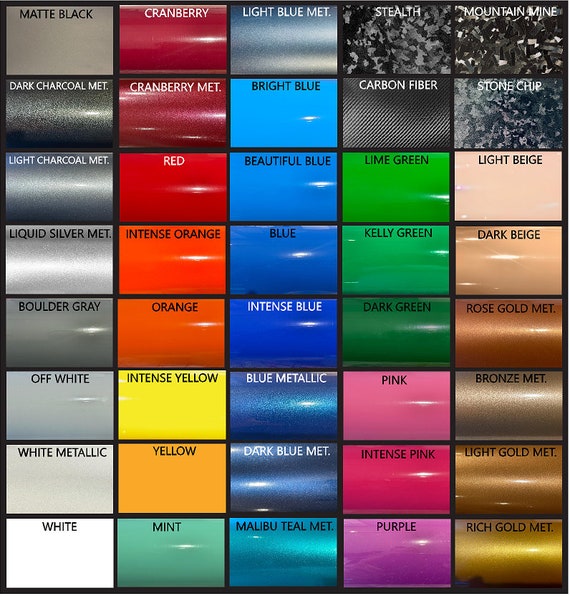
The Perfect Maaco Color for Your Car's Year and Model
Giving your vehicle a fresh coat of paint can breathe new life into an aging daily driver or complete the revival of a project car. When working with budget-friendly auto painting franchises, selecting the perfect Maaco color for your car's year and model requires balancing original factory specifications, body line geometry, and the technical tier of paint you purchase. A shade that looks stunning on a 1969 muscle car can look jarring on a 2018 compact crossover, and vice versa.

Whether your goal is a seamless factory restoration or an affordable color refresh, understanding how Maaco formulates colors and pairs them with specific vehicle generations will save you money and ensure a factory-appropriate finish.
Understanding Maaco's Paint Systems and Color Matching
Before picking a swatch, it helps to understand how Maaco handles paint. Maaco does not simply carry a limited rack of premixed cans; their shops utilize computer-driven paint-mixing banks capable of replicating thousands of original equipment manufacturer (OEM) paint codes. However, the final look depends heavily on the paint package you choose:
- Single-Stage Synthetic Enamel: Maaco's entry-level service. The pigment and gloss are mixed into a single application. It works best with non-metallic, solid colors like basic white, gloss black, and primary reds.
- Single-Stage Urethane: A more durable chemical formulation that resists UV fading better than basic enamel. Suitable for budget-conscious resprays on older trucks and utilitarian daily drivers.
- Basecoat/Clearcoat (Dual-Stage): The industry standard for modern cars. A dedicated color basecoat is applied first, followed by one or more layers of protective clearcoat. This system is essential if your car features metallic flakes, mica, or pearl finishes.
Choosing the Perfect Maaco Color for Your Car's Year and Model
Automotive styling trends evolve dramatically across decades. Matching the color choice to the design language of your car's specific production era creates a cohesive, natural aesthetic.
Classic and Muscle Eras (Pre-1980)
Vehicles from the 1960s and 1970s feature bold, pronounced body lines, chrome trim, and wide quarter panels. Modern muted grays or fine pearl finishes often look out of place on these silhouettes.
If you are painting a classic car or vintage pickup at Maaco, lean toward era-correct solid hues. Deep non-metallic blacks, vibrant poppy reds, forest greens, and period-correct whites highlight the mechanical styling of older sheet metal. Single-stage urethane paints can actually replicate the depth and non-clearcoated sheen of vintage lacquer or enamel paints better than ultra-glossy modern clearcoats.
The Modern Classic and Rad Era (1980–1999)
The late 1980s through the 1990s saw a shift toward aerodynamic curves, integrated plastic bumpers, and distinctive color palettes. If you are refinishing an era-defining vehicle—such as a Fox-body Mustang, an early Mazda Miata, or a Jeep Cherokee XJ—consider whether you want pure factory originality or a period-accurate upgrade.
Popular OEM colors from this era include metallic teals, deep hunter greens, rich burgundies, and warm champagne silvers. Because clearcoat became the standard during this period, opt for at least a two-stage basecoat/clearcoat package from Maaco. Single-stage metallics from this era often fail prematurely or settle unevenly, giving the metallic flake an irregular look across wide, flat hoods.
Contemporary Daily Drivers (2000–Present)

Modern vehicles feature complex, multi-radiused stampings and rely heavily on lighting reflections to define their shapes. Late-model sedans, trucks, and SUVs almost exclusively require two-stage basecoat/clearcoat applications.
When selecting a Maaco paint code for a post-2000 vehicle, consider these practical options:
- Charcoal and Liquid Grays: Modern grays with fine metallic fleck hide surface imperfections well while highlighting the complex creases of newer body designs.
- Tri-Stage Pearl Replications: If your car came with a luxury pearl white or deep metallic blue, talk to the shop manager. While true tri-coat applications carry higher labor and material costs, Maaco can often mix a high-grade basecoat metallic that closely approximates the factory luster.
- Factory Bright White or Pitch Black: Universal, timeless, and forgiving. These shades offer the easiest color blending if you only need partial repainting down the road.
How to Locate and Use Your Vehicle's OEM Paint Code
If your goal is to restore the original look or repaint the exterior without redoing the interior door jambs, you must supply your vehicle's exact OEM paint code. Automotive manufacturers use specific alphanumeric codes to dictate the exact ratio of pigments, binders, and metallic flakes.
You can typically find your car's paint code on the manufacturer certification label located in one of these spots:
- Driver's Side Door Jamb: The most common location. Look for an abbreviation like "PNT," "EXT PNT," or "Color Code" near the bottom of the VIN sticker.
- Under the Hood: Often stamped on a metal plate near the radiator support or firewall.
- Glove Box or Trunk Spare Tire Well: Frequently used by General Motors and European imports.
Providing this code allows the Maaco technician to pull the factory formulation directly from their computerized mixing system, guaranteeing an accurate match to the day your vehicle rolled off the assembly line.
The Color Change Dilemma: Jambs, Trunks, and Engine Bays
One of the most frequent dilemmas drivers face at Maaco is deciding between keeping the original color or choosing something entirely new. While changing from silver to midnight blue sounds appealing, a total color change requires significantly more labor.
A standard Maaco exterior respray only covers the outside sheet metal. If you change colors without paying extra for jambs:
- Your original color will show every time you open the doors, trunk, or hood.
- Resale value may suffer, as mismatched door jambs immediately signal an inexpensive aftermarket paint job to prospective buyers.
- Adding door jambs, under-hood edges, and trunk rims to the work order can double the labor cost due to manual taping and detailed prep work.
If you want a new aesthetic on a budget, choose an evolved shade of your car's existing family—such as transitioning from a flat light gray to a deeper metallic graphite. The contrast against the original door jambs will be subtle rather than glaring.
Final Recommendations for the Best Result
The secret to getting an exceptional result from Maaco lies in matching the right paint chemistry to your vehicle's design and usage profile. A work truck or commuter beater does not warrant a premium four-stage clearcoat, but a clean modern sports car will look stripped of its character under a basic synthetic enamel.
Inspect the shop's physical spray-out cards in direct sunlight before committing. Fluorescent shop lighting distorts metallic flakes and pearls. By verifying your OEM code, respecting the visual lines of your vehicle's model year, and picking the right clearcoat package, you will get a durable, head-turning finish that looks factory-correct for years to come.