The Power Behind the Pope: Vatican's Global Economy
Introduction

When most people think of Vatican City, images of Michelangelo's frescoes, ancient cathedrals, and the spiritual leadership of the Catholic Church immediately come to mind. Yet, behind the incense and sacred liturgy lies a complex, highly sophisticated financial apparatus. Understanding The Power Behind the Pope: VATICAN’s Role in the Modern Global Economy requires looking past the spiritual facade to examine centuries-old financial institutions, massive global real estate holdings, and modern ethical investment portfolios that wield significant influence on the world stage.
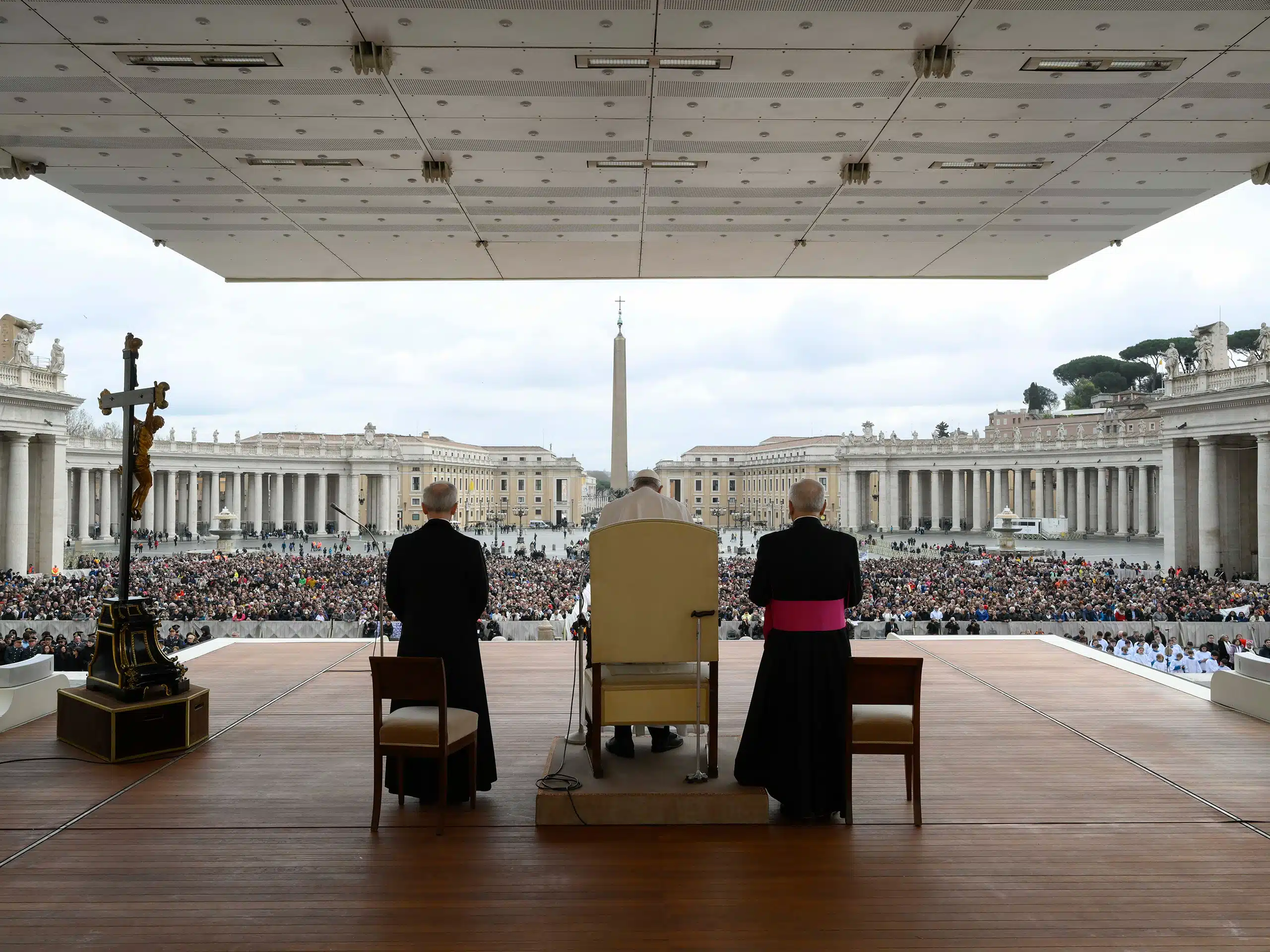
While the Holy See is the smallest independent state in the world by area—spanning just 121 acres in Rome—its economic footprint extends across continents. From managing donations from over a billion Catholics worldwide to directing billions of euros in investments, the Vatican operates as both a sovereign entity and a global financial player.
The Structure of Vatican Finance
The financial governance of the Vatican has undergone profound changes, particularly under the reforms initiated by Pope Francis. Historically decentralized and notoriously opaque, Vatican finances are now centralized under stricter regulatory frameworks designed to bring transparency and compliance with international anti-money laundering standards.
The Secretariat for the Economy
Established in 2014, the Secretariat for the Economy acts as the overarching regulatory body overseeing all economic and administrative activities of the Holy See and Vatican City State. It consolidates budgets, reviews financial statements, and implements cost-cutting measures. This centralization marked a decisive shift away from autonomous department budgets toward unified fiscal accountability.
The Administration of the Patrimony of the Apostolic See (APSA)
APSA functions essentially as the central bank and real estate manager of the Vatican. It handles the administration of real estate, sovereign bonds, and liquid assets owned by the Holy See. APSA's portfolio includes thousands of residential and commercial properties not just in Italy, but in prime European capitals like London, Paris, and Geneva.
The Vatican's Global Investment Strategy
Managing the assets of a global institution requires balancing financial returns with moral imperatives. The Vatican's investment strategy is guided by Catholic social teaching, which places strict ethical boundaries on where and how capital is deployed.
Video: How the Vatican Became a Global Power?
- Exclusionary Screening: The Vatican routinely divests from industries that violate Catholic doctrine, including weapons manufacturing, pornography, abortion-related pharmaceuticals, and fossil fuel extraction that harms the environment.
- Impact Investing: Increasingly, papal funds are directed toward sustainable agriculture, renewable energy, and microfinance projects designed to alleviate poverty in developing nations.
- Sovereign Bonds and Equities: APSA and other Vatican funds hold diverse portfolios of international equities and government bonds to generate the operating revenue needed to sustain the Roman Curia's global diplomatic and pastoral missions.
The Institute for the Works of Religion (IOR)
Often referred to as the Vatican Bank, the Institute for the Works of Religion (IOR) is perhaps the most famous and scrutinized institution within the Holy See's financial network. Founded in 1942 by Pope Pius XII, the IOR is not a traditional commercial bank; rather, it manages assets for religious orders, dioceses, clergy, and Vatican employees worldwide.
In recent decades, the IOR has faced intense scrutiny regarding historical governance failures. Under Pope Francis, the bank closed thousands of dormant or non-compliant accounts, instituted rigorous Know-Your-Customer (KYC) protocols, and partnered with the Council of Europe's Moneyval committee to ensure full alignment with global financial transparency standards. Today, the IOR plays a targeted role in moving funds securely to support Catholic missions in high-risk or politically unstable regions.
Real Estate: The Foundation of Vatican Wealth
Real estate remains the bedrock of the Vatican’s material wealth. APSA controls an estimated 4,000 to 5,000 properties, with roughly 80% located in Italy—primarily Rome and surrounding areas—and the remainder scattered across high-value European markets.
Historically, many of these properties were acquired through the Lateran Pacts of 1929, as compensation for the loss of the Papal States. While a significant portion of these buildings house Vatican offices, embassies, and clergy, a large percentage consists of commercial and residential real estate rented at market rates, generating steady rental income that cushions the Holy See's operating budget.
Influence on Global Economic Discourse
Beyond its balance sheets and real estate portfolios, the Vatican exerts soft power over the modern global economy through moral suasion, papal encyclicals, and high-level economic summits.
Through foundational documents like Pope Francis’s *Laudato si’* (on care for our common home) and *Fratelli tutti*, the Vatican has positioned itself as a moral critic of unfettered capitalism, economic inequality, and environmental degradation. The Holy See routinely convenes economists, central bankers, and tech executives—such as through the Council for Inclusive Capitalism—to advocate for a more equitable economic model that prioritizes human dignity over purely quantitative growth.
Conclusion
The Vatican’s role in the modern global economy is a study in contrasts. It is an ancient spiritual authority navigating the complexities of modern digital finance, international banking regulations, and global real estate markets. Through ongoing financial reforms, stringent ethical screening, and a persistent voice advocating for social justice, the Vatican continues to wield a unique brand of economic power—one that impacts not only the balance sheets of the Holy See, but the conscience of global capitalism itself.