The Rise and Fall of the Nazis: History & Legacy
Introduction to the History of the Nazis

The term "Nazis" refers to members of the National Socialist German Workers' Party (NSDAP), a far-right political party that ruled Germany from 1933 to 1945 under the dictatorship of Adolf Hitler. Emerging from the political and economic instability of post-World War I Germany, the party exploited public grievances, widespread unemployment, and intense national humiliation to seize absolute control of the state. Understanding how the Nazis transformed a democratic republic into a totalitarian regime remains one of the most critical studies in modern history.
This article explores the origins of the Nazi movement, the mechanics of their dictatorial rule, the devastation of World War II and the Holocaust, and the global efforts to dismantle and remember their hateful legacy.
The Rise of the Nazi Party (1919–1933)
The origins of the Nazi party trace back to the German Workers' Party (DAP), founded in Munich in 1919. Adolf Hitler joined the party shortly after its inception and quickly rose through the ranks due to his powerful oratorical skills and radical nationalist ideology. In 1920, the party was renamed the NSDAP, combining extreme nationalism, anti-communism, and virulent antisemitism.
Key Factors in Hitler's Ascent
- The Treaty of Versailles: The harsh reparations and territorial losses imposed on Germany after World War I fostered deep resentment.
- Economic Collapse: The Great Depression of 1929 devastated the German economy, leading to mass unemployment and loss of faith in the democratic Weimar government.
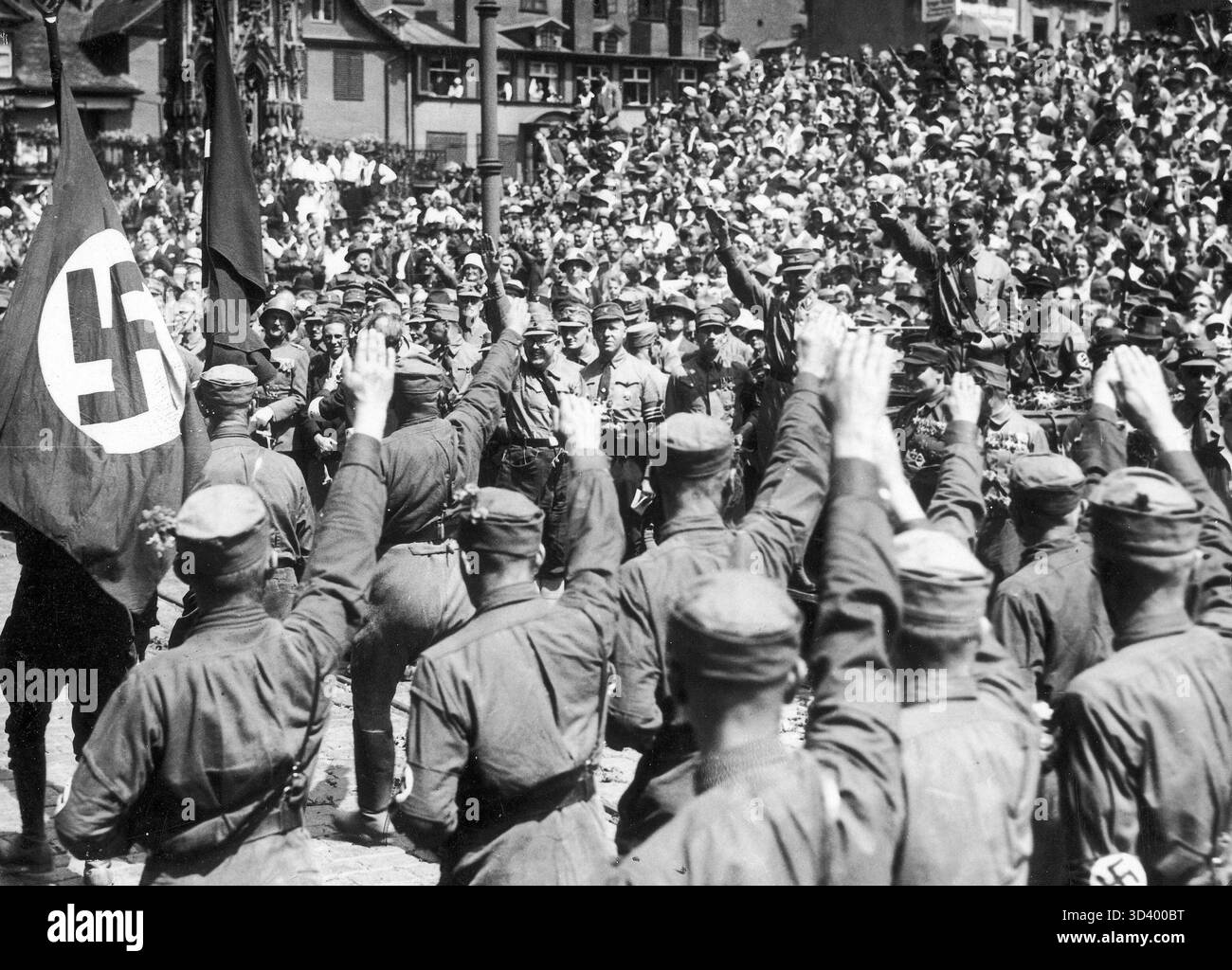
- Propaganda: Led by Joseph Goebbels, the party utilized modern media, rallies, and newspapers to spread its message and scapegoat minority groups.
In January 1933, amid political deadlock, President Paul von Hindenburg appointed Hitler as Chancellor of Germany. Within months, the Nazis dismantled democratic institutions, banned opposition parties, and established a brutal police state.
Life Under the Third Reich
Once in power, the Nazi regime sought *Gleichschaltung* (coordination), a process that brought all aspects of German public and private life under state control. Education, the press, the judiciary, and cultural organizations were purged and reorganized to reflect Nazi ideology.
Citizens were subjected to constant surveillance by the Gestapo (secret police) and the SS (Schutzstaffel), a paramilitary organization led by Heinrich Himmler. Dissent was met with swift imprisonment in concentration camps, torture, or execution. Through youth organizations like the Hitler Youth, the state indoctrinated children to ensure future loyalty to the regime and its racial doctrines.
Video: Remaja yang Melawan Nazi 😮

World War II and the Holocaust
The aggressive foreign policy of the Nazis was driven by the concept of *Lebensraum* (living space), which demanded the territorial expansion of Germany eastward into Eastern Europe and the Soviet Union. This expansionist drive ignited World War II in Europe with the invasion of Poland on September 1, 1939.
The Mechanics of Genocide
At the core of Nazi ideology was a pseudoscientific belief in racial hierarchy, which positioned the "Aryan" race as supreme while designating Jews, Romani people, people with disabilities, and other groups as subhuman (*Untermenschen*). This ideology culminated in the Holocaust, also known as the Shoah—the systematic, state-sponsored genocide of six million European Jews.
- Persecution and Segregation: The Nuremberg Laws of 1935 stripped Jews of citizenship, followed by forced ghettoization in cities like Warsaw and Łódź.
- Mass Shootings: During the invasion of the Soviet Union, mobile killing squads known as *Einsatzgruppen* murdered over one million Jews and political opponents.
- Extermination Camps: The regime established industrial death camps, such as Auschwitz-Birkenau and Treblinka, where victims were murdered on an industrial scale using poison gas.
Fall of the Regime and the Post-War Reckoning
The tide of World War II turned against Germany following defeats at Stalingrad, in North Africa, and the successful Allied invasions of Italy and Normandy. By early 1945, Allied forces from the West and Soviet forces from the East converged on Berlin. Hitler committed suicide on April 30, 1945, in his underground bunker, and Germany surrendered unconditionally on May 8, 1945.
In the aftermath, the international community sought accountability. The Nuremberg Trials (1945–1946) prosecuted surviving Nazi leaders for war crimes, crimes against peace, and crimes against humanity, establishing foundational principles for modern international humanitarian law.
Conclusion and Modern Legacy
The legacy of the Nazis serves as a permanent historical warning about the fragility of democracy, the dangers of unchecked extremism, and the catastrophic potential of hate speech and scapegoating. Today, education, memorial sites, and international legislation against hate symbols ensure that the atrocities committed by the Third Reich are neither forgotten nor repeated.