The Risks of Restraint Use in Healthcare
When caring for vulnerable patients—particularly older adults or individuals experiencing acute psychiatric crises—ensuring safety is a top priority. For decades, physical and chemical restraints were routinely deployed to prevent falls, manage agitation, and stop patients from pulling out vital medical tubes. However, modern healthcare standards have shifted dramatically. Clinical research now shows that restraints often cause more harm than the behaviors they are meant to manage.

While numerous complications can arise from restricting a patient's movement, **one serious problem that may result from restraint use is** rapid functional decline and muscle atrophy. Beyond this immediate physical deterioration, the practice triggers a cascade of severe physiological and psychological consequences that every healthcare provider, caregiver, and family member should understand.
Understanding Restraint Use in Modern Care
Restraints are classified broadly into physical devices and chemical agents. Physical restraints include wrist mitts, vests, lap belts, or side rails that a patient cannot easily remove. Chemical restraints refer to psychoactive medications administered not to treat a specific psychiatric condition, but to intentionally control or restrict a patient's freedom of movement.
Historically, staff utilized these measures out of an abundance of caution, fearing liability if a patient fell out of bed or disrupted their IV line. Today, evidence-based guidelines emphasize restraint-free care environments. Regulatory bodies, such as the Centers for Medicare & Medicaid Services (CMS) and The Joint Commission, view restraints as a last resort, mandating rigorous documentation and constant monitoring when they are used.
One Serious Problem That May Result from Restraint Use Is Physical Decline
When a patient is immobilized, their body immediately begins to decondition. Within days of continuous or frequent restraint use, individuals experience significant muscle weakness, joint stiffness, and a loss of balance coordination. This sets off a dangerous cycle known as the immobility cascade.
The Cascade of Functional Loss
- Muscle Atrophy: Without regular movement, muscle fibers break down rapidly, particularly in the lower extremities, making independent walking nearly impossible after a short period of restriction.
- Contractures: Joints held in a fixed position for extended periods can permanently freeze, causing chronic pain and permanent loss of range of motion.
- Pressure Ulcers: Immobile patients are at a vastly elevated risk for developing painful, hard-to-heal bedsores over bony prominences.
- Circulatory Issues: Lack of movement slows blood circulation, drastically increasing the risk of deep vein thrombosis (DVT) and potentially fatal pulmonary embolisms.
Ironically, while restraints are often applied to prevent falls, the severe muscle weakness they cause actually increases the patient's long-term fall risk once the restraint is eventually removed.
Psychological and Emotional Trauma
Video: 02.07 Restraints

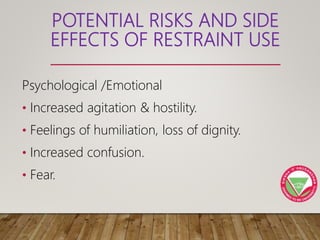
The impact of being tied down or chemically subdued goes far beyond the physical body. For many patients, restraints induce intense fear, panic, and confusion. This is particularly true for individuals with dementia or delirium, who may not understand why their limbs are restricted.
Patients frequently perceive restraints as a form of punishment or imprisonment. This realization can lead to increased agitation, combative behavior, and prolonged psychological distress. Post-traumatic stress symptoms, feelings of helplessness, and severe depression are commonly reported by patients who have experienced unnecessary or prolonged restraint.
Other Critical Complications of Restraints
Beyond functional decline and psychological trauma, clinical literature highlights several other life-threatening complications associated with physical and chemical restraints:
- Risk of Asphyxiation and Strangulation: Vest and belt restraints have tragically led to positional asphyxiation when patients slide down in their chairs or beds, becoming trapped in the device.
- Incontinence and Skin Breakdown: Restricted patients often cannot signal for help to use the restroom, leading to prolonged exposure to moisture, skin irritation, and urinary tract infections.
- Increased Mortality: Studies consistently show higher mortality rates among institutionalized patients who are regularly subjected to physical restraints compared to those managed with restraint-free protocols.
Alternatives to Restraints
Recognizing the severe dangers of restriction, healthcare facilities have successfully implemented restraint reduction programs. Safe, compassionate alternatives focus on identifying the root cause of a patient's behavior—such as pain, hunger, boredom, or a need to use the bathroom—rather than suppressing the symptom.
Effective alternatives include low beds, mat floors, wearable fall-detection sensors, distraction therapy, and increased staff supervision or family presence. By addressing underlying discomfort, caregivers can maintain patient safety without resorting to harmful restrictive practices.
Conclusion
Ensuring the safety of patients in hospitals, nursing homes, and care facilities is a complex balancing act. However, the evidence is unequivocal: while restraints may seem like a quick fix for safety concerns, they carry immense risks. Recognizing that one serious problem that may result from restraint use is irreversible physical and functional decline helps reinforce the critical shift toward patient-centered, restraint-free care.