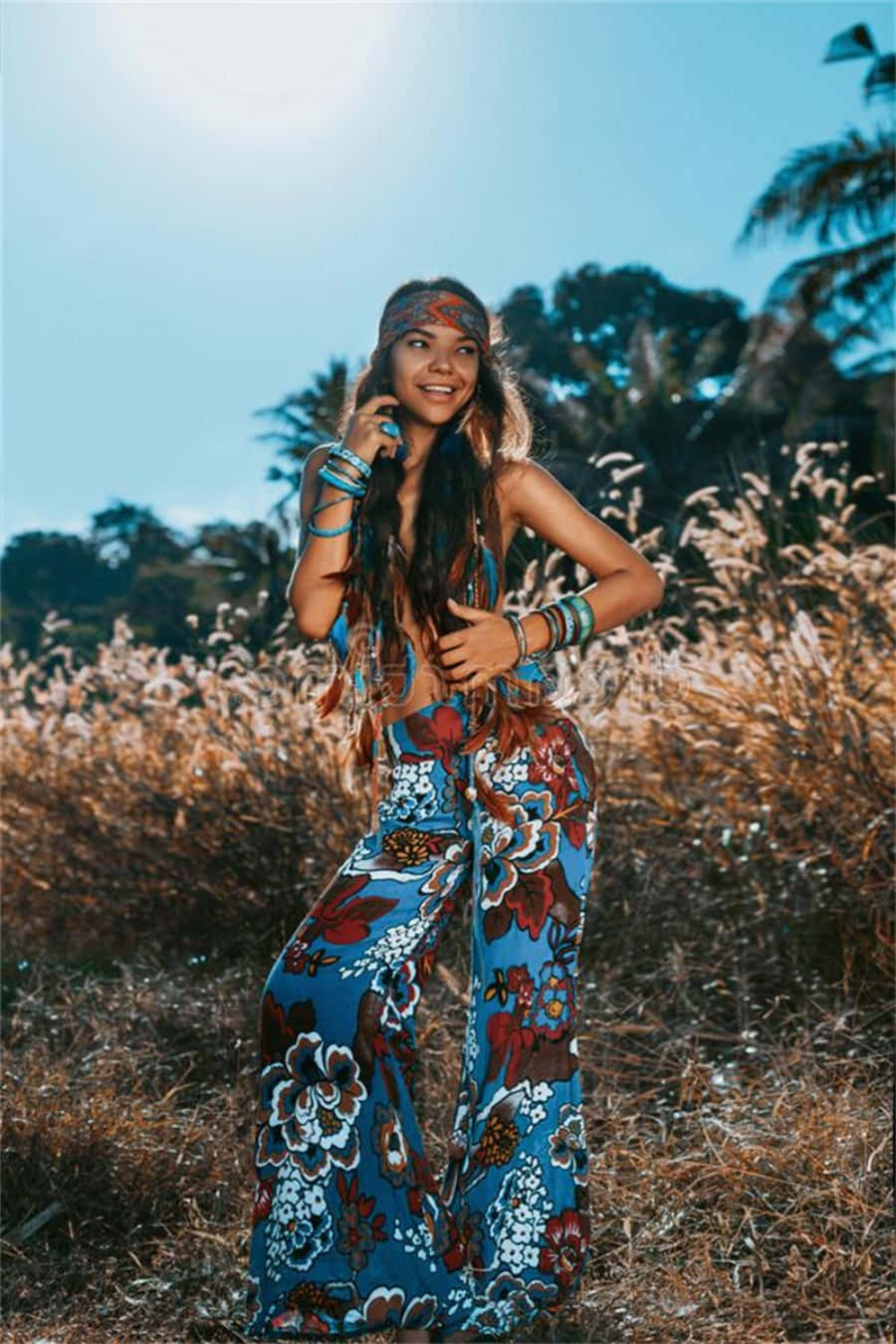
The True Image of a Hippie: Style and Reality
When most people picture the 1960s counterculture, a vivid set of visual clichés instantly comes to mind: flowing hair, barefoot wanderers, round wire-rimmed glasses, faded denim, and swirling tie-dye. The enduring image of a hippie remains one of the most recognizable cultural archetypes of the twentieth century. Yet behind the vibrant aesthetic lies a deliberate, politically charged rejection of post-war consumerism and rigid social conformity.

Understanding this visual identity requires looking past the caricature. What began as an anti-establishment lifestyle among a small cohort of activists, artists, and dropouts rapidly evolved into a global visual language. By exploring how this look was constructed, interpreted, and commercialized, we can better understand both the counterculture that created it and the modern trends it continues to inspire.
Anatomy of an Aesthetic: What Defined the Hippie Look?
The original countercultural wardrobe was not born on high-fashion runways; it emerged from necessity, philosophy, and practical rebellion. Unlike the polished, tailored silhouettes favored by mid-century mainstream America, hippie style embraced looseness, comfort, and direct utility.
Anti-Consumerist Fashion and Natural Fibers
At its core, countercultural fashion was a protest against the industrial-consumer complex. Hippies actively avoided department stores and mass-produced synthetic fabrics like polyester and nylon, which had become symbols of suburban complacency. Instead, they favored:
- Thrifted and Military Surplus Garments: Secondhand jackets, utilitarian work shirts, and patched denim allowed young people to dress affordably while rejecting the commercial churn of fast-moving trends. Wearing military jackets was also a deliberate anti-war irony.
- Handmade and Upcycled Pieces: Embroidery, patchwork, knitting, and leathercraft became personal signatures. Repairing a torn pair of jeans with scraps of floral fabric was both an economic choice and a statement of individuality.
- Natural Materials: Cotton, linen, raw wool, hemp, and untreated leather were chosen for their connection to the earth and their breathability.
Hair, Grooming, and Social Defiance
Perhaps nothing unsettled conservative observers more than countercultural grooming habits. In an era where men were expected to wear clean crew cuts and women kept highly styled, lacquered hair, letting hair grow wild and unconstrained was an act of civil disobedience.
For young men, long hair and full beards signaled a break from corporate careerism and the military draft. For women, abandoning girdles, restrictive brassieres, and heavy makeup was an early visual step toward bodily autonomy and liberation. Going barefoot or wearing simple leather sandals (most famously German-made Birkenstocks) further emphasized a desire for physical grounding and proximity to nature.
The Media's Role in Shaping the Image of a Hippie
While the movement originated organically in enclaves like San Francisco's Haight-Ashbury and New York's East Village, mainstream media played a pivotal role in codifying the subculture into a single, recognizable persona.
During the 1967 “Summer of Love,” television networks, photojournalists, and national magazines descended upon San Francisco. Outlets like Life, Time, and Look published glossy photo essays that both sensationalized and crystallized the aesthetic. To the press, complex political debates regarding the Vietnam War, civil rights, and environmentalism were difficult to capture in a single frame; a teenager in a fringed suede vest blowing soap bubbles was not.
This coverage produced a double-edged effect. On one hand, it broadcasted an attractive vision of freedom, youth, and communal living to disaffected teenagers across the globe. On the other, it flattened a diverse, often deeply serious social movement into a lighthearted, eccentric costume party, laying the groundwork for rapid commercialization.
Visual Symbols of the Counterculture

The visual culture of the era extended far beyond clothing. A distinct iconography developed through fine art, protest photography, and graphic design, anchoring the movement in public memory.
The CND Peace Symbol
Originally designed in 1958 by British artist Gerald Holtom for the Campaign for Nuclear Disarmament, the peace sign became the universal emblem of the anti-war movement. Drawn on banners, embroidered onto denim jackets, and worn as cast-metal pendants, the simple geometric figure was ubiquitous.
Flower Power
The concept of “Flower Power,” popularized by poet Allen Ginsberg, proposed meeting state-sanctioned violence with nonviolent resistance, beauty, and love. Iconic photojournalism—such as Bernie Boston’s 1967 photograph Flower Power, showing a young protestor placing carnations into the rifle barrels of military police—immortalized flowers as tools of political defiance rather than mere decoration.
Psychedelic Poster Art
In music capitals like San Francisco and London, graphic artists such as Wes Wilson, Victor Moscoso, and Peter Max revolutionized visual communication. Drawing inspiration from Art Nouveau, Viennese Secessionism, and the sensory distortions of hallucinogenic experiences, they produced concert posters characterized by:
- Vibrating, complementary color palettes (such as electric blue paired with hot orange).
- Hand-lettered, fluid typography that deliberately challenged legibility.
- Surrealistic, kaleidoscopic imagery that mirrored the soundscapes of contemporary rock music.
Cultural Borrowing and Complexity
A critical examination of the classic countercultural style requires addressing its heavy reliance on cultural borrowing. Seeking alternatives to Western industrialism, many young people looked toward indigenous and Eastern traditions for spiritual and aesthetic inspiration.
Tunics, caftans, dashikis, and Indian kurtas entered the standard wardrobe alongside Native American beadwork, moccasins, and fringed leather. While participants viewed this as an earnest embrace of universal brotherhood and earth-centered wisdom, modern cultural historians often view it as romanticized appropriation, where sacred symbols were sometimes stripped of their traditional contexts to serve as personal countercultural statements.
The Modern Legacy: From Resistance to Festival Chic
Today, the radical ethos that birthed the movement has largely been decoupled from its visual presentation. The commodification of the aesthetic began as early as the late 1960s, when Madison Avenue realized that youth rebellion could be packaged and sold back to consumers.
In the contemporary landscape, elements of the countercultural wardrobe resurface regularly in mainstream fashion. The “boho-chic” trends of the early 2000s and modern festival attire seen at events like Coachella trace their lineage directly back to Woodstock. Bell-bottoms return to runway collections, and tie-dye undergoes cyclical revivals by luxury streetwear brands.
Yet despite decades of commercial assimilation, the visual language retains an undercurrent of its original promise. When modern environmental activists wear handmade, thrifted garments, or when artists use psychedelic graphics to challenge political authority, they tap into a tradition established more than half a century ago. The aesthetic endures because it was never just about clothes; it was an attempt to make hope, peace, and alternative ways of living visible to the world.