The True Story of the Old Six Flags Commercial Guy
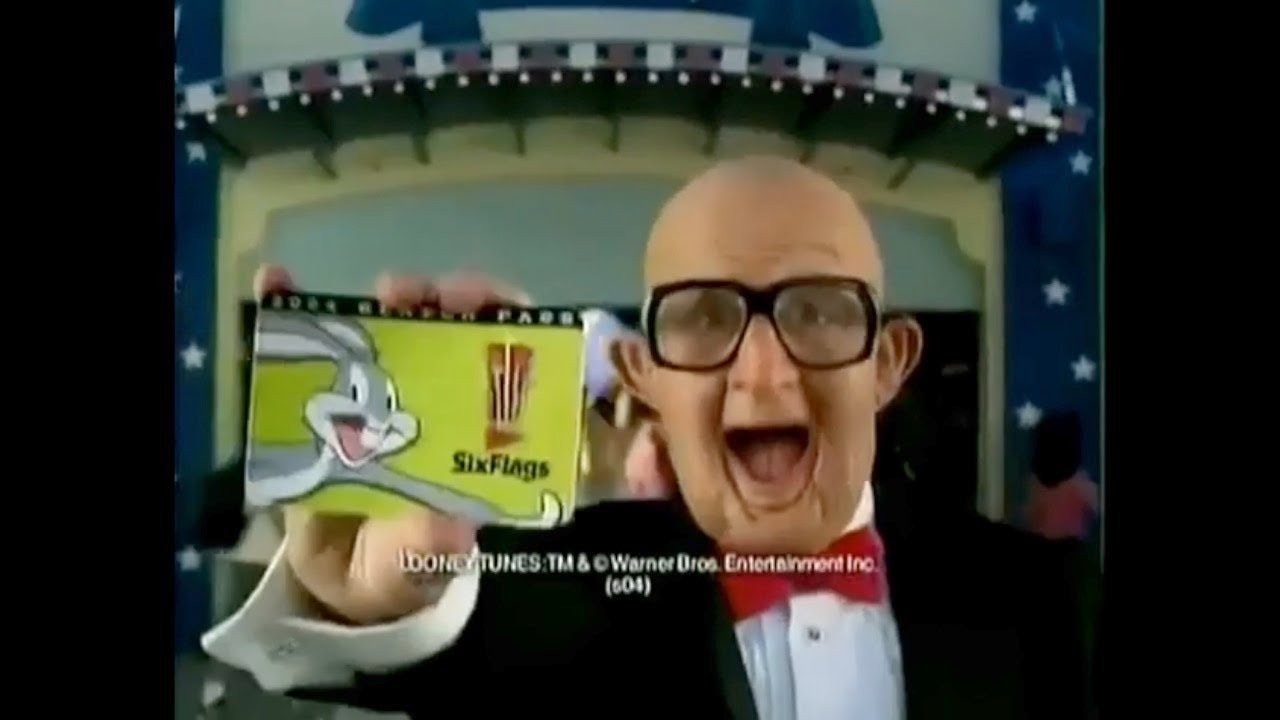
In the mid-2000s, turning on the television almost guaranteed you would see a peculiar, elderly man step out of a suburban home, crank up loud techno music, and burst into a frenetic, high-energy dance. This eccentric figure—universally known as the old Six Flags commercial guy—became an overnight pop culture phenomenon. With his oversized suit, bald head, round glasses, and surprisingly agile dance moves, he cemented himself in advertising history.

Despite airing nearly two decades ago, the campaign remains one of the most memorable in theme park history. But who was the man behind the makeup, and what happened to the character after the commercials stopped airing? Here is the complete story.
Who Was the Old Six Flags Commercial Guy?
For years, viewers wondered if the energetic dancer was a real senior citizen with incredible stamina, a CGI creation, or a younger performer in heavy prosthetic makeup. The reality lies in the latter category.
The old Six Flags commercial guy was actually played by Danny Teeson, a professional dancer and choreographer. When Teeson booked the gig in 2004, he was only in his early 30s. Transforming into the character, officially named "Mr. Six," required an extensive transformation process every single day on set.
The Creation of Mr. Six
Advertising agency Doner, working alongside Six Flags, wanted a campaign that would cut through the noise and emphasize that visiting the amusement park makes you feel young again. The creative brief called for an unexpected juxtaposition: an elderly man doing something vibrant and youthful.
Key elements of the Mr. Six character included:
- The Wardrobe: An ill-fitting, vintage-style charcoal suit with a skinny black tie that exaggerated his movements.
- The Prosthetics: A specialized latex mask and makeup kit designed to age Teeson by several decades while maintaining flexible facial expressions.
- The Music: The iconic track used in the commercials was a remix of the 1998 song "We Like to Party!" by the Dutch group Vengaboys.
The Cultural Impact of the Campaign
The commercials debuted in 2004 and immediately captured the public's attention. In an era before viral videos were common on social media, the Mr. Six spots went viral through television syndication and water-cooler talk. People loved the contrast between the geriatric appearance and the hyper-kinetic dance style.
Six Flags leveraged the character heavily. Mr. Six appeared in print ads, made live appearances at park openings, and even danced on various talk shows. The campaign successfully drove ticket sales and shifted the brand's image toward family-friendly fun and high-energy excitement.
Where Did Mr. Six Go?
Like many successful advertising campaigns, the original run eventually came to an end. By 2005, Six Flags underwent a change in corporate leadership and shifted its marketing strategy. The new executives wanted to move away from the quirky, cartoonish character in favor of a more traditional family-focused approach.
As a result, the old Six Flags commercial guy was retired, and the Vengaboys song was temporarily shelved from the ad rotations.
A Brief Revival
Fans of the character got a surprise in 2009 when Six Flags brought Mr. Six back for a new round of commercials. This time, the advertising campaign leaned heavily into internet nostalgia. The revived commercials featured Mr. Six arriving at a park gates, shedding his old-man disguise to reveal a younger dancer, symbolizing how the park rejuvenates all visitors.
However, this comeback was short-lived, and the character was permanently retired soon after as Six Flags once again updated its marketing direction.
Where Is Danny Teeson Now?
After hanging up the oversized suit and prosthetic makeup, Danny Teeson continued working in the entertainment industry. Rather than remaining in front of the camera, he largely focused on his career behind the scenes as a choreographer, creative director, and television personality.
Teeson has worked on various television productions, fitness projects, and live stage shows. Though he is rarely recognized on the street without the iconic bald cap and glasses, he occasionally reflects fondly on his time as one of the most recognizable advertising icons of the 2000s.
Legacy in Advertising History
The old Six Flags commercial guy remains a masterclass in effective character-driven advertising. By combining an earworm pop track, surreal humor, and a memorable visual gag, the campaign achieved what every brand dreams of: staying culturally relevant long after the media buy has ended.
Today, Mr. Six lives on through internet memes, nostalgic retrospective videos, and the fond memories of millennials who grew up watching him dance across their television screens.