The Truth Behind Pablo Escobar Death Pictures
On December 2, 1993, the most hunted man in the world met his violent end on the rooftops of Medellín, Colombia. As news of the kingpin's demise spread globally, the media scrambled for proof. This intense public curiosity birthed the famous pablo escobar death pictures, images that instantly became historical artifacts and sparked decades of debate.
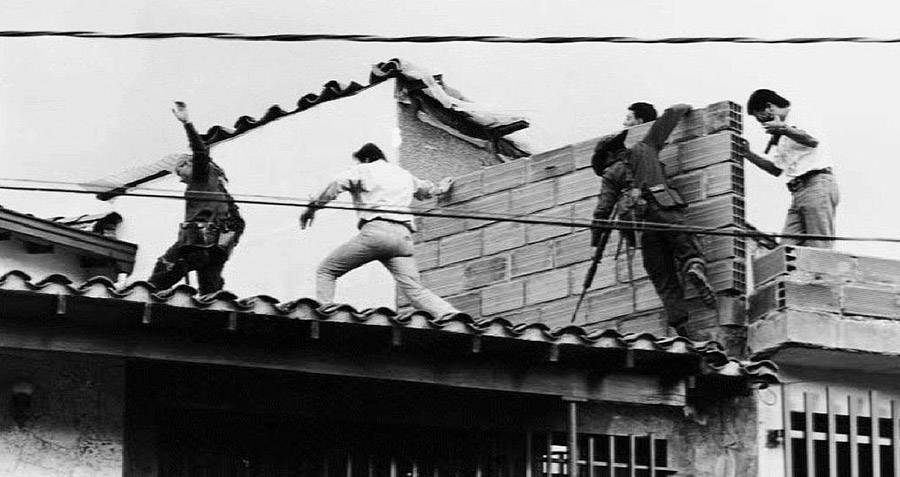
Understanding these photographs requires examining the context of Escobar's final hours, the photographers who captured the scene, and the lasting impact these stark images left on Colombian history and popular culture.
The Final Moments on the Medellín Rooftop
Pablo Escobar had been on the run for nearly 17 months following his escape from La Catedral prison in July 1992. Operating a clandestine network from safe houses across Medellín, he was eventually tracked down by the Search Bloc—a specialized unit of the Colombian National Police working closely with U.S. intelligence agencies.
On that fateful afternoon, authorities intercepted a radio telephone call Escobar made to his son, Juan Pablo. This signal allowed them to pinpoint his location in the middle-class neighborhood of Los Olivos. When police surrounded the two-story house, Escobar and his bodyguard, Álvaro de Jesús Agudelo (known as "Limón"), attempted to escape by running across the terracotta-tiled roofs.
Escobar was struck twice—in the leg and the torso—before a fatal shot penetrated his right ear, ending his life instantly. Within minutes, law enforcement officers swarmed the rooftop, eager to verify the identity of the fallen cartel boss and document the scene.
Analyzing the Famous Pablo Escobar Death Pictures
The visual documentation of Escobar's death is remarkably thorough for an era preceding smartphones and instant digital distribution. Several distinct elements define these archival photographs:
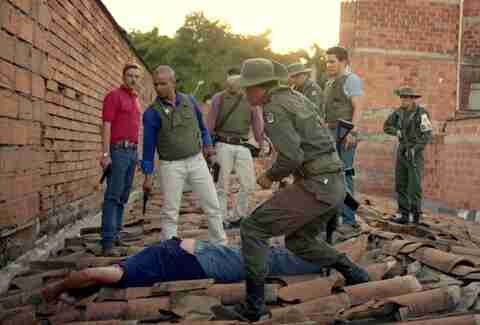
- The Rooftop Setting: Escobar’s body lies sprawled across a sloped, red-tile roof, wearing a blue patterned shirt, jeans, and no shoes, which he had kicked off during the desperate chase.
- Surrounding Law Enforcement: Smiling Colombian police officers and military personnel pose over the body, holding weapons aloft in victory, capturing the mood of a nation liberated from immense terror.
- Forensic and Media Clutter: Bloodstains on the tiles and debris from the shootout highlight the chaotic nature of the final confrontation.
The most iconic image features Colombian police officers huddled around the corpse on the roof, gazing down at the man who had terrorized a nation with car bombs and assassinations for over a decade. These photos were quickly transmitted via wire services to front pages around the globe.
Controversies and Conspiracy Theories
While official reports from the Colombian government and forensic teams concluded that Escobar was killed by police gunfire during the rooftop shootout, the vivid nature of the death pictures fueled numerous conspiracy theories that persist today.

Did He Commit Suicide?
One of the most persistent theories stems from claims made by Escobar’s family, particularly his brother, Roberto Escobar. The family argued that Pablo had long maintained he would shoot himself behind the ear rather than allow himself to be captured alive. They pointed to the entry wound behind his right ear as evidence of suicide rather than a sniper's bullet.
However, forensic experts who examined the body and reviewed the ballistic evidence largely dismissed this theory. They noted that the trajectory of the bullet was consistent with a shot fired from a distance by a pursuing officer, rather than the powder burns and angle typical of a self-inflicted contact wound.
The Absence of Shoes
Amateur sleuths often question why Escobar was barefoot in the photographs. Historical accounts clarify a mundane reality: Escobar had removed his shoes to run more easily across the slippery tile roofs while attempting his escape. Such minor details in the photographs have nevertheless fed skepticism among critics of the official police narrative.
Impact on Colombian Culture and Media
The publication of these graphic photographs marked a turning point in how violent crime was reported in Colombia. In the early 1990s, graphic imagery of cartel violence filled local newspapers almost daily, but the images of Escobar's lifeless body carried unique symbolic weight.
They signaled the symbolic end of the Medellín Cartel's golden era of terror, even though drug trafficking operations quickly fragmented and evolved under rival organizations like the Cali Cartel. For ordinary citizens, the pictures provided undeniable closure to a reign of fear.
Where to Find Historical Archives Today
Decades after the event, these historical photographs remain accessible through major photo agencies like Getty Images, AP Images, and historical documentaries. They are frequently studied by historians, criminologists, and fans of true crime seeking an unvarnished look at the fall of an empire.
Ultimately, the enduring interest in these images highlights humanity's complex fascination with the rise and fall of powerful figures. They serve as a stark reminder of a violent chapter in modern history and the ultimate downfall of the world's most infamous narcotraficante.