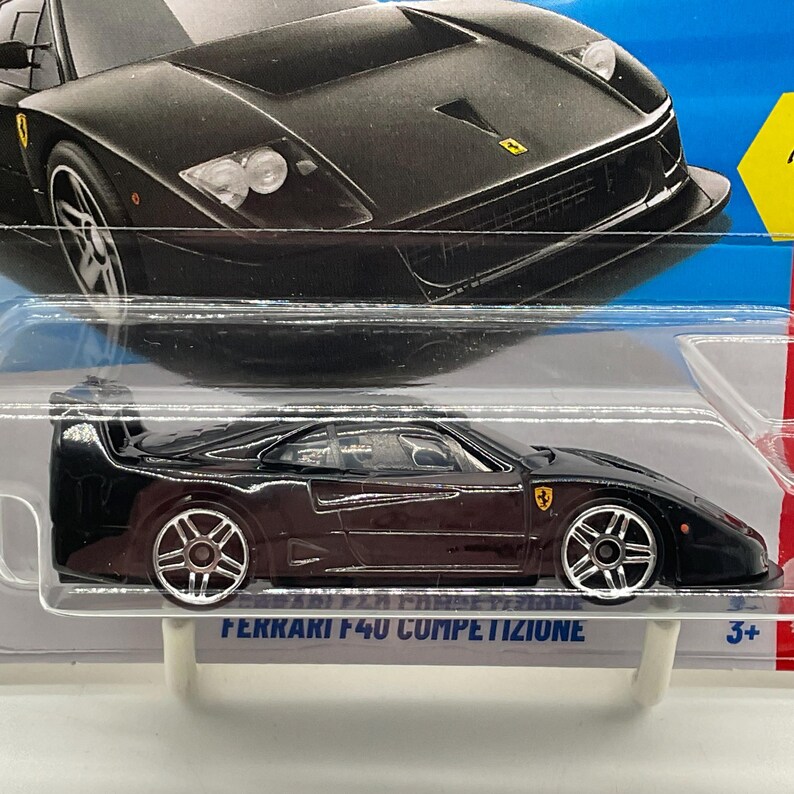
The Ultimate Guide to the Hot Wheels Ferrari F40
Introduction to the Legend

Few cars capture the imagination quite like the Ferrari F40. As the final supercar commissioned by Enzo Ferrari himself, it remains an automotive icon. It is no surprise that when Mattel paired this Italian masterpiece with its famous 1:64 scale toy line, the resulting Hot Wheels Ferrari F40 instantly became a legend in the diecast collecting community.
For decades, Hot Wheels produced numerous versions of the F40, spanning various eras of casting design, tampo printing, and wheel styles. Whether you are a seasoned collector looking to complete your Ferrari set or a nostalgic fan trying to find a childhood favorite, understanding the history and variations of this casting is essential.
The History of the Hot Wheels Ferrari F40 Casting
The Hot Wheels Ferrari F40 made its debut in the late 1980s, closely following the real car's 1987 release. Designed by Larry Wood, one of Hot Wheels' most legendary designers, the initial casting aimed to capture the aggressive wedge shape, massive rear wing, and vented rear glass engine cover of the 1:1 supercar.
Over the years, the casting underwent several revisions. Early editions featured metal bases and opening features or simpler interior details, while later releases focused on sleek rolling performance for the mainline tracks. No matter the year, the F40 remained a staple of the Hot Wheels catalog throughout the 1990s and early 2000s.
The End of an Era: The Ferrari Licensing Agreement
The landscape of collecting a Hot Wheels Ferrari F40 changed dramatically in 2014. Mattel’s long-standing exclusive licensing agreement with Ferrari came to an end. Because Mattel could no longer produce Ferrari models, every single Ferrari casting produced up to that point instantly transitioned from a common mainline toy to a retired piece of history.
This expiration caused a significant surge in demand and secondary market value for almost all vintage and modern Hot Wheels Ferraris. Finding an F40 in good condition on the secondary market now requires a bit of knowledge regarding which versions are out there.
Video: Detail yang jarang di temui.. Hotwheels Ferrari F40 Competizione (Unboxing & Review)
Notable Variations and Releases
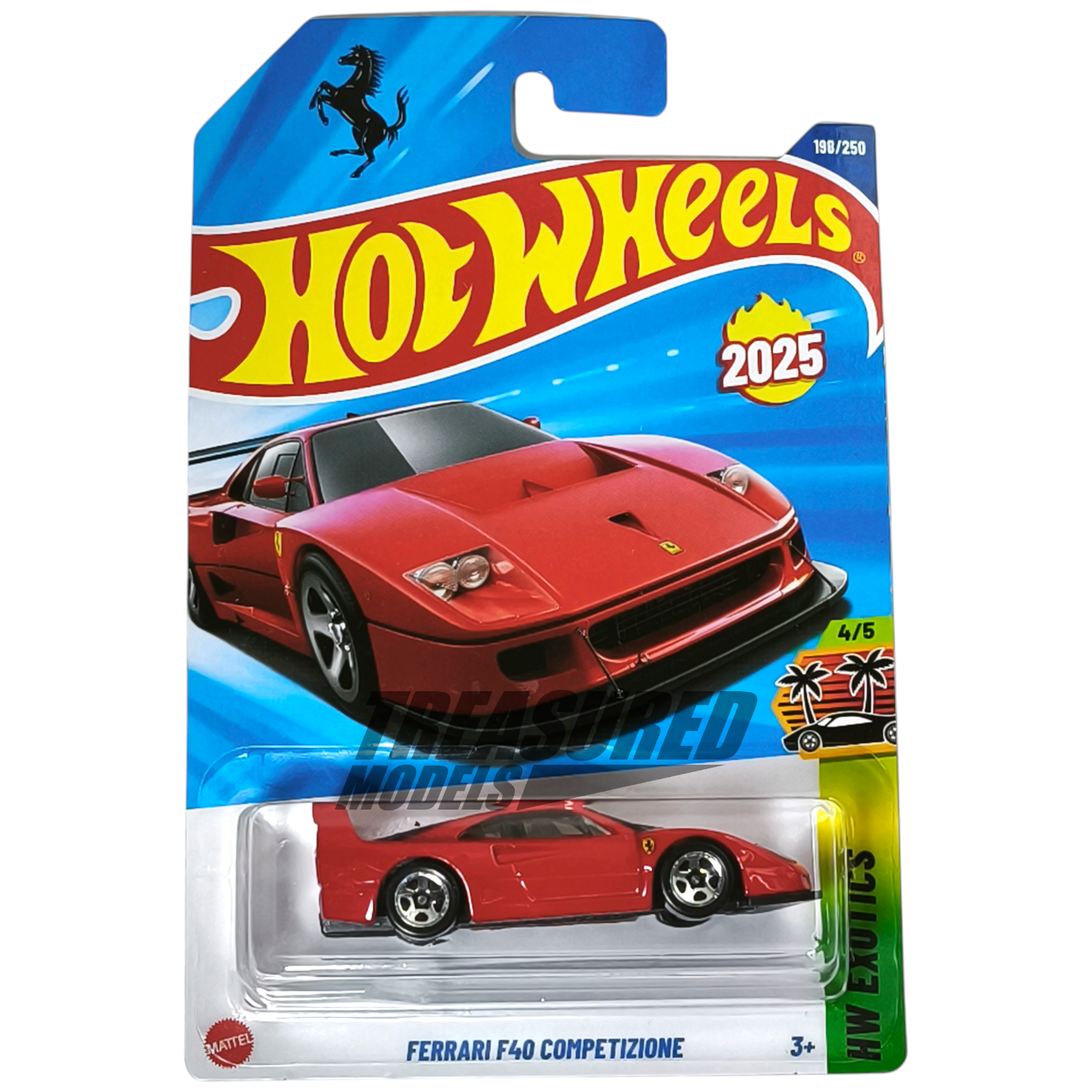
Collectors categorize the Hot Wheels Ferrari F40 by its paint, wheels, and packaging. Here are some of the most notable releases to look out for:
- The 1989 First Edition: Typically finished in classic Rosso Corsa (racing red) with basic black interior and classic basic wheels. These often command a premium if found on pristine blister cards.
- The 1990s Mainline Variations: Throughout the decade, the F40 appeared in various colorways, including yellow, black, and white, alongside promotional and racing livery versions.
- The 1998 100% Hot Wheels Series: This premium line featured rubber Real Riders tires, opening hoods or engine bays, and incredible paint depth. The 100% Hot Wheels F40 is a masterpiece of small-scale engineering.
- Racing Tampos and Speed Machines: Later releases featured intricate sponsor decals mimicking the LM and GTE race cars that dominated endurance racing in the 1990s.
How to Spot Real vs. Fake and Assess Condition
Because the value of retired Hot Wheels Ferraris has climbed, buyers must exercise caution when shopping online marketplaces like eBay or at flea markets. Here is how to ensure you are getting an authentic piece:
- Check the Base: Flip the car over. An authentic vintage casting will feature copyright stamps from Mattel and typically state "Ferrari F40" along with the country of manufacture (such as Malaysia or China).
- Examine the Proportions: Larry Wood's original casting has distinct proportions. Counterfeit or knock-off diecast cars from the era usually feature poorly defined rear louvers or incorrect proportions on the rear wing.
- Inspect the Blister Pack: If buying carded, look for yellowing of the clear plastic bubble (a sign of aging plastics) and ensure the cardboard backing does not show signs of being resealed.
Collecting Tips for Modern Enthusiasts
If you want to add a Hot Wheels Ferrari F40 to your collection, you don't necessarily have to break the bank. While rare carded editions from the 1990s or the 100% Hot Wheels line can cost anywhere from $50 to over $150, loose mainline models in decent condition are often much more affordable.
Always balance your budget with your collecting goals. Decide whether you want a complete rainbow of colors, a curated display of race-liveried versions, or simply one pristine example of the classic red supercar to anchor your Ferrari display shelf.
Conclusion
The Hot Wheels Ferrari F40 represents the golden intersection of toy nostalgia and automotive passion. Even though Mattel can no longer produce new versions, the existing pool of castings continues to charm generations of gearheads. Whether it sits loose on a desk or hangs preserved on a wall, the mini F40 remains a timeless treasure in the world of diecast collecting.