The Ultimate Macromolecule Builder for Summer Camp
Summer camp is the perfect setting for hands-on discovery, where science transitions from flat textbook diagrams into tangible, memorable experiences. When introducing biochemistry to campers, abstract concepts like polymers and cellular structures can feel intimidating. Creating the ultimate macromolecule builder for summer camp transforms these invisible biological building blocks into an interactive, high-energy challenge that campers will talk about all summer long.

Why Macromolecules Are Perfect for Hands-On Camp STEM
Macromolecules—carbohydrates, lipids, proteins, and nucleic acids—are foundational to understanding human biology, nutrition, and nature. At camp, children swim, run, eat s’mores, and explore the outdoors; each of these activities directly connects to biological molecules.
By using a modular macromolecule builder, campers can physically assemble monomers into complex polymers. This kinesthetic approach reinforces several key learning objectives:
- Structural modularity: Understanding how identical or similar repeating units (monomers) link together to form diverse biological structures (polymers).
- Form determines function: Discovering why the shape of a protein or carbohydrate dictates what it does inside a living organism.
- Interdisciplinary thinking: Connecting nutrition labels at the camp dining hall to molecular chemistry.
Designing the Ultimate Macromolecule Builder for Summer Camp
A successful summer camp activity needs to balance scientific fidelity with durability, simplicity, and fun. Depending on your camp’s budget, venue, and age group, you can design your macromolecule builder using three distinct material pathways.
1. The Edible Biochemistry Lab
For younger campers or single-session workshops, food-based builders offer high engagement. Campers use toothpicks, pretzel sticks, mini-marshmallows, gumdrops, and dried fruit to assemble molecular monomers.
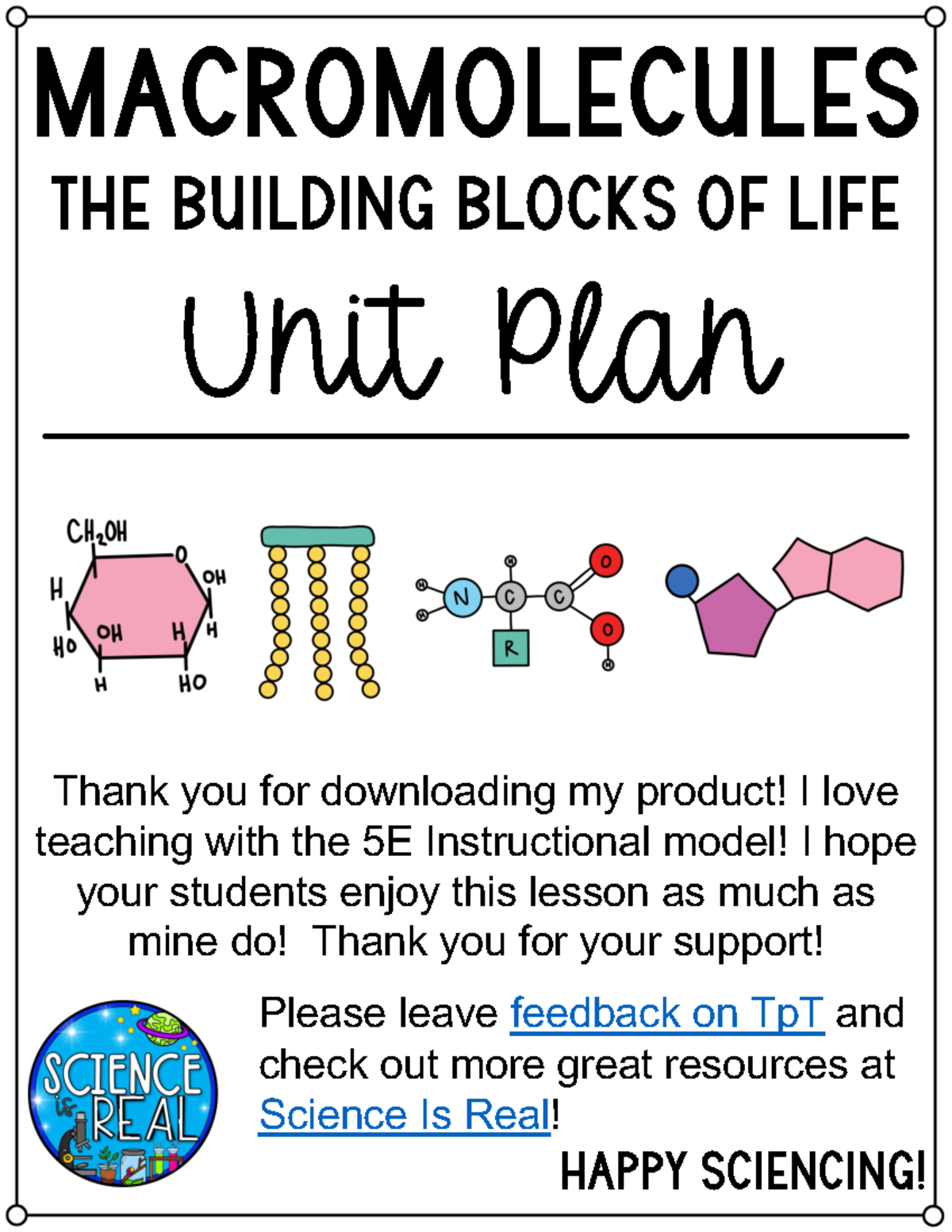
- Carbohydrates: Hexagonal glucose rings made from toothpicks and green grapes.
- Proteins: Multicolored miniature marshmallows representing different amino acids strung onto dried spaghetti sticks.
- Lipids: Licorice ropes acting as fatty acid tails anchored to a marshmallow glycerol head.
Safety note: Always verify camper food allergies before running edible sessions, and keep edible construction materials strictly separated from any non-food crafting supplies.
2. The Heavy-Duty Outdoor PVC and Pool Noodle Set
If you run outdoor relay races or team-building challenges on the camp field, standard tabletop kits will get lost in the grass. Large-scale models built from sliced pool noodles, PVC pipe connectors, and industrial Velcro make biology an active team sport.
Color-code sliced pool noodles by molecule type: blue for nitrogen bases, red for carbon backbones, and yellow for phosphate groups. Campers physically run across the field to grab corresponding monomers and connect them via Velcro straps into massive DNA strands or starch chains.
3. Modular Wooden Bead or Snap-Fit Tabletop Kits
For an indoor discovery lodge or rainy-day science schedule, durable wooden beads or magnetic interlocking blocks offer a reusable, mess-free solution. Color-coded wooden balls with magnetic dowels allow campers to build, break down, and rebuild molecules across multiple camp sessions without generating single-use waste.
The Four Core Building Stations
To run this activity smoothly, divide your camp space into four themed building zones. At each station, campers receive a prompt card, a monomer inventory, and a specific molecular challenge.

Station 1: Carbohydrate Chains (Fueling the Hike)
Start with simple sugars. Campers construct single glucose rings and connect them using dehydration synthesis (represented by removing a designated water token). Connecting two rings yields maltose; linking a dozen rings demonstrates glycogen storage in human muscles or starch in plants. Challenge campers to compare the branched structure of glycogen with the straight, fiber-like structure of plant cellulose.
Station 2: Lipid Construction (Cell Walls and Insulation)
Introduce the structure of triglycerides and phospholipids. Campers construct a glycerol backbone and attach three fatty acid chains. Introduce the difference between saturated fatty acids (straight, packed tightly together like butter) and unsaturated fatty acids (kinked chains that stay fluid like olive oil). For an advanced challenge, have the cabin group work together to build a section of a cell membrane lipid bilayer.
Station 3: Protein Folding (The Camp Machinery)
Proteins present the best tactile building opportunity. Provide campers with 20 distinct monomer tokens representing the 20 biological amino acids, color-coded by chemical property: hydrophobic (water-fearing), hydrophilic (water-loving), and electrically charged.
Campers first string their chosen sequence together into a primary chain. Next comes the folding phase: campers must fold their chain into a compact 3D shape based on simple rules (e.g., all water-fearing tokens must face inward toward the center). This demonstrates how amino acid sequence dictates final 3D enzyme shape.
Station 4: DNA Double Helix (The Instruction Manual)
Campers pair nucleotide monomers using the base-pairing rule: Adenine always pairs with Thymine, and Cytosine always pairs with Guanine. Using twistable pipe cleaners, flexible plastic tubing, or wooden dowels, campers construct two complementary strands and twist them into the iconic double-helix shape.
Gamifying the Builder: Three Camp-Tested Challenges
To keep the energy high and prevent the activity from feeling like school, integrate these friendly competitive formats:
- The Enzyme Speed Assembly: Give each cabin team a specific target protein sequence. Teams race against the clock to locate the correct amino acid monomers from a central supply depot and assemble their enzyme without errors.
- The Nutrition Mystery Box: Hand campers an anonymous nutrition label from common camp foods (peanut butter, energy bars, or sports drinks). Campers deduce which macromolecule dominates the food item and build a scaled representation of its chemical components.
- The Denaturation Showdown: After building intricate protein structures, demonstrate what happens when heat or acid disrupts molecular bonds. Campers simulate heat stress by gently shaking or altering their models, reinforcing why hydration and temperature regulation matter during hot summer days.
Counselor Tips for Smooth Execution
Facilitating an effective science session requires smart preparation. Keep these operational tips in mind:
- Color-code everything consistently: Establish universal color standards across all four stations (for instance, black for carbon, red for oxygen, white for hydrogen, and blue for nitrogen) to avoid confusing campers as they rotate.
- Keep storage organized: Use clear, lidded tackle boxes or sorting bins for all loose components. End each session with a “cleanup inventory check” where cabins earn points for returning complete sets.
- Differentiate by age: For campers aged 7–10, focus primarily on simple repeating chains (carbs and DNA ladders) and broad analogies like train cars. For campers aged 11–15, introduce functional groups, hydrogen bonding, and folding mechanics.
Inspiring the Next Generation of Scientists
A well-planned macromolecule builder activity strips away the intimidating jargon of organic chemistry and replaces it with tactile problem-solving, teamwork, and spatial reasoning. By letting campers construct the foundational elements of life with their own hands, you give them a conceptual toolkit that makes biology intuitive, approachable, and genuinely exciting.