The Untold Power Behind UnitedHealthcare's CEO
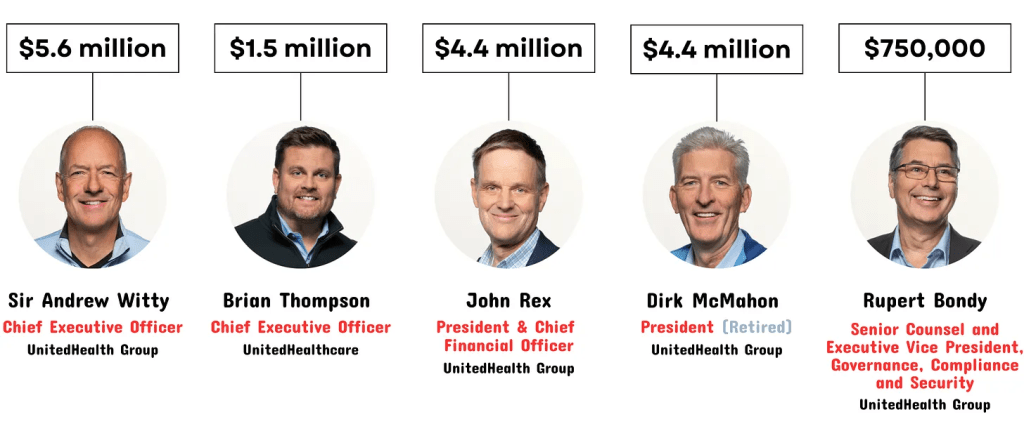
When people think about the American healthcare system, they often picture doctors, hospitals, and pharmaceutical laboratories. Yet, the invisible hand guiding a vast portion of medical care in the United States belongs to corporate boardrooms—specifically, the executive suites of health insurance giants. At the apex of this pyramid sits UnitedHealthcare, the largest health insurer in the nation by market share and revenue. Behind its staggering financial footprint lies a singular question that captivates economists, patients, and policymakers alike: The Untold Power Behind UnitedHealthcare’s CEO – Is Their Worth Real?

To understand the true weight of this office, we have to look past the standard executive compensation packages and examine how corporate scale translates into real-world control over human lives, medical pricing, and clinical availability.
The Anatomy of Corporate Scale
UnitedHealthcare is not just a health insurance company; it is the crown jewel of UnitedHealth Group (UHG), a massive diversified healthcare and wellbeing company. UHG routinely ranks in the top ten of the Fortune 500, out-grossing many sovereign nations. The CEO of UnitedHealthcare sits atop an enterprise that touches tens of millions of American lives through commercial plans, Medicare Advantage, and Medicaid managed care.
This immense scale creates a unique form of administrative gravity. When the CEO sets policy, entire networks of hospitals, physician groups, and pharmaceutical companies must adapt. The power is systemic:
- Network Access: Deciding which doctors are in-network dictates whether a local medical practice thrives or struggles.
- Formulary Control: Determining which drugs receive preferred status directly influences pharmaceutical research, pricing, and patient access.
- Data Monopolization: Through its Optum subsidiary, the parent company manages vast troves of health data, giving leadership unmatched predictive power over market trends.
Decoding the Financial Valuation: Is Their Worth Real?
When critics point to multi-million-dollar compensation packages, stock options, and severance guarantees, public outcry often follows. But from a purely corporate finance perspective, is this immense executive worth real, or is it inflated by market dynamics?
The Argument for Structural Value
From the perspective of institutional shareholders and boards of directors, a CEO managing an enterprise of this magnitude carries risks and responsibilities comparable to running a central bank or a massive defense contractor. A single misstep in regulatory compliance, a catastrophic cybersecurity breach, or a failed multi-billion-dollar acquisition could wipe out shareholder value overnight.
Furthermore, the CEO acts as the chief political and economic lobbyist for the organization, navigating complex federal laws, antitrust scrutiny, and shifting state regulations. Proponents argue that top-tier compensation is necessary to attract talent capable of steering an organization that generates hundreds of billions of dollars annually without collapsing under its own bureaucratic weight.
The Counterargument: Social and Economic Disconnect

Conversely, critics and healthcare reform advocates argue that this financial worth is an artifact of market concentration rather than exceptional individual brilliance. Because the health insurance industry features high barriers to entry and limited true consumer competition in many geographic regions, massive profits are often generated through administrative efficiency, claim denials, and premium optimization rather than revolutionary innovation.
When executive worth is tied to stock performance driven by aggressive cost containment, a fundamental misalignment occurs. The financial reward of the leadership team scales with how effectively medical utilization is managed—which, in clinical terms, often translates to reduced or delayed care for patients.
The Power to Shape Clinical Practice
The most profound yet understated power wielded by UnitedHealthcare’s CEO is the ability to quietly rewrite clinical guidelines across the country. Through automated prior authorization systems, algorithmic claim reviews, and strict policy definitions of "medical necessity," the insurance giant acts as an unacknowledged gatekeeper to modern medicine.
Physicians frequently voice frustration that insurance algorithms override clinical judgment. When a chief executive oversees systems that automate thousands of prior authorization denials daily, they hold the power to alter patient outcomes at scale. A delayed cancer treatment or an unapproved specialist referral has a direct human cost, making the executive's decisions carry moral weight that extends far beyond standard corporate governance.
Navigating Future Regulatory Crosswinds
As public scrutiny intensifies, the future of executive power in health insurance is facing new challenges. Lawmakers on both sides of the aisle are increasingly examining the role of pharmacy benefit managers (PBMs), Medicare Advantage overpayments, and the use of artificial intelligence in claim denials.
For the person leading UnitedHealthcare, the coming years will test whether traditional corporate scaling can survive an era of populism and demands for single-payer reform. The challenge is maintaining profitability while public trust in health insurers remains historically low.
Conclusion
Is the worth of UnitedHealthcare’s CEO real? Financially, yes—the market rewards scale, risk management, and capital allocation with astronomical compensation. But humanely and socially, that worth is deeply contested. The position commands a level of administrative power over American health and longevity that rivals government agencies. Until the structural incentives of the U.S. healthcare system change, the person sitting in that chair will remain one of the most quietly influential figures in modern society.