The Untold Truth Behind Rothschilds’ Billion-Dollar Empire
Introduction

Few family names carry the weight, mystery, and historical significance of the Rothschilds. For over two centuries, this European dynasty has been the subject of intense fascination, inspiring countless conspiracy theories and financial lore. Yet, looking past the myths of shadowy global control reveals a much more compelling reality: the untold truth behind Rothschilds’ billion-dollar empire – it’s not just money.
While the family's accumulated wealth is legendary, their true staying power stems from a masterclass in strategic intelligence, geopolitical foresight, and a tightly controlled family network. This article examines how a single 18th-century Frankfurt merchant family built a multi-generational powerhouse through principles that go far beyond simple asset accumulation.
The Humble Origins in the Frankfurt Ghetto
To understand how the empire was built, we must look back to the mid-1700s in the Jewish ghetto of Frankfurt, Germany. Mayer Amschel Rothschild started humbly, trading rare coins and antiques before transitioning into banking and court-factoring for German nobility.
Mayer Amschel realized early on that survival and growth required more than just capital—it required absolute trust and agility. He positioned himself as an indispensable financial advisor to Prince William of Hesse, managing funds safely during the turbulent era of the Napoleonic Wars.
The Five-Arrow Strategy
Mayer Amschel’s most brilliant move was strategic expansion through his five sons. Instead of keeping the business consolidated in one location, he sent them to establish operations in Europe's most vital financial capitals:
- Amschel: Remained in Frankfurt to manage the German headquarters.
- Salomon: Established a branch in Vienna, Austria.
- Nathan: Moved to London, England, creating N M Rothschild & Sons.
- Calmann (Karl): Opened an office in Naples, Italy.
- James: Founded the Paris branch in France.
This decentralized approach meant the family could operate as a synchronized, international network. If one European nation faced revolution, war, or economic collapse, the other branches could provide liquidity and support. This resilience became the foundation of their enduring empire.
Information as Currency: The Real Secret Weapon
Popular myth often attributes Rothschild wealth to a single dramatic event, such as Nathan Rothschild receiving news of the Battle of Waterloo before anyone else. While the exact details of the Waterloo legend are often exaggerated, the underlying truth is vital: the family understood that information was more valuable than gold.
Long before modern telecommunications, the Rothschilds invested heavily in private couriers, carrier pigeons, fast sailing ships, and a dedicated spy network. Because they received accurate intelligence regarding political developments, crop failures, and military outcomes days—sometimes weeks—ahead of governments and competitors, they could make exceptionally informed financial moves.
This mastery of intelligence allowed them to finance sovereign debts, fund railways across Europe, and stabilize currencies. They were not merely bankers; they were geopolitical architects who greased the wheels of international diplomacy.
Pioneering Global Industrialization
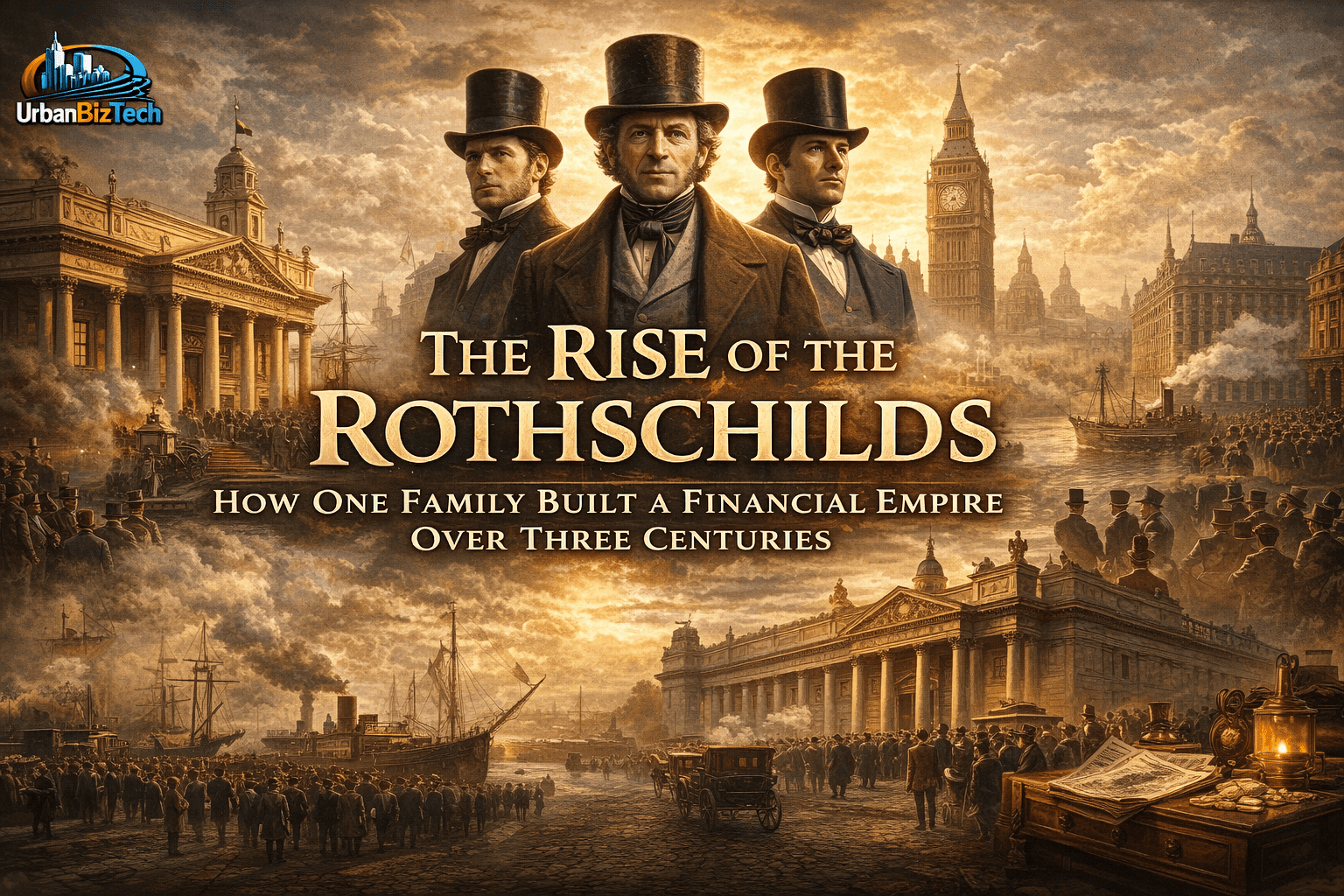
As the 19th century progressed, the family shifted their focus from government loans to industrial enterprise. They realized that the future belonged to steel, coal, logistics, and natural resources.
The Rothschild network financed some of the most ambitious infrastructure projects of the Industrial Revolution:
- Railways: They funded rail networks across France, Austria, and Belgium, unifying fragmented national markets.
- Mining: They invested heavily in mercury mines in Spain (Almadén) and copper mines in the United States, securing vital industrial raw materials.
- Oil: The family played a foundational role in developing Russian oil fields through the Caspian and Black Sea Oil Company, competing directly with Standard Oil.
By controlling the underlying resources that fueled modern economies, they diversified their wealth far beyond traditional banking and currency exchange.
The Power of Unity and Preservation
Money is notoriously difficult to keep across generations. The old adage "shirtsleeves to shirtsleeves in three generations" describes how most fortunes dissipate due to family infighting, extravagant spending, or poor management. The Rothschilds systematically beat these odds.
Strict Governance and Enduring Rules
Mayer Amschel Rothschild left behind a strict will designed to protect the family’s assets and unity. Key tenets included:
- Matrilocal Marriages: To keep wealth within the family and prevent dilution, many Rothschilds married their cousins (endogamy). While modern genetic science looks askew at this practice today, it successfully locked down ownership of the firm for decades.
- Exclusion of Women from Direct Management: Female heirs were generally excluded from direct partnership roles in the business operations, ensuring that control remained centralized among male family members (though women remained vital wealth-holders).
- Discretion and Low Profiles: Unlike modern tech billionaires who court public attention, the Rothschilds historically preferred absolute discretion, operating quietly behind the scenes of power.
These strict internal controls ensured that the family acted as a cohesive unit rather than a fractured collection of wealthy heirs.
Philanthropy and Cultural Legacy
Another overlooked aspect of the dynasty is their deep commitment to philanthropy and institution-building. Throughout the 19th and 20th centuries, the family funded hospitals, schools, scientific research institutions, and massive public housing projects across London, Paris, and Frankfurt.
They were also avid art collectors, donating priceless collections to museums like the Louvre and the National Gallery in London. By anchoring their family name to cultural preservation, scientific advancement, and public welfare, they successfully transitioned their image from ruthless financiers to respected societal pillars.
Conclusion
The story of the Rothschild family is frequently obscured by conspiracy theories and internet exaggeration. However, looking past the myths reveals a far more instructive reality. The untold truth behind their enduring success is that money is merely a byproduct of deeper principles: unmatched intelligence networks, cross-border diversification, rigorous family governance, and a long-term view of history. Ultimately, the Rothschild empire endured not just because of what they owned, but because of how they thought.