The Vatican’s Financial Miracle: Why Its Net Worth Defies Logic
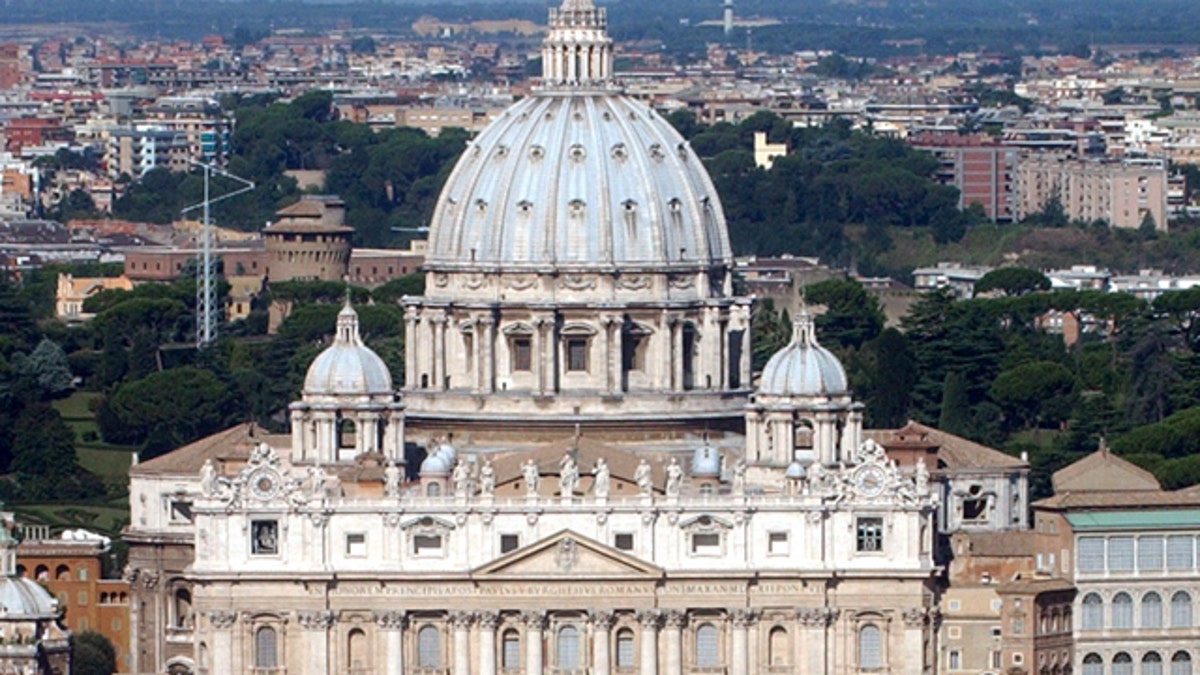
For centuries, pilgrims have walked through St. Peter’s Square marveling at Bernini’s colonnades and Michelangelo’s dome, rarely pondering the balance sheets behind the basilica. Yet beneath the spiritual governance of the world’s 1.3 billion Catholics lies an economic apparatus that has baffled economists, secular critics, and devout believers alike. Examining The Vatican’s Financial Miracle: Why Its Billionaire Net Worth Defies Logic and Faith requires peeling back layers of sovereign secrecy, historical windfalls, institutional real estate, and high-stakes geopolitical maneuvering.

How does an institution founded on Christ’s mandate of voluntary poverty command an international asset empire valued in the billions? The answer lies not in mystical accumulation, but in a century-long transformation from near-bankruptcy to sovereign financial power.
The Architecture of Holy Wealth: Dissecting the Balance Sheets
One of the primary reasons public discourse surrounding Vatican finances descends into myth is the mistaken assumption that the Roman Catholic Church operates under a single, unified treasury. In institutional reality, Vatican money is divided across three distinct, compartmentalized silos:
- The Holy See (Santa Sede): The sovereign juridical entity and central government of the Catholic Church. It covers the costs of the Roman Curia, diplomatic nunciatures across 180+ countries, and communication networks like Vatican News. It routinely runs an operational deficit.
- The Vatican City State: The physical 108-acre sovereign territory. It generates its own revenue primarily through museum admissions, postage stamps, coin sales, and souvenirs, traditionally operating at a healthy surplus that helps offset Holy See losses.
- The Institute for the Works of Religion (IOR): Commonly referred to as the Vatican Bank. Founded in 1942, the IOR is not a central bank or a commercial high-street institution; it manages deposits and investment accounts for dioceses, religious congregations, and curial personnel.
Overseeing the physical assets is the Administration of the Patrimony of the Apostolic See (APSA). APSA functions as the Vatican's sovereign wealth manager, holding the title deeds to more than 5,000 real estate properties spanning Rome, Paris, London, and Geneva.
The 1929 Mussolini Deal: The Foundation of Modern Catholic Capital
Contrary to the belief that church wealth accumulated uninterrupted from the Middle Ages, the Papacy entered the early 20th century in dire financial straits. Following the 1870 capture of Rome by Italian troops, the Papal States were dissolved, stripping the Holy See of its territory, tax base, and sovereign revenues.
The financial resurrection arrived on February 11, 1929, with the signing of the Lateran Pacts. In exchange for formal recognition of the Italian state, Benito Mussolini’s government compensated the Holy See with 750 million lire in cash and 1 billion lire in 5% consolidated state bonds. In 1929 terms, this was an astronomical fortune.
The Nogara Doctrine
Pope Pius XI made a historic decision: he placed this capital into the hands of a lay engineer and financier named Bernardino Nogara. Nogara agreed to direct the newly formed Special Administration under one strict condition: he would not be bound by religious dogma or usury restrictions when investing church capital.
Nogara practiced disciplined modern diversification. He bought major shareholdings in utilities, banking, insurance, and manufacturing across Europe. More crucially, he poured vast sums into premier residential and commercial real estate across Rome, Paris, and the United Kingdom. By the time of Nogara's death in 1958, the Lateran compensation had multiplied tenfold, creating the foundation of the modern Vatican asset base.
The Vatican’s Financial Miracle: Why Its Billionaire Net Worth Defies Logic and Faith

The enduring paradox of the Holy See’s financial footprint is ideological as much as it is numerical. In Matthew 19:21, Jesus famously tells the rich young ruler to sell everything and give it to the poor. Yet centuries later, the institutional chair of Saint Peter commands sovereign investment portfolios, gold bars held at the U.S. Federal Reserve, and prime retail storefronts on London’s New Bond Street and Paris’s Boulevard Saint-Germain.
From an economic perspective, the setup defies conventional logic:
- Asset Rich, Liquidity Poor: The Vatican's balance sheet lists priceless artistic, cultural, and historic treasures at an accounting value of exactly one symbolic euro. The Sistine Chapel, the Pietà, and millennia of archival documents cannot be liquidated, leveraged, or converted to cash.
- Absence of Direct Taxation: Unlike modern nation-states, the Vatican cannot levy personal income taxes, property taxes, or corporate taxes on a domestic workforce.
- Structural Operational Deficits: The Holy See regularly operates with structural deficits between €30 million and €70 million annually. It employs roughly 3,000 to 5,000 lay workers and clergy, carrying massive, underfunded defined-benefit pension liabilities.
The "miracle" of its continued solvency relies on non-standard capital flows: dividend returns from APSA’s sovereign investments, annual profits remitted by the Vatican Bank, real estate lease yields, and annual charitable contributions from the global faithful via Peter’s Pence (Obolo di San Pietro).
Scandals, Shadows, and the London Real Estate Debacle
Unchecked sovereign secrecy, decentralized decision-making, and an absence of external oversight periodically led to disastrous financial entanglements. From the collapse of Banco Ambrosiano and the mysterious death of Roberto Calvi in 1982 to money-laundering allegations at the IOR in the early 2000s, financial opacity routinely clouded the Vatican's moral standing.
The definitive reckoning emerged with the infamous Sloane Avenue affair in London. Between 2014 and 2018, the Holy See's Secretariat of State invested over €350 million—much of it drawn from credit lines secured by Peter’s Pence donations—into a former Harrods warehouse in London’s Chelsea district. Handled through speculative middlemen and opaque offshore trusts, the deal resulted in catastrophic losses exceeding €100 million.
The resulting 2021–2023 Vatican mega-trial ended with the historic criminal conviction of Cardinal Angelo Becciu for embezzlement and fraud, marking the first time a prince of the Church faced judgment by a secular-style Vatican tribunal for financial wrongdoing.
The Francis Reformation: Centralization and Transparency
Faced with systemic loss of credibility and impending insolvency in curial pension funds, Pope Francis initiated the most radical financial overhaul in modern papal history:
- Creation of the Secretariat for the Economy (SPE): Established in 2014, this authority acts as an independent auditor and comptroller over all curial spending.
- Deprivation of Independent Wallets: Individual departments, including the Secretariat of State, were stripped of their private investment accounts; all liquid funds were ordered transferred to APSA.
- Consolidated Public Balance Sheets: For the first time, APSA and the Holy See publish comprehensive annual accounts detailing property holdings, commercial yields, and portfolio allocation.
- IOR Overhaul: The Vatican Bank closed thousands of dormant or non-compliant accounts, adopting strict anti-money-laundering (AML) standards reviewed by the Council of Europe's Moneyval committee.
A Wealth Bound to Mission, Not Liquidity
Ultimately, analyzing Vatican wealth requires separating sensationalist claims from institutional balance sheets. The Holy See is neither a bankrupt museum nor a trillion-dollar corporate conglomerate. Its estimated net worth—ranging between €3 billion and €5 billion in liquid assets, equities, and real estate—operates under constraints unique to a sovereign religious entity.
The Vatican's survival across centuries of war, expropriation, and financial crisis remains a study in sovereign asset preservation. By professionalizing its management and shedding the secrecy that permitted past scandals, the Holy See aims to ensure that its financial stewardship finally aligns with the moral mission it proclaims to the world.