The Wealth Equation Is Broken—Here’s How to Fix It
For decades, conventional financial advice rested on a remarkably simple premise: go to school, land a stable job, spend less than you earn, invest the difference in broad-market index funds, and wait for compound interest to carry you across the finish line at age 65. But in today’s economic landscape, millions of hard-working professionals are realizing that the wealth equation is broken—here’s how to fix it.
Between skyrocketing housing costs, persistent inflation, and wages that fail to keep pace with the price of productive assets, the standard playbook feels increasingly disconnected from reality. Simply working harder and cutting back on small daily luxuries does not generate genuine financial independence anymore. To build lasting security, we need to diagnose why the old math failed and rebuild the wealth equation from the ground up.
The Traditional Math (and Why It Collapsed)
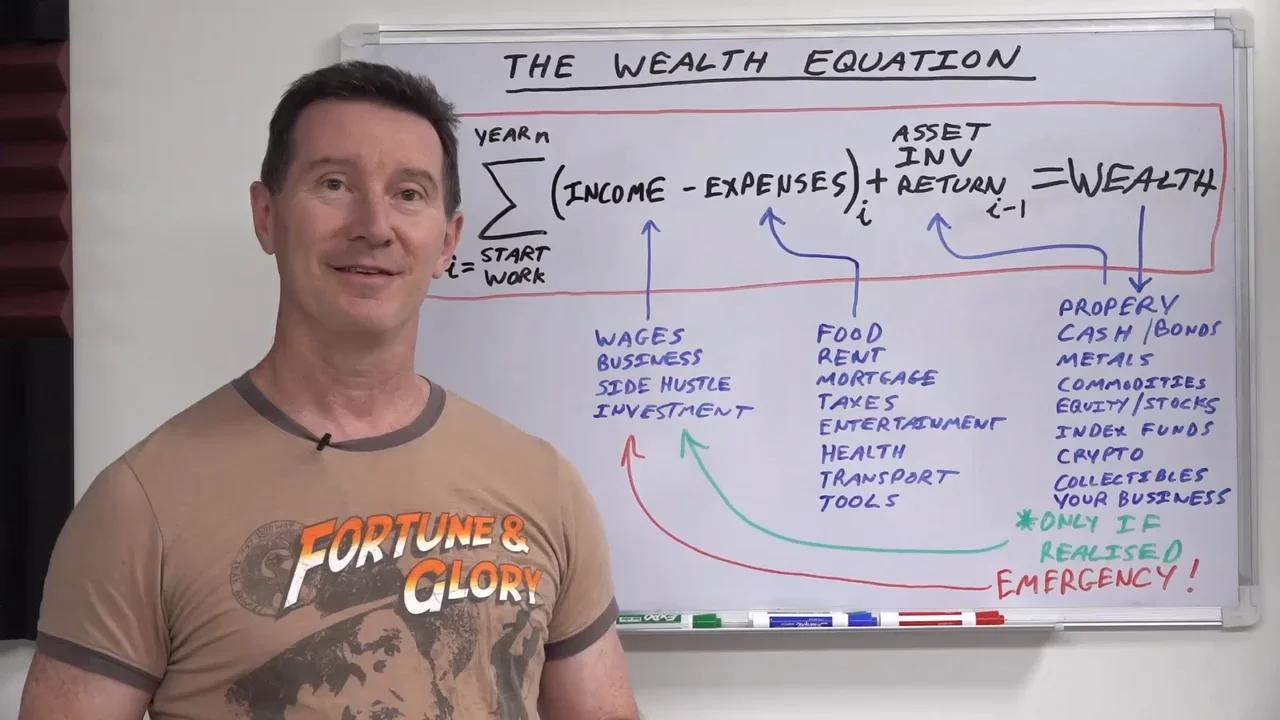
The legacy model for personal finance can be expressed as a linear formula:
Wealth = (Income − Expenses) × Time × Compound Interest
While mathematically sound in a vacuum, this equation makes several hidden assumptions that no longer hold true for modern earners:
- Asset prices outpace wages: The median home price in the United States has outgrown median family income by several multiples over the last four decades. Saving a fixed percentage of income to buy real estate is mathematically far harder than it was in 1980.
- Linear time trading: Relying on an hourly wage or annual salary means your income is capped by the number of hours you can physically work. When the cost of living compounds faster than annual 3% merit raises, your real purchasing power declines.
- The inflation tax: Official Consumer Price Index (CPI) figures often understate the inflation rate of the specific assets people need to thrive—namely housing, healthcare, higher education, and quality equities.
If you rely strictly on the old equation, you are attempting to outrun an exponential increase in living costs using linear inputs. It is the financial equivalent of running up a downward-moving escalator.
The Wealth Equation Is Broken—Here’s How to Fix It
To establish true financial resilience, we have to swap out linear inputs for asymmetric outputs. The modern wealth equation looks very different:
Wealth = (Asymmetric Equity × Leverage) / Structural Fixed Costs
Instead of obsessing over reducing minor discretionary expenses, this revised framework focuses on expanding non-linear upside while structurally optimizing major cost centers. Here is how you put the new formula into practice.
1. Shift from Selling Time to Owning Equity
Nobody builds life-changing wealth exclusively by trading their calendar for a paycheck. High earners often fall into the trap of increasing their lifestyle to match their salary without ever accumulating meaningful ownership.
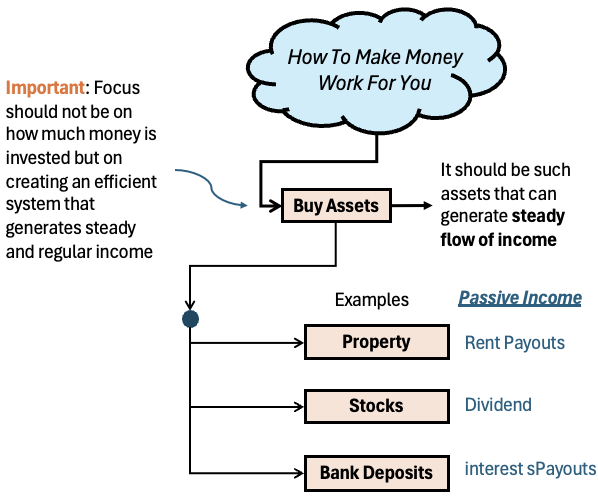
Equity represents a claim on future cash flows and enterprise value. It detaches your earnings from your personal labor. Modern equity takes multiple forms:
- Company stock or equity grants: Negotiating equity packages or participating in employee stock purchase programs (ESPPs).
- Business ownership: Building a profitable micro-enterprise, consultancy, or e-commerce asset that operates independently of your daily hours.
- Cash-flowing assets: Owning commercial or residential real estate, intellectual property, or royalty-generating digital products.
2. Deploy Modern, Permissionless Leverage

Historically, wealth creation required two classical forms of leverage: people (managing employees) and capital (investing large sums of money). Both required permission from gatekeepers like banks, venture capitalists, or corporate boards.
Today, the most accessible leverage is permissionless. You can build and deploy assets without asking anyone’s approval:
- Code and Software: Developing tools, automation scripts, or software products that work 24/7 with near-zero marginal replication costs.
- Media and Content: Creating articles, newsletters, videos, or courses that build trust and distribute your expertise at scale.
- Automated Systems: Implementing workflows that handle sales, marketing, and onboarding without human intervention.
Permissionless leverage allows a single person to generate economic output that previously required an entire department, fundamentally warping the income side of the wealth equation in your favor.
3. Redefine the Denominator: Attack Structural Costs
Financial gurus often lecture people about canceling streaming services or skipping coffee. This approach addresses the wrong variables. Cutting small joys creates mental fatigue without moving the needle on your net worth.
The denominator of the wealth equation is driven by the "Big Three":
- Housing: The largest single expense for most households. Strategies like house hacking, relocating to lower-cost regions, or refinancing dynamically can save thousands every month.
- Transportation: Purchasing reliable, depreciated used vehicles with cash instead of carrying high-interest loans on rapidly depreciating luxury cars.
- Taxes: The single largest expense over your lifetime. Moving from a W-2 framework to an equity- or business-oriented framework unlocks tax incentives, deductions, and favorable long-term capital gains treatments.
Lowering your structural baseline dramatically lowers the "escape velocity" required to achieve financial independence.
4. Accelerate the Velocity of Capital
The conventional strategy tells you to deposit money into a retirement account and leave it untouched for 35 years. While passive index investing remains a valuable baseline for long-term savings, modern wealth creation relies on the velocity of capital—the speed at which invested capital returns to you so it can be deployed into another asset.
For example, real estate investors use the BRRRR method (Buy, Rehab, Rent, Refinance, Repeat) to recycle the same pool of capital across multiple properties. Digital entrepreneurs reinvest free cash flow from an agency into building high-margin software. Keeping capital active and compounding across multiple uncorrelated vehicles reduces dependence on volatile public markets.
The Ultimate Metric: Time Sovereignty
Perhaps the most broken element of the old wealth equation is the finish line. Achieving an arbitrary net worth milestone at age 67 offers little consolation if your best physical and mental years were sacrificed in an office cubicle.
Wealth is not merely a balance sheet figure; it is the degree of agency you have over your daily schedule. By replacing a linear savings strategy with equity, modern leverage, and an attack on structural overhead, you build a self-sustaining system that buys back your time decades ahead of schedule.
Stop trying to fix a modern economic challenge with outdated financial mechanics. When you realign your financial approach to match how value is actually captured today, the equation starts working for you instead of against you.