This Is Why Bobby Althoff’s Leak Shocked the Tech World Immediately
When synthetic media breaches mainstream culture, the fallout is swift—and this is why Bobby Althoff’s leak shocked the tech world immediately, sending engineers, platform trust-and-safety officers, and lawmakers scrambling for answers. In early 2024, an explicit video allegedly featuring the viral podcast host began circulating across social media platforms like X (formerly Twitter), Telegram, and Reddit. Within hours, it became clear that the video was not a hacked personal recording, but an entirely fabricated deepfake produced with cutting-edge generative artificial intelligence.

While celebrity scandals are common on the internet, this incident struck a nerve deep inside Silicon Valley. It demonstrated that synthetic media had crossed a dangerous threshold: from obvious, uncanny parodies to photorealistic, weaponized digital impersonation that existing moderation infrastructure was completely unprepared to contain.
The Incident: A Fabricated "Leak" in an Era of Hyper-Realism
Bobbi Althoff, who shot to fame in 2023 with her deadpan, awkward interview style on The Really Good Podcast, suddenly found her likeness plastered across millions of feeds. Bad actors packaged the synthetic video as an authentic celebrity "leak," a framing that capitalized on tabloid curiosity to trigger instant algorithmic amplification.
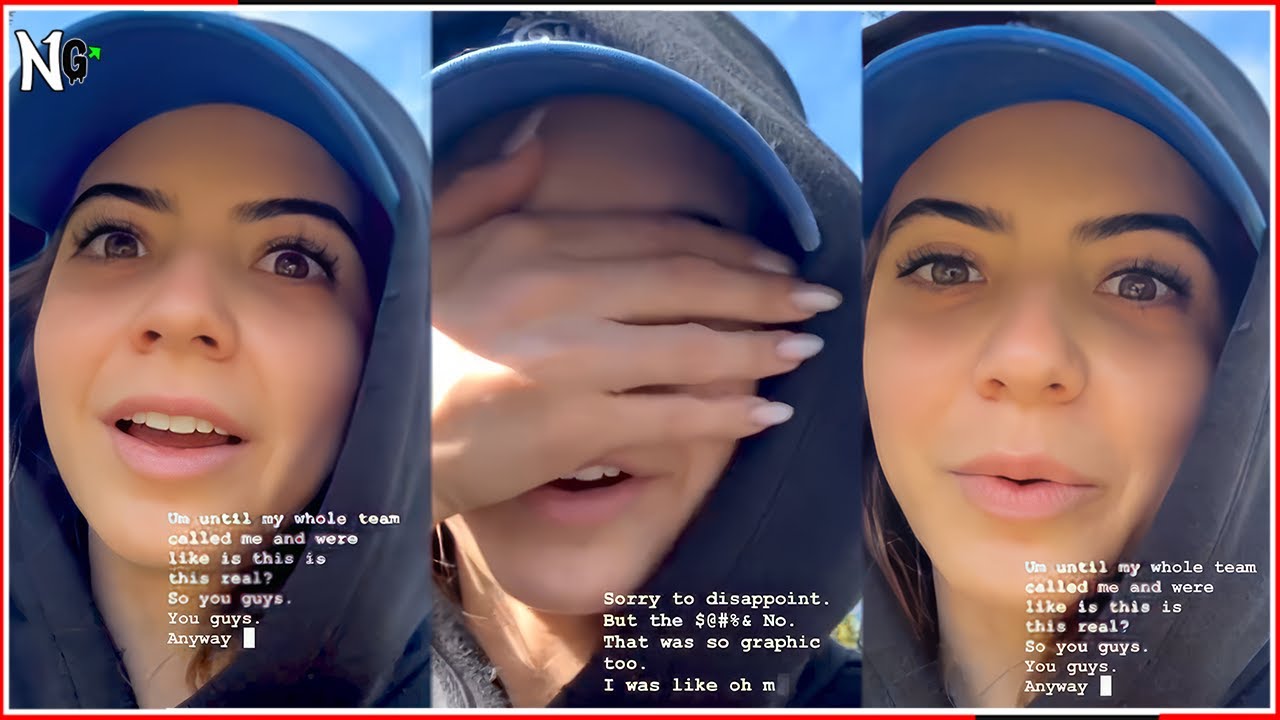
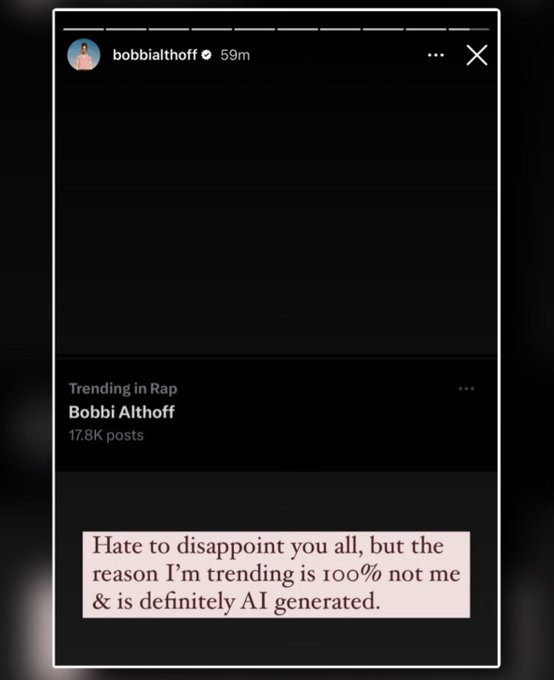
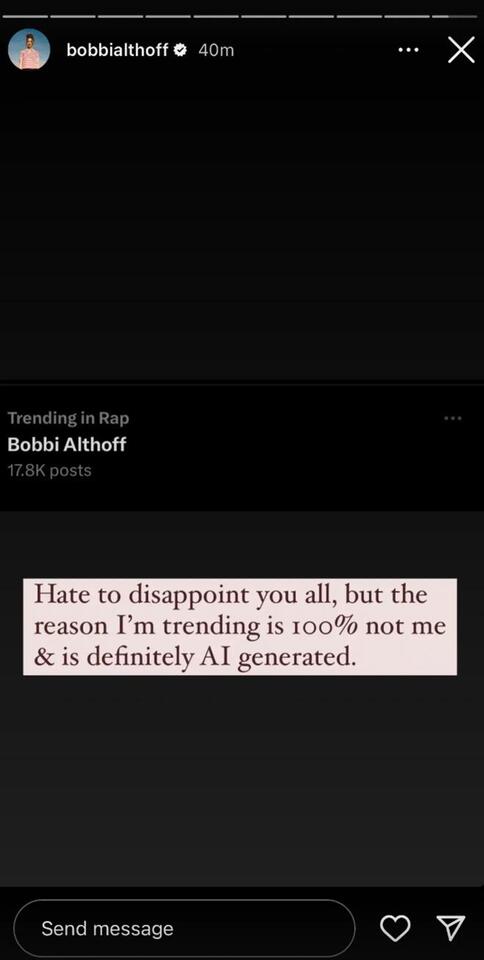
Althoff addressed the video directly on her social channels, publicly debunking it as a total fabrication and sharing the emotional violation of seeing her identity hijacked. But by the time she spoke, the video had already achieved viral velocity. For the tech sector, the shock was not about celebrity gossip; it was about the mechanics of the deception. The video demonstrated how easily modern generative AI tools could bypass safeguards to manufacture non-consensual sexual content (NCSC) with chilling fidelity.
This Is Why Bobby Althoff’s Leak Shocked the Tech World Immediately
The tech industry's intense reaction stemmed from a confluence of systemic vulnerabilities that the incident laid bare in real time. Several critical factors explain why engineers, policy researchers, and platform executives viewed this event as an urgent crisis.
1. The Quantum Leap in Generative Video Fidelity
Early deepfakes were notoriously flawed. They suffered from telltale artifacts: unnatural blinking, blurry jawlines, inconsistent lighting, and warped backgrounds. Skilled viewers could spot them instantly, and automated computer vision models could easily flag the visual inconsistencies.
The Althoff incident demonstrated that those days are over. Recent advancements in latent diffusion models, neural rendering, and facial reconstruction have largely eliminated those digital tells. The fabricated video featured realistic skin textures, accurate specular highlights, and seamless lip-synchronization. The technology had democratized to the point where consumer-grade GPUs or cloud-hosted open-source models could produce studio-grade forgery in minutes.
2. The Weaponization of Public High-Definition Data
Podcast creators represent a unique goldmine for bad actors training synthetic models. A successful creator like Althoff produces dozens of hours of crystal-clear 4K video footage featuring consistent lighting, dynamic angles, diverse micro-expressions, and high-fidelity vocal tracks. The leak proved that public video content can be weaponized against digital creators, turning their professional output into the exact training data used to violate their privacy.
3. The Total Failure of Algorithmic Moderation
Major social networks rely heavily on automated systems to catch illicit material before it spreads. However, these systems rely primarily on two mechanisms:
- Perceptual Hashing (PhotoDNA, PDQ): Comparing uploaded media against existing databases of known harmful content.
- Keyword and Metadata Filtering: Flagging suspicious search queries and text tags.
Neither approach works against zero-day generative deepfakes. Because the synthetic video was novel, no existing perceptual hash existed. Malicious uploaders easily bypassed text filters by using coded language, acronyms, and evasive file names. The video racked up millions of impressions before human review teams could intervene, exposing a massive blind spot in automated platform safety.
The Platform Vulnerability: Velocity vs. Enforcement
The Althoff controversy highlighted the severe asymmetry between the speed of viral distribution and the latency of content moderation. Once synthetic media enters decentralized communication networks, centralized platforms struggle to contain it.
- Incubation: The synthetic asset is initially generated and tested on private message boards or decentralized channels like Telegram.
- Arbitrage on Public Platforms: Bot networks and opportunistic accounts repost snippets to major platforms like X, baiting engagement algorithms.
- Network Cascading: Normal users quote-tweet, comment, and re-upload screen recordings, mutating the original file and creating dozens of unique hash variants.
- Reactive Enforcement: By the time trust-and-safety personnel issue a manual takedown, hundreds of mirrors exist across the open web.
This structural friction proved to platform architects that reactive moderation is obsolete against AI-powered distribution.
Catalyst for Legal and Policy Reform
Occurring shortly after similar malicious deepfakes targeted Taylor Swift, the Althoff leak accelerated a bipartisan push in Washington to establish federal civil and criminal penalties for non-consensual synthetic media.
Chief among these initiatives is the DEFIANCE Act (Disrupt Explicit Forged Images and Non-Consensual Edits Act), designed to give victims of non-consensual deepfake pornography a direct federal civil cause of action against both the creators and individuals who knowingly distribute the material. The incident also reignited debates around Section 230 of the Communications Decency Act, with legal scholars questioning whether platforms should retain broad immunity if they fail to maintain proactive measures against non-consensual synthetic media.
Technical Solutions Under Scrutiny
In response to the controversy, software architects and standards bodies are accelerating technical countermeasures, though each faces significant hurdles:
- Content Provenance (C2PA): The Coalition for Content Provenance and Authenticity advocates for cryptographically signing images and videos at the hardware level during capture. However, malicious actors can easily strip metadata before publication.
- Adversarial Data Poisoning: Tools like Nightshade and Glaze allow creators to embed imperceptible pixel perturbations into their public videos, causing AI models to misinterpret the visual data during training.
- Deepfake Detection APIs: Platforms are integrating machine-learning detectors that search for biological anomalies, such as micro-vascular pulse patterns (photoplethysmography) that synthetic models fail to reproduce accurately.
The Lasting Impact on the Creator Economy
The synthetic video targeting Bobbi Althoff marked a definitive turning point in the digital age. It punctured the illusion that deepfake victimization was an edge-case threat reserved for global heads of state or niche internet corners. Instead, it proved that anyone with a high-resolution web presence can have their likeness stolen, simulated, and circulated to millions within a few hours.
For the tech world, the incident served as an undeniable message: generative technology had advanced faster than the ethical frameworks and technical guardrails meant to govern it. Closing that gap is no longer just an academic exercise—it is an existential requirement for the future of digital trust.