Top Benefits of Machine Learning in Business & Tech
Introduction to Machine Learning

Machine learning (ML) has rapidly evolved from a theoretical academic discipline into the operational backbone of modern enterprises. By allowing software applications to become more accurate at predicting outcomes without being explicitly programmed, ML transforms raw data into actionable intelligence. Organizations across healthcare, finance, retail, and logistics now rely on these algorithms to streamline operations and unlock new revenue streams. Understanding the core benefits of machine learning is essential for any business leader or technologist looking to remain competitive in a data-driven world.
1. Automation of Complex Processes
Traditional software automation follows rigid, rule-based instructions. If a process encounters a scenario outside those rules, it fails or requires human intervention. Machine learning changes this dynamic by enabling systems to learn from experience and handle variability.
From automated invoice processing to intelligent routing in supply chains, ML algorithms can categorize unstructured data, verify documents, and make operational decisions at scale. This drastically reduces the time spent on repetitive administrative tasks, allowing human workers to focus on strategic, creative problem-solving.
2. Advanced Predictive Analytics
Hindsight tells you what happened, but foresight tells you what is about to happen. Predictive analytics is one of the most powerful capabilities enabled by machine learning models.
By analyzing historical patterns, current market conditions, and real-time inputs, ML models forecast future trends with remarkable accuracy. Examples include:
- Financial forecasting: Detecting fraudulent transactions before they clear.
- Retail demand planning: Predicting which products will sell out during specific seasons.
- Predictive maintenance: Anticipating industrial machinery failure before it causes costly downtime.
3. Hyper-Personalization at Scale
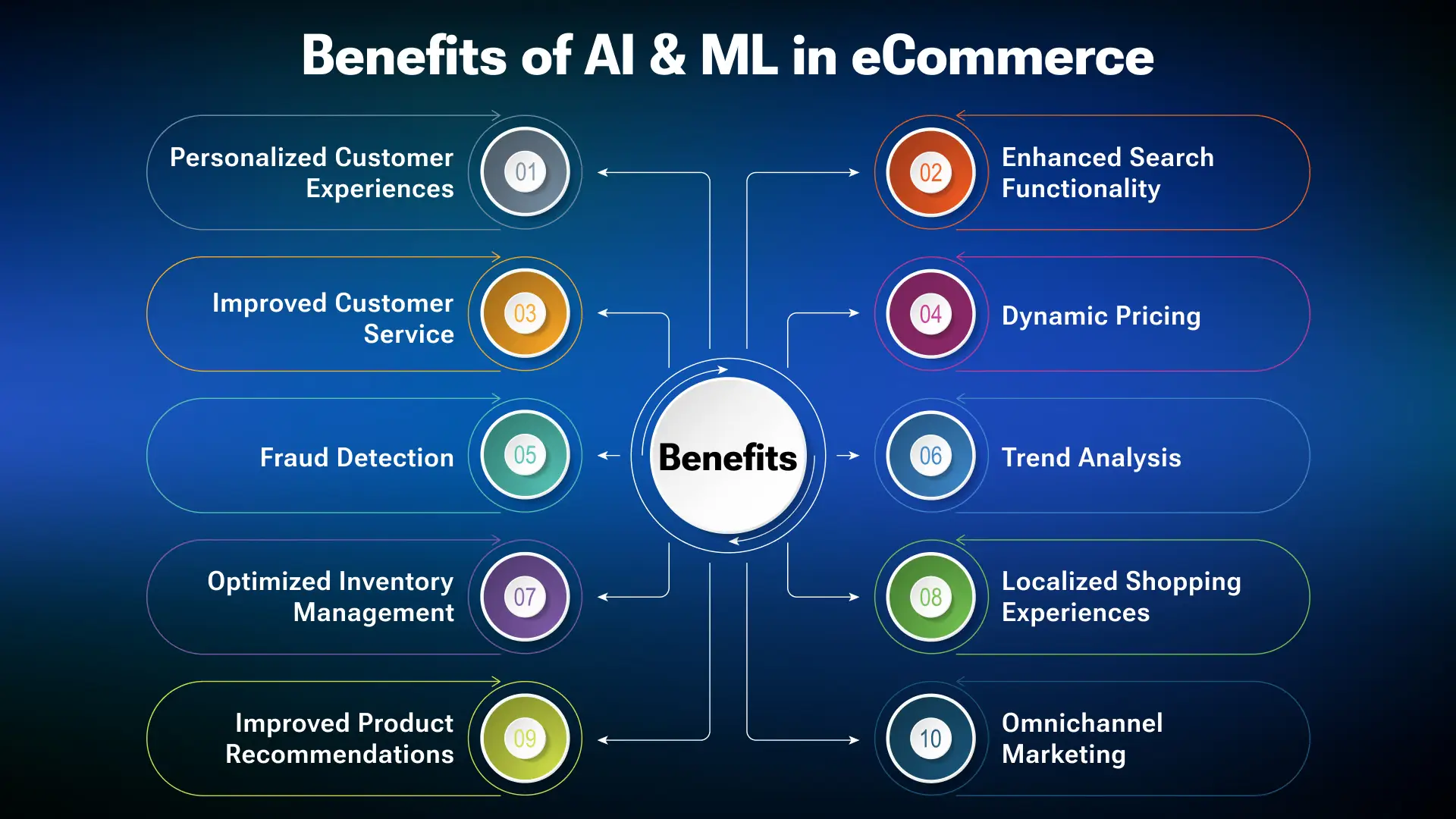
Consumers today expect tailored experiences. Whether they are shopping online, streaming music, or browsing a news portal, generic recommendations no longer suffice. Machine learning powers the recommendation engines that drive modern customer engagement.
Algorithms continuously analyze user behavior, clickstream data, purchase history, and demographic information to deliver real-time personalization. Streaming giants and e-commerce leaders use these insights to serve individual users with hyper-relevant content, boosting conversion rates and fostering long-term brand loyalty.
Video: 29 Kills!! Benedetta Offlane Monster!! - Build Top 1 Global Benedetta ~ MLBB
4. Continuous Improvement and Adaptability
Static software degrades in value over time as business environments change, requiring expensive manual updates. Machine learning systems, conversely, improve organically over time.
Because these algorithms are trained on incoming data, they adapt dynamically to shifting consumer behaviors, emerging market trends, and new operational bottlenecks. This self-optimizing nature ensures that predictive models and automated pipelines stay relevant without constant human maintenance.
5. Uncovering Insights in Big Data
The sheer volume of data generated daily is impossible for human analysts to process manually. Big data holds the answers to critical business questions, but it remains locked away in unstructured formats like emails, customer service logs, social media posts, and sensor telemetry.
Natural Language Processing (NLP) and computer vision—two specialized branches of machine learning—enable systems to read text, interpret images, and extract meaningful patterns from unstructured data pools. This gives executives a 360-degree view of their operations, customer sentiment, and market positioning.
6. Enhanced Cybersecurity and Fraud Detection
Cyber threats are increasingly sophisticated, often bypassing traditional rule-based firewalls and security protocols. Machine learning provides a proactive defense mechanism against modern cyberattacks.
ML models establish a baseline of normal network traffic and user behavior. When an anomaly occurs—such as an unusual login attempt from a foreign IP address or abnormal data exfiltration—the system flags or neutralizes the threat instantly. This real-time detection minimizes the window of exposure and protects sensitive enterprise assets.
Conclusion
The integration of machine learning into business operations is no longer optional for industry leaders; it is a fundamental driver of efficiency, innovation, and growth. By automating routine workflows, predicting future trends, and delivering personalized customer experiences, ML empowers organizations to do more with less. As algorithms become more accessible and compute power more affordable, the strategic advantages of machine learning will only continue to expand.