Top Synonyms of Jargon and How to Use Them
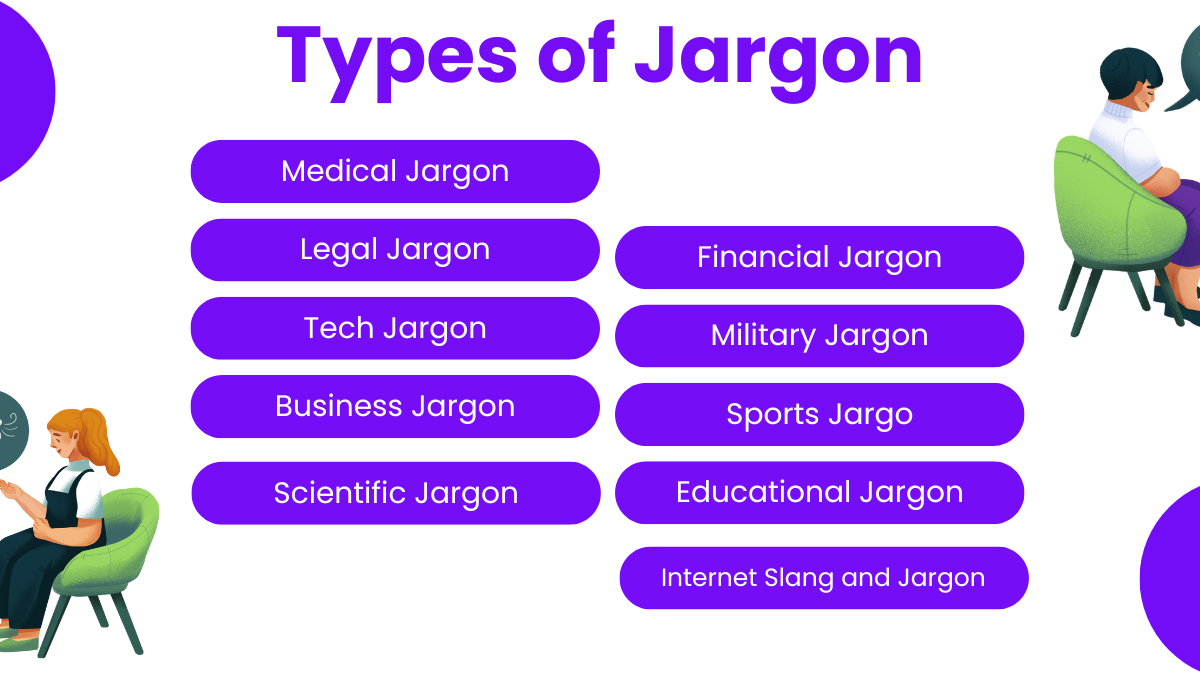
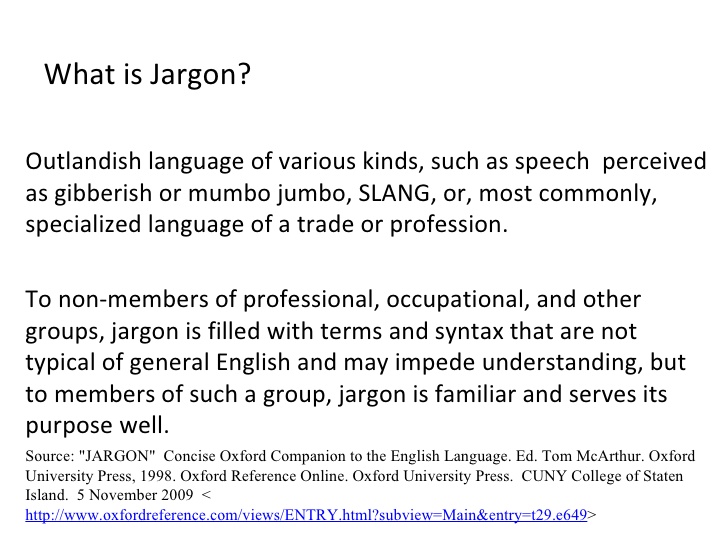
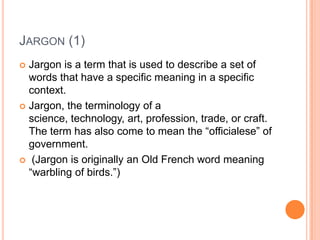
Language changes dramatically depending on who is speaking and who is listening. When specialists converse within their field, they rely on specialized shorthand to convey complex ideas efficiently. In other contexts, that same specialized language feels impenetrable, alienating, or deliberately pretentious. Depending on your intent and tone, searching for synonyms of jargon requires more than a simple swap in a thesaurus; it requires understanding the subtle nuances between neutral trade terms, informal group talk, and frustrating administrative double-talk.

Whether you want to describe a doctor's precise medical vocabulary or criticize a corporate manager's buzzword-filled presentation, choosing the right word sharpens your critique or clarifies your praise. Below, we break down the most useful alternatives to "jargon" based on tone, context, and nuance.
Formal Synonyms of Jargon for Clear Writing
If you are writing an academic paper, an essay, or a professional report, you may want to refer to specialized speech without implying that it is confusing or low-value. In these cases, avoid terms that carry negative baggage. Here are the best formal and neutral alternatives:
- Terminology: This is the most objective and common substitute. It refers to the technical or specialized terms used in a business, art, science, or subject. Unlike "jargon," which often implies unnecessary complexity, "terminology" simply denotes accuracy. Example: "Medical terminology ensures precise communication between surgeons."
- Lexicon: Technically referring to a dictionary or the complete vocabulary of a language, "lexicon" also describes the specialized vocabulary of a specific group, field, or activity. Example: "Terms like 'bull market' and 'liquidity' form the bedrock of the financial lexicon."
- Parlance: This word refers to a particular way of speaking, especially among a specific group or profession. It is frequently used in the prepositional phrase "in [field] parlance." Example: "In legal parlance, the word 'consideration' refers to value exchanged, not thoughtful reflection."
- Nomenclature: Best suited for scientific, taxonomic, or highly formal contexts, nomenclature refers to an organized system of naming things. Example: "Chemical nomenclature follows strict international conventions."
- Idiom: While often understood as a figurative expression (such as "kick the bucket"), idiom also means the distinct language, style, or dialect characteristic of a people, region, or community of practice.
Informal and Colloquial Alternatives
In everyday conversation, technical jargon is often referred to with lighter, more casual terms. These words suggest a shared communal vocabulary rather than formal institutional barriers.
- Lingo: Perhaps the most common conversational synonym, "lingo" refers to the vocabulary characteristic of a group, job, or hobby. It carries a slightly playful or offhand connotation. Example: "It took me months to learn the technical lingo used by the software developers."
- Shop Talk: This compound noun refers specifically to conversations about one's occupation, typically when conducted during leisure time or outside working hours. Example: "Let's go out for dinner and agree to leave the shop talk behind."
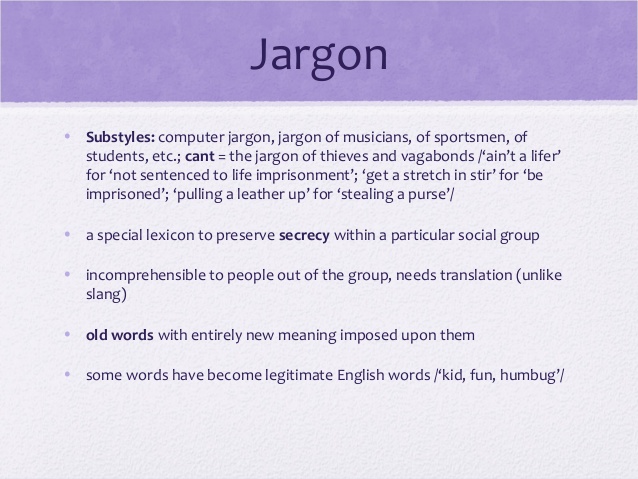
- Slang: Although linguists distinguish slang (very informal language that usually originates in subcultures) from technical jargon, people frequently use them interchangeably when referring to insular group speech.
- Argot: Sitting between formal and colloquial, "argot" historically referred to the secretive slang used by criminals to prevent outsiders from understanding them. Today, it describes any niche, idiosyncratic vocabulary adopted by a subculture or tight-knit group.
Critical Synonyms: When Jargon Obscures Meaning
Very often, people search for synonyms of jargon because they are irritated by language designed to impress rather than inform. If your goal is to call out language that is needlessly convoluted, manipulative, or pretentious, these words carry the exact critical bite you need:
- Gobbledygook: Coined in the 1940s by an American politician to describe dense bureaucratic writing, "gobbledygook" captures language that is so bloated and circuitous that it sounds like the senseless gobbling of a turkey. Example: "The insurance policy was written in incomprehensible bureaucratic gobbledygook."
- Buzzwords: This term refers specifically to trendy, vague business or technical phrases used to sound cutting-edge without conveying substance. Example: "The presentation was stuffed with buzzwords like 'synergy,' 'paradigm shift,' and 'core competency.'"
- Doublespeak: Inspired by George Orwell's concepts of "doublethink" and "newspeak," doublespeak describes language that deliberately obscures, disguises, distorts, or reverses the meaning of words. Example: "Calling layoffs 'workforce optimization' is pure corporate doublespeak."
- Mumbo Jumbo: This idiom describes language or ritual that appears mysterious, esoteric, or nonsensical, usually intended to confuse or baffle the listener. Example: "Don't try to baffle me with legal mumbo jumbo; tell me what the contract actually means."
- Cant: A traditional term denoting hypocritical, pious, or insincere talk, especially moral, religious, or political rhetoric repeated mechanically without genuine belief.
- Psychobabble: A targeted term for psychological or therapeutic terms used casually, incorrectly, or excessively in daily life to sound emotionally profound.
Jargon vs. Slang vs. Argot: Understanding the Distinction
While dictionaries often list "slang," "argot," and "jargon" as interchangeable synonyms, precision writers understand their distinct sociological functions:

- Jargon: Functional and occupational. Its primary purpose is efficiency among practitioners within a specialized field, though it can inadvertently or intentionally exclude outsiders.
- Slang: Expressive and social. Slang signals cultural belonging, modernity, or rebellion, usually emerging from youth culture, music, or internet communities. It fades quickly over time.
- Argot: Protective and insular. Its historical purpose is deliberate concealment, allowing members of a subgroup to communicate openly without outsiders grasping their intent.
How to Select the Right Synonym for Your Context
Before selecting a substitute, consider your audience and your objective. Ask yourself the following three questions:
1. Is the language actually necessary?
If an engineer is explaining a structural failure to fellow engineers, their specialized words serve a legitimate function. In this scenario, choose terminology, lexicon, or nomenclature. These words acknowledge that the language is appropriate and useful.
2. Is the tone conversational?
If you are writing dialogue for a novel, a personal blog post, or a quick email, heavy academic words feel stiff. Reach for lingo or shop talk to keep your prose natural and relatable.
3. Is the speaker trying to deceive or confuse?
If someone is hiding bad news behind convoluted sentences or using abstract phrasing to mask poor performance, use critical descriptors. Doublespeak, buzzwords, or gobbledygook clearly identify bad faith or excessive pretension.
Conclusion
The English language provides an extensive palette of words to describe how communities speak. By moving beyond "jargon" and selecting the precise synonym that matches your intended tone—whether that is the clinical neutrality of terminology, the casual familiarity of lingo, or the sharp critique of doublespeak—you make your own communication far clearer and more persuasive.