Top Wordplay Crossword Puzzle Solver Tips and Tricks
Crossword puzzles have evolved far beyond simple definition-matching. Modern puzzles—especially cryptic ones—rely heavily on wordplay, double meanings, puns, and lateral thinking. If you often find yourself staring blankly at a grid, wondering how the setter arrived at a specific answer, you are not alone. Mastering these grids requires a shift in how you read the English language.

Whether you are a casual daily solver or someone looking to tackle advanced weekend broadsheet puzzles, understanding the mechanics behind the clues is essential. By applying proven methodologies, you can transform frustrating mental blocks into satisfying “aha!” moments. Read on to discover the top wordplay crossword puzzle solver tips and tricks used by experts to crack even the toughest grids.
Decode the Punctuation and Grammar
In standard puzzles, punctuation is there to help the sentence flow. In wordplay-heavy and cryptic crosswords, punctuation is often a deliberate misdirection. Setters use question marks, exclamation points, and quotation marks to signal that something unusual is happening.
- Question Marks: A question mark at the end of a clue almost always indicates a pun, a play on words, or a whimsical definition. If the clue is "Cold cash?", the answer isn't financial; it's likely something like "AIR-CONDITIONING" or "SNOWMAN."
- Grammatical Agreement: The tense, capitalization, and part of speech of the answer must always match the clue. If the clue uses a plural noun, your answer must be plural. If the clue uses past tense verbs, the solution should reflect that.
- Hidden Indicators: Words like "maybe," "perhaps," or "say" often serve as indicators that the clue is giving an example rather than a direct definition.
Mastering Anagrams and Insertion Clues
Wordplay puzzles love to rearrange letters or stuff words inside other words. Spotting the indicators for these maneuvers is half the battle.
Spotting Anagram Indicators
An anagram clue always consists of two parts: the fodder (the letters you need to scramble) and the indicator (the word telling you to scramble them). Common anagram indicators include words denoting chaos, movement, or transformation, such as:
- Broken, twisted, scrambled, or mixed
- Awry, confused, or fluid
- New, bizarre, or engineered
If a clue mentions "mixed feelings" or "broken heart," look closely at the letter counts. Counting the letters in the fodder word and matching them to the available squares in the grid is a reliable way to confirm your suspicions.
Video: How to Crack Cryptic Crosswords: A simple tactic for beginners to try! Anagram clue spotting

Handling Insertions and Deletions
Insertion clues require you to put one word inside another. Words like "entering," "surrounded by," or "captured by" signal that one answer goes inside the belly of another. Conversely, deletion clues use words like "beheaded" (remove the first letter), "tailless" (remove the last letter), or "skinned" (remove the outer letters).
Leveraging Cross-Letters and Letter Patterns
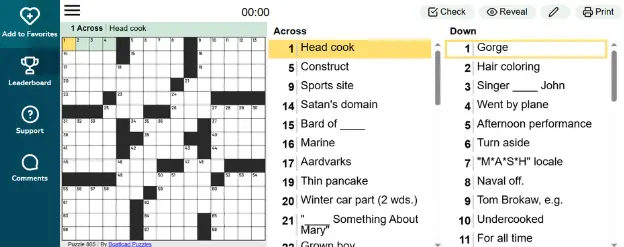
Never solve a crossword clue in isolation. The intersecting letters (the cross-letters) provided by solved vertical and horizontal words are your best safety net. If you have three out of five letters in a word, your brain immediately limits the possibilities through pattern recognition.
When you are completely stuck on a wordplay clue, look at the intersecting vowels and consonants. Ask yourself what common prefixes or suffixes fit those specific letter slots. Often, the intersecting letters will completely invalidate a wrong theory you had about a pun, steering you toward the correct interpretation.
Develop a Daily Solving Routine
Consistency is the secret weapon of elite solvers. Solving a puzzle daily trains your brain to recognize the specific patterns and personality quirks of different puzzle constructors.
- Start with the Easy Clues: Never feel obligated to solve a grid in order. Scan the entire list for absolute gimmes—clues you know instantly—to build a foundation of intersecting letters.
- Keep a Wordplay Journal: When you finally figure out a clever clue that baffled you, write it down. Analyze *why* the setter used that specific trick. Over time, you will start recognizing recurring tropes like chemical symbols used as abbreviations or Roman numerals hiding in plain sight.
- Take Strategic Breaks: If you stare at a puzzle for twenty minutes without making progress, walk away. When you return with fresh eyes, your subconscious mind will have often broken through the mental bias that had you stuck.
Cracking wordplay-heavy crosswords is a skill built on practice, pattern recognition, and a healthy dose of skepticism toward the English language. By treating every clue as a puzzle within a puzzle, paying close attention to punctuation, and utilizing your intersecting letters, you will steadily watch your solving times drop and your enjoyment soar.