TPT Free Strategies for Differentiated Instruction Made Easy
Every classroom contains a wide spectrum of learners: students who master concepts in minutes, students who need structured scaffolding, and English language learners who need visual reinforcement. Meeting each learner at their instructional level is vital, yet designing multiple variations of every lesson can rapidly lead to teacher burnout. Mastering TPT free strategies for differentiated instruction made easy allows educators to provide individualized learning experiences without spending hundreds of dollars or working late into the night.
Teachers Pay Teachers (TPT) hosts tens of thousands of educator-created freebies. However, downloading random worksheets often results in digital clutter rather than effective differentiation. To make differentiation manageable, you need a purposeful system for finding, modifying, and delivering these materials based on proven pedagogical frameworks.
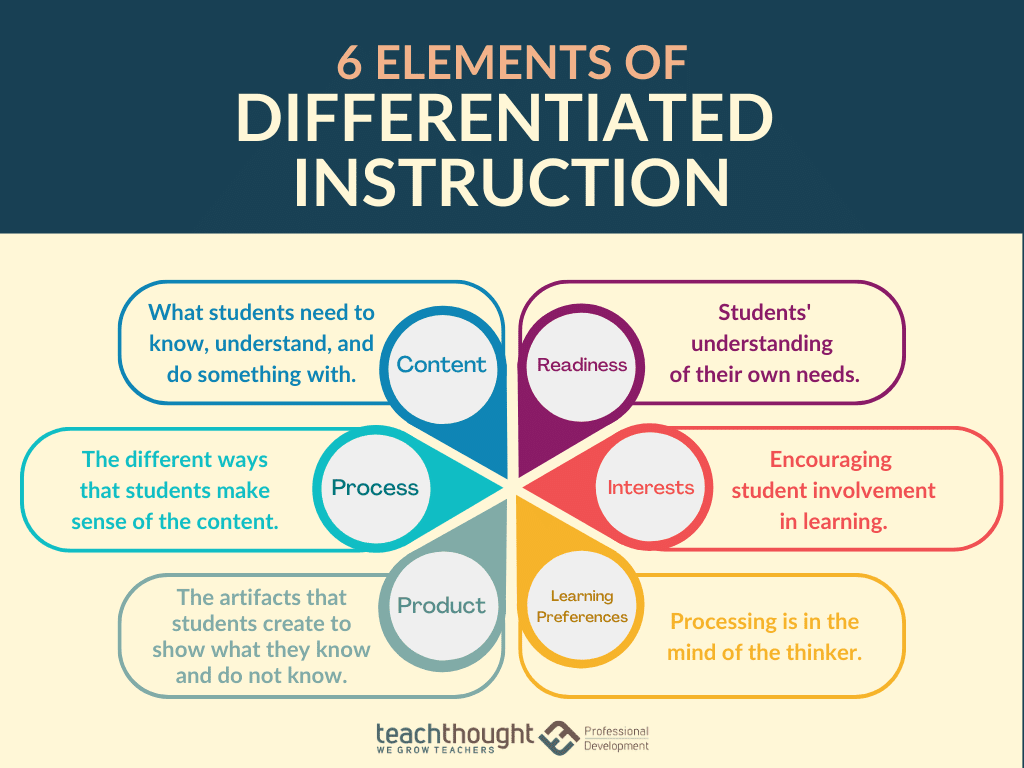
The Core Framework: Differentiating Content, Process, and Product
Before searching for materials, it helps to ground your search in Carol Ann Tomlinson’s foundational framework of differentiation. Effective differentiation does not mean writing three distinct lesson plans; it means altering one or two dimensions of a single lesson:
- Content: What students learn or how they access information (e.g., leveled reading passages, audio recordings, or visual anchor charts).
- Process: The activities students use to make sense of the content (e.g., graphic organizers with varied levels of prompting, manipulatives, or tiered task cards).
- Product: How students demonstrate mastery (e.g., choice boards, oral presentations, or structured fill-in-the-blank summaries).
TPT Free Strategies for Differentiated Instruction Made Easy: The Search Formula
Finding high-quality, zero-cost materials on TPT requires more than typing "differentiation" into the search bar. Use this targeted filtering strategy to locate flexible resources quickly:
1. Combine Differentiation Terms with Resource Types
Rather than searching broad subjects, use search strings that target structured differentiation mechanisms. Effective search queries include:
- "Tiered exit tickets" + [Subject/Grade]
- "Differentiated graphic organizer" + [Topic]
- "Universal choice board template"
- "Scaffolded guided notes" + [Skill]
2. Apply Precision Filters
Use TPT’s sidebar filters to narrow thousands of results down to the most relevant assets:
- Select your exact grade band to filter out irrelevant complexity levels.
- Check the Free box under the "Price" category.
- Filter by Resource Type, focusing on Graphic Organizers, Task Cards, Assessment, or Worksheets.
- Sort by Rating or Most Recent rather than "Best Sellers" to uncover hidden gems created by active classroom teachers.
3. Inspect Previews for Built-In Scaffolds
High-value freebies usually feature multiple entry points. Check the product preview for sentence stems, word banks, visual cues, or tiered levels (often indicated discreetly with subtle symbols like stars, circles, or letters in the footer).
4 High-Impact Free TPT Resources to Differentiate Immediately
You do not need a new download for every school day. Collecting a core toolkit of versatile, reusable free resources will support differentiation across multiple units.
1. Tiered Exit Tickets
Quick formative assessment is the engine of differentiation. Search for free tiered exit ticket templates that assess three levels of understanding:
- Level 1 (Recall & Vocabulary): Simple identification or matching to verify fundamental comprehension.
- Level 2 (Application): Procedural questions or short-answer explanations showing conceptual understanding.
- Level 3 (Extension & Transfer): Open-ended prompts or error analysis requiring higher-order thinking.
Use student responses to assign flexible intervention and extension groups for the following day’s warm-up.

2. Fillable and Scaffolded Graphic Organizers
Graphic organizers make abstract concepts tangible. Search TPT for editable or multi-level graphic organizers for reading comprehension, scientific processes, or essay outlines. You can deploy the exact same organizer across the class with three variations:
- One version containing pre-filled hints or sentence starters for students needing maximum support.
- A standard version with guided prompts for on-level learners.
- A blank version where advanced learners synthesize information independently.
3. Editable Tic-Tac-Toe Choice Boards
Choice boards differentiate by product and learning modality. Search for free "editable choice board templates" or "learning menus." You can reuse a single nine-square grid across multiple units by populating tasks that appeal to linguistic, visual, kinesthetic, and analytical thinkers. Ensure that whichever three tasks a student chooses (horizontal, vertical, or diagonal), they engage with core curriculum standards.
4. Leveled Task Card Sets
Task cards are inherently modular. Free task card samplers on TPT often contain 8 to 12 questions. Instead of having every student complete every card in order, color-code or number them to create targeted learning pathways:
- Cards 1–4: Foundational skill review.
- Cards 5–8: Grade-level standard mastery.
- Cards 9–12: Multi-step reasoning or critical analysis.
Students can be directed to start at the card number that matches their pre-assessment data, eliminating both frustration and boredom.
How to Implement TPT Materials Without Adding Hours of Prep
Even free resources cost time if you do not have an efficient implementation routine. Follow this three-step workflow to keep your planning sustainable:
Step 1: Keep Student Groupings Fluid
Never lock students into fixed "ability tracks." A student who struggles with decoding informational text may excel during geometry or historical inquiry. Use quick, 3-minute formative checks to assign groups dynamically for specific activities.
Step 2: Discrete Differentiation Coding
Avoid printing materials that overtly announce a student’s skill level (e.g., "Modified Version"). Look for TPT resources that use discreet markers, such as a subtle polygon or subtle letter code in the corner. If a resource lacks this, add your own unobtrusive mark before photocopying so students focus on learning rather than social comparison.
Step 3: Organize a Digital "Differentiation Bank"
Create a dedicated cloud folder divided into three subfolders: Reteach/Scaffolding, On-Level Practice, and Extension/Enrichment. When you download a freebie on TPT, file it immediately into one of these folders. Over the course of a school year, you will build a ready-to-use curriculum bank tailored to your class.
Make Differentiation a Sustainable Habit
Differentiating instruction does not require endless hours of content creation. By combining targeted search strategies with flexible, high-quality TPT freebies, you can provide every student with the scaffolding or extension they need while protecting your own planning time. Start small: choose one upcoming lesson this week, grab a single tiered resource, and watch your students engage at their personal point of growth.