Transform Your Child with Vowel Teams Help
English spelling can feel like an unsolvable puzzle to an emerging reader. Just when a child masters basic consonant-vowel-consonant (CVC) words like cat, bed, and sit, they suddenly encounter words like boat, rain, and pie. The rules change, words stop sounding out letter-by-letter, and frustration sets in. If your student is stumbling over multiletter vowel combinations, learning how to transform your child with vowel teams help can turn that confusion into lasting reading fluency.
Vowel teams represent one of the most critical turning points in phonics instruction. By understanding how these letter combinations function and applying targeted, multisensory strategies, parents and educators can bridge the gap between labored decoding and effortless reading.
What Are Vowel Teams and Why Do They Matter?
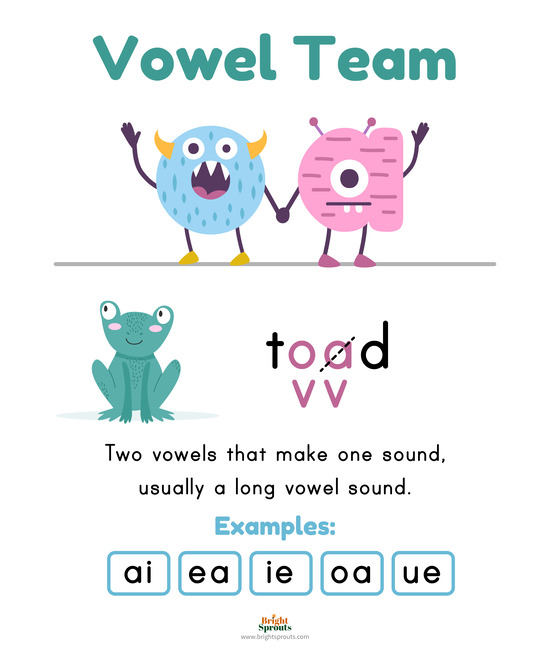
A vowel team occurs when two or more letters work together to represent a single vowel sound. In most cases, these teams consist of two vowels side-by-side, such as ai in train or ea in beach. However, some vowel teams include consonants that act as part of the vowel sound, such as igh in night or ay in play.
Linguistically, vowel teams fall into two primary categories:
- Vowel Digraphs: Two letters that represent one distinct vowel sound, usually a long vowel (e.g., oa representing /ō/ in boat, or ee representing /ē/ in feet).
- Diphthongs: Vowel combinations where the mouth physically glides from one vowel position to another within the same syllable (e.g., oi in coin, oy in toy, ou in shout, and ow in cow).
Without explicit vowel team instruction, children often attempt to sound out each vowel individually. A word like meat gets sounded out as /m/ /ĕ/ /ă/ /t/, leaving the child puzzled by a nonsense word. Teaching these units explicitly trains the brain to recognize the letters as a single phonological package.
Why Vowel Teams Cause Confusion for Young Readers
Many adults grew up hearing the rhyme: "When two vowels go walking, the first one does the talking." While well-intentioned, reading researchers have shown that this rule holds true only about 45% of the time. It completely falls apart with teams like ea in bread, oo in book, or oi in boil. Relying on outdated rhymes causes children to guess, which undermines systematic phonics development.
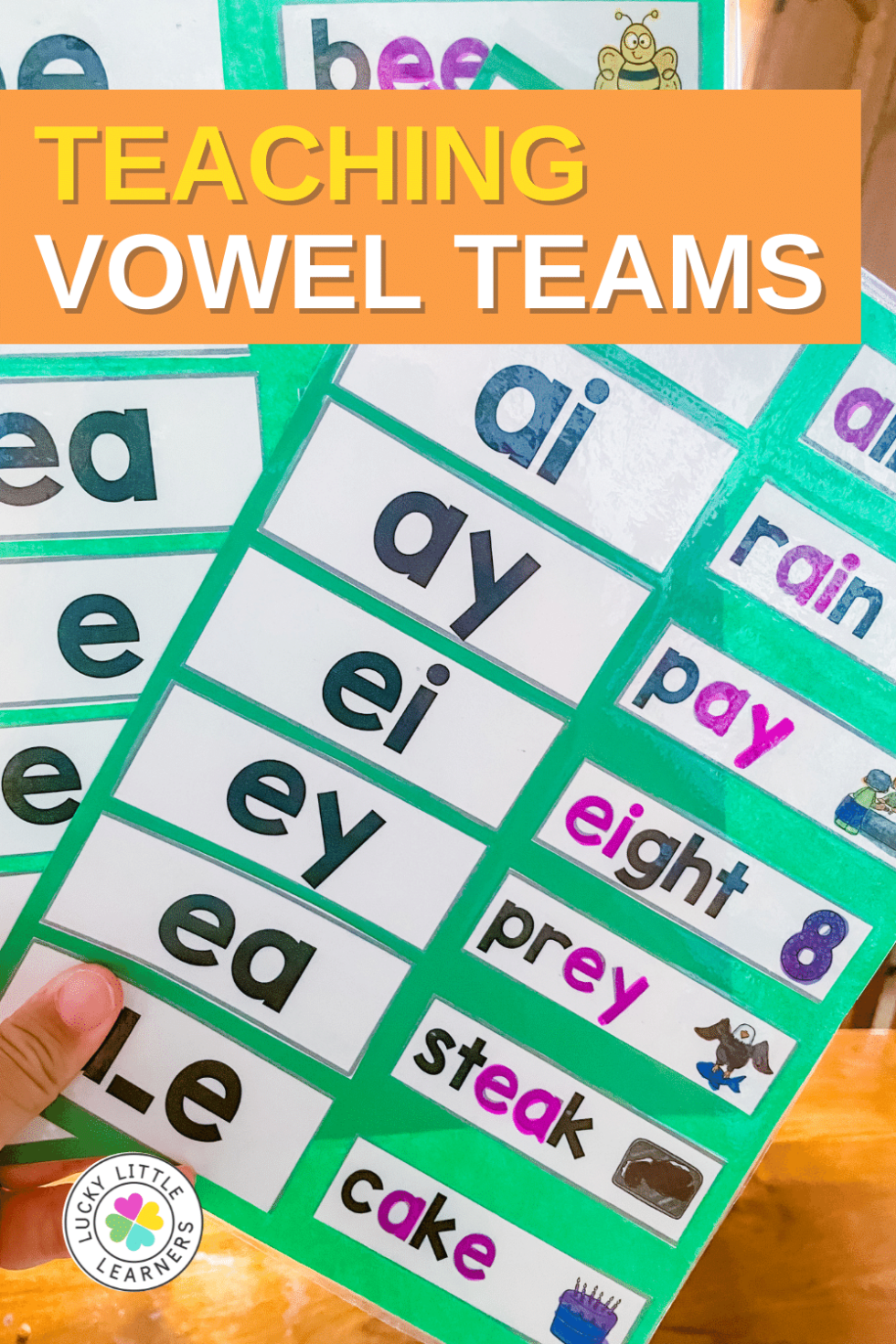
Another major challenge is that English has multiple ways to spell the exact same sound. The long /ā/ sound, for example, can be spelled using a_e (cake), ai (rain), ay (day), ea (steak), or eigh (eight). To decode and encode accurately, children need structured frameworks rather than guesswork.
How to Transform Your Child with Vowel Teams Help
Shifting your child from struggling to flourishing requires moving away from memorization and toward systematic, evidence-based phonics instruction. Use these foundational approaches to build mastery.
1. Introduce Teams Systematically, Not All at Once
Do not present every vowel team in a single week. Introduce them in small, logical groups. Start with the most common and consistent long vowel teams before moving to diphthongs and irregular patterns:
- Long E: ee (seed), ea (meat)
- Long A: ai (paint), ay (stay)
- Long O: oa (toad), oe (toe)
- Diphthongs: oi, oy, ou, ow
- Complex Teams: igh, eigh, ew, ui
2. Teach Position-Based Spelling Rules
English spelling is far more organized than it appears. Children feel empowered when they learn that specific vowel teams have designated positions inside words:
- ai vs. ay: ai almost always appears at the beginning or middle of a base word (aim, sail), because English words rarely end in the letter i. Conversely, ay appears at the end of a base word or syllable (play, tray).
- oi vs. oy: oi belongs in the middle of a syllable (coin, point), while oy sits at the end (boy, joy).
- oa vs. ow: oa usually sits in the middle (boat, soap), while ow frequently handles the sound at the end (snow, glow).
3. Use Orthographic Mapping and Sound Boxes

Orthographic mapping is the mental process readers use to anchor letter patterns into long-term memory. Use Elkonin sound boxes to make this process concrete. Draw three connected boxes on a dry-erase board for the word rain:
Ask your child to tap the sounds: /r/ /ā/ /n/. Have them place the letter r in the first box, the vowel team ai together in the middle box, and n in the final box. This visually reinforces that although there are two letters in the middle, they represent only one sound.
Practical Multisensory Activities for Home Practice
Young learners retain patterns best when sight, sound, and touch are combined. Here are three practical activities that deliver real results without feeling like dry worksheets.
Vowel Team Word Sorts
Provide your child with a stack of word cards that share the same vowel sound spelled different ways—for example, cards featuring ai and ay. Have them read each word aloud and sort it into the correct column. Sorting forces the brain to analyze letter patterns actively rather than scanning passively.
Color-Coding Vowel Teams
When giving your child short passages or sentences to read, give them a colored highlighter. Instruct them to scan the text first, hunting for the target vowel team (e.g., highlighting every oa in yellow). Spotting the pattern before reading gives them a mental head start when decoding full sentences.
Vowel Team Swapping
Use magnetic letters on a baking sheet to show how altering the vowel team changes the entire word. Start with the word boat. Have your child change the oa to ee to make beet, then change the b to m to make meet. This rapid manipulation builds phonemic agility.
The Power of Decodable Books
A common mistake during reading intervention is handing a child a trade picture book filled with uncontrolled vocabulary right after a phonics lesson. If a child has just learned oa, but their book contains though, bought, and dough, their confidence will plummet.
Instead, choose decodable readers that specifically target the vowel teams you have introduced. If the focus is ee and ea, the book should feature stories centered around characters like a queen on a green jeep who visits a stream. Once accuracy reaches 90% or higher, transition to broader children's literature to foster comprehension and vocabulary expansion.
Patience and Consistency Yield Big Results
Mastering vowel teams does not happen overnight. It is common for readers to hesitate or misidentify teams when they first appear in longer, multisyllabic words. Keep practice sessions brief—10 to 15 focused minutes each day is far more effective than an hour-long drill once a week.
When you replace memorization and guesswork with explicit phonics, sound mapping, and consistent practice, reading stops feeling like an obstacle. With the right tools and steady encouragement, you can unlock your child's reading fluency and help them build lifelong confidence.