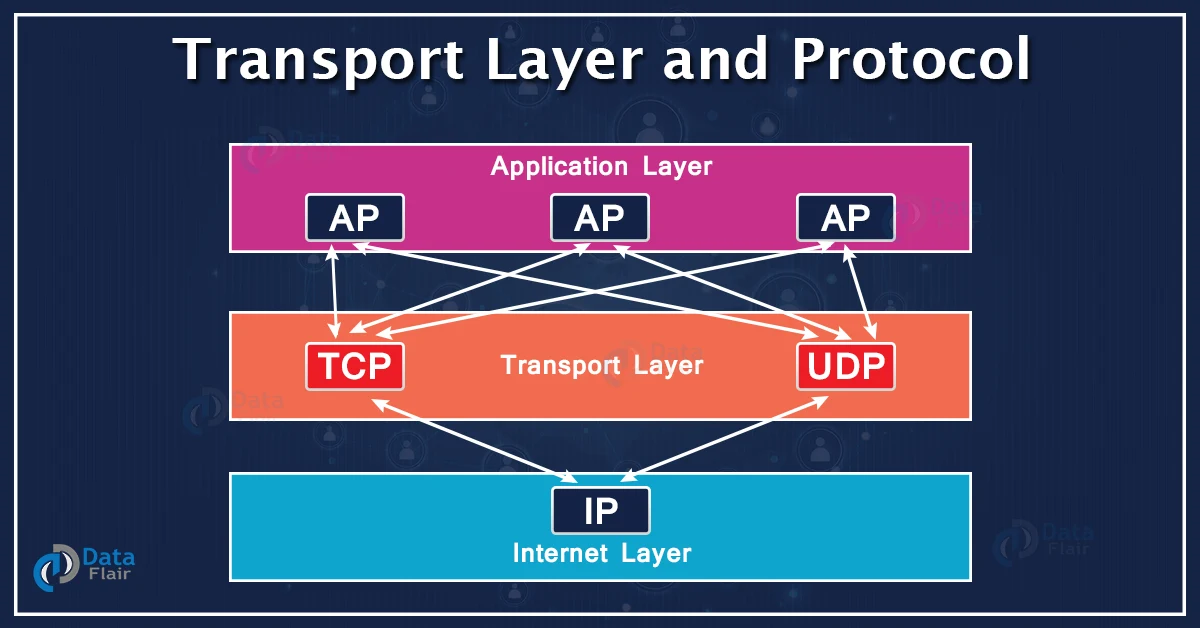
Transport Layer: Choose Three Key Responsibilities
If you are studying for your Cisco CCNA, CompTIA Network+, or a university computer science exam, you have likely encountered the classic multiple-choice challenge: what are three responsibilities of the transport layer choose three. Because Layer 4 sits directly between host-centric application processes and network-centric routing tasks, test questions frequently test your understanding of where these operational boundaries lie.

At a high level, the Transport Layer (Layer 4 of the OSI model) is responsible for logical, end-to-end communication between applications running on different hosts. While the Network Layer delivers packets from one machine to another, the Transport Layer ensures data actually reaches the correct software program in a format it can consume.
What Are Three Responsibilities of the Transport Layer? Choose Three
According to networking curriculum standards—most notably Cisco Networking Academy and standard OSI documentation—the three core responsibilities shared across Layer 4 implementations are:
- Tracking individual conversations (session multiplexing): Monitoring multiple active data streams between applications on source and destination devices simultaneously.
- Segmenting data and reassembling segments: Dividing large application data blocks into manageable pieces for network transmission and rebuilding them on the receiving host.
- Identifying target applications (port addressing): Using port numbers to direct incoming and outgoing data segments to the proper application software.
While additional capabilities like reliability, error recovery, and flow control are essential features of connection-oriented protocols like TCP, the three items listed above are universal functions that define how the transport layer operates, whether running TCP or UDP.
Detailed Breakdown of the Three Core Responsibilities
1. Tracking Individual Communications
Modern devices rarely run just one network task at a time. A typical user might stream audio on Spotify, download a system update in the background, browse multiple web pages in Chrome, and receive incoming Slack notifications. Each of these applications sends and receives data across the same physical and logical network interface.
The transport layer tracks each distinct conversation taking place between the local host and remote servers. By maintaining session state data for each conversation, Layer 4 ensures that incoming video data packets are never merged into an active file download, keeping distinct network streams cleanly separated.
2. Segmentation and Reassembly of Data
Applications often generate data payloads that are far too large to send across lower-layer media in a single transmission. Physical network media enforce limits such as the Maximum Transmission Unit (MTU), which is typically 1,500 bytes for standard Ethernet frames.
To overcome this limitation, the transport layer performs segmentation:
- At the source: It breaks application payloads into smaller, structured chunks known as segments (in TCP) or datagrams (in UDP). Each segment receives a Layer 4 header containing necessary control metadata.
- At the destination: The receiving transport layer strips the transport header, reorders segments if they arrived out of sequence (when using TCP), and reassembles the payload into a continuous stream before handing it off to the application layer.
Without segmentation, a single dropped frame during a multi-gigabyte file transfer would require retransmitting the entire file. With segmentation, network devices only need to retransmit the individual missing segments.
3. Identifying the Target Application via Port Numbers

IP addresses locate the host machine on an IP network, and MAC addresses direct data between local interfaces. However, neither an IP address nor a MAC address specifies which program on a computer should receive the incoming data. That function belongs exclusively to Layer 4 through port addressing.
Every transport layer header includes a source port and a destination port. These 16-bit numerical identifiers (ranging from 0 to 65,535) map traffic to designated services:
- Well-Known Ports (0 – 1,023): Reserved for standard public services like HTTP (port 80), HTTPS (port 443), SSH (port 22), and DNS (port 53).
- Registered Ports (1,024 – 49,151): Assigned by IANA to specific vendor applications, such as Microsoft SQL Server (port 1433) or MySQL (port 3306).
- Dynamic/Private Ports (49,152 – 65,535): Assigned dynamically by client operating systems as ephemeral source ports when initiating an outbound connection.
By pairing an IP address with a port number, the operating system creates a socket. Sockets allow the receiving host to deliver data directly to the corresponding application process.
Additional Transport Layer Functions: TCP vs. UDP
Beyond the three universal responsibilities, specific Layer 4 protocols provide contrasting secondary features depending on what an application requires:
Transmission Control Protocol (TCP)
TCP is a connection-oriented, reliable protocol designed for applications where data accuracy is non-negotiable (such as web browsing, email, and file transfers). TCP adds three major responsibilities:
- Connection Establishment: Uses a three-way handshake (SYN, SYN-ACK, ACK) to confirm that both endpoints are ready before sending payload data.
- Reliability and Acknowledgments: Employs sequence numbers and acknowledgment (ACK) packets to verify that every segment arrived. Lost segments are automatically retransmitted.
- Flow Control: Utilizes a dynamic sliding window mechanism to regulate transmission speeds, preventing a fast sender from overwhelming a slow receiver or congesting intermediary network buffers.
User Datagram Protocol (UDP)
UDP is a connectionless, "best-effort" protocol designed for speed and low overhead. UDP carries out the three primary transport duties—multiplexing via port numbers, segmentation tracking, and conversation management—without adding acknowledgments, sequence ordering, or flow control.
Because UDP avoids handshake latency and retransmission delays, it is the protocol of choice for real-time traffic like VoIP, live video conferencing, and online multiplayer gaming.
Common Exam Trap Answers to Watch Out For
When answering certification questions regarding transport layer responsibilities, be prepared to rule out distractor options that describe tasks handled by other OSI layers:
- Routing packets across networks: This is a Network Layer (Layer 3) responsibility handled by routers using IP addresses.
- Framing and physical media access: This belongs to the Data Link Layer (Layer 2) and Physical Layer (Layer 1) using MAC addresses and physical signaling.
- Data formatting, encryption, and compression: These are functions of the Presentation Layer (Layer 6).
- Domain Name Resolution: Although DNS relies on UDP/TCP port 53, name resolution logic operates at the Application Layer (Layer 7).
Summary Table: Layer 4 Duties at a Glance
| Responsibility | OSI Layer | Key Mechanism |
|---|---|---|
| Tracking Conversations | Layer 4 | Conversation multiplexing & socket states |
| Segmentation & Reassembly | Layer 4 | MSS limits, sequencing headers |
| Application Identification | Layer 4 | Source and Destination Port numbers |
| Packet Routing | Layer 3 (Not Layer 4) | IP addressing and routing tables |
| Physical Framing | Layer 2 (Not Layer 4) | MAC addresses and FCS checks |
Whenever you are asked to select three primary responsibilities of the transport layer, remember the acronym T-S-P: Track conversations, Segment data, and Port addressing to identify applications. Locking in those three core concepts guarantees success on exam day and provides a solid foundation for troubleshooting complex network issues.