TS Michigan Financial Data Management and Integration
Organizations operating within Michigan face an increasingly complex financial ecosystem. Whether managing local municipal funds, regional healthcare networks, higher education endowments, or commercial enterprises, the demand for timely, unified, and audit-ready fiscal records has never been higher. Executing effective TS Michigan financial data management and integration requires a deliberate approach that reconciles fragmented accounting systems, ensures adherence to state and federal regulatory frameworks, and provides executives with real-time financial visibility.

The Complex Landscape of Michigan Financial Systems
Michigan's financial landscape is defined by specific reporting mandates, varied taxation structures, and legacy infrastructure. Municipalities and public institutions, for instance, must comply with Michigan Public Act 2 of 1968 (the Uniform Budgeting and Accounting Act) and adhere to Governmental Accounting Standards Board (GASB) principles. Simultaneously, commercial entities must coordinate multi-jurisdictional sales and use tax, withholding filings, and corporate income taxes administered by the Michigan Department of Treasury.
When financial data resides in departmental silos—such as disconnected accounts payable software, niche payroll platforms, local tax collection databases, and core General Ledger (GL) systems—operational friction multiplies. Staff spend excessive manual hours conducting reconciliations, data latency delays reporting cycles, and the risk of reporting discrepancies increases significantly.
Core Pillars of Financial Data Governance
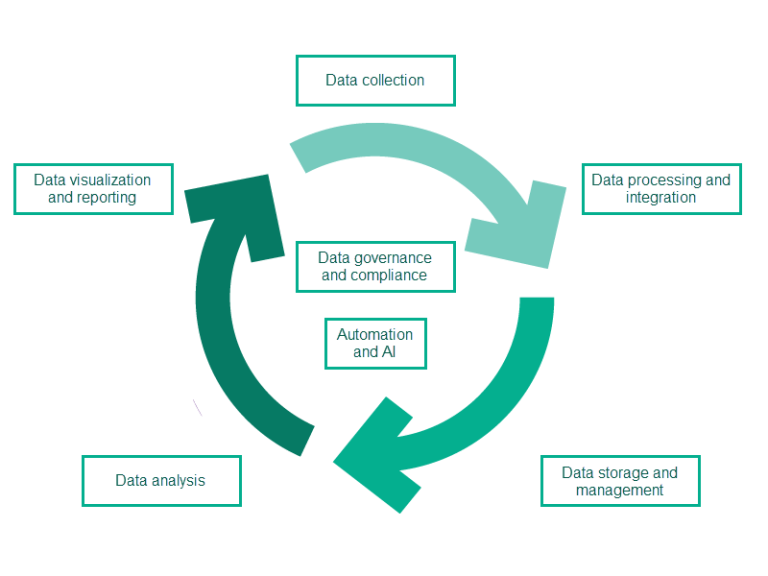
Sustainable integration begins with structured data management. Without rigorous governance, integrating disparate data streams simply accelerates the movement of low-quality or inaccurate information. Successful strategies focus on three primary data governance pillars:
- Standardized Chart of Accounts (COA): Aligning account codes, cost centers, and fund hierarchies across every operating unit ensures transactions aggregate smoothly into top-level financial statements.
- Data Provenance and Audit Trails: Every transaction must preserve metadata indicating source system origins, user IDs, timestamps, and modification logs to satisfy state auditors and internal compliance officers.
- Master Data Management (MDM): Establishing a single source of truth for vendor registries, customer accounts, and municipal fund identifiers prevents duplicate entries and invoice mismatches.
Modern Approaches to TS Michigan Financial Data Management and Integration
Bridging traditional accounting platforms with cloud-based analytics requires robust integration architectures. Organizations typically encounter a mix of modern cloud ERPs (such as NetSuite, Workday, or Microsoft Dynamics 365) and established regional platforms widely used in Michigan (such as BS&A Software, Tyler Technologies, or custom on-premise relational databases).
1. Bridging Specialized Systems with Central ERPs
Michigan municipal bodies and county governments often depend on specialized software suites for property tax assessment, utility billing, and permitting. Integrating these domain-specific ledgers with the primary fund accounting system eliminates manual journal entries. Modern integration leverages RESTful and SOAP APIs or secure SFTP pipelines to transmit end-of-day transaction summaries directly into general ledger staging tables, triggering automated balance validations.
Video: What Is Master Data Management? Explained with Finance and Accounting Examples

2. Implementing Scalable ETL and ELT Pipelines
For data warehousing and business intelligence, financial teams increasingly employ Extract, Transform, Load (ETL) or Extract, Load, Transform (ELT) architectures. Raw transactional records are ingested from banking feeds, treasury management portals, and billing engines into secure cloud repositories like Snowflake, AWS Redshift, or Google BigQuery. Transformation layers then standardize date formats, translate local transaction codes into standard financial classifications, and perform continuous currency or balance checks.
3. Automating Reconciliation and Exception Handling
The manual month-end reconciliation process is often the largest bottleneck in financial operations. Automated integration engines reconcile bank statements against cash ledgers by matching transaction reference numbers, amounts, and settlement dates. When a discrepancy arises—such as an unrecorded processing fee or a timing mismatch—the system routes the transaction to an exception queue for human review rather than halting the entire integration pipeline.
Ensuring Regulatory Compliance and Audit Readiness
Data integration workflows must be designed with compliance as an active parameter rather than a post-facto review. In Michigan, financial transparency mandates require public bodies to deliver standardized reporting to the Michigan Department of Treasury’s Financial Information Database (FID) and Munetrix dashboards.
- Automated Compliance Mapping: Configure automated translation tables that remap internal general ledger accounts to the specific revenue and expenditure categories mandated by state reporting guidelines.
- Role-Based Access Controls (RBAC): Enforce least-privilege security policies across the integration layer. Financial data in transit must be encrypted using TLS 1.3, while data at rest requires AES-256 encryption to meet SOC 1, SOC 2, and state data privacy benchmarks.
- Immutable Logging: Retain raw transaction payloads and transformation logs in write-once, read-many (WORM) storage to give auditors verifiable proof of record integrity during statutory reviews.
A Strategic Implementation Framework
Executing a financial data integration project requires clear operational sequencing to prevent disruption to daily accounting operations:
- Phase 1: Architecture and Schema Discovery: Document all upstream and downstream financial data flows, identify legacy dependencies, and evaluate API capabilities across all systems.
- Phase 2: Data Cleansing and Normalization: Purge obsolete vendor accounts, resolve historical chart of accounts redundancies, and standardize data formatting across all connected nodes.
- Phase 3: Sandbox Integration and Dual-Run Testing: Deploy integration middleware in a staging environment. Execute parallel accounting periods to confirm that the integrated pipeline generates figures identical to the legacy manual process.
- Phase 4: Production Cutover and Continuous Monitoring: Launch automated workflows with real-time alerting for failed API payloads, schema drift, or ledger balance mismatches.
Unlocking Actionable Financial Intelligence
Ultimately, unifying financial records through robust data integration does more than reduce operational overhead—it transforms static records into strategic assets. When budget-to-actual variances, cash balances, and revenue projections refresh automatically, leadership can make proactive capital allocation decisions, model long-term liabilities with greater accuracy, and deliver reliable fiscal transparency to stakeholders across Michigan.