Tucker Carlson’s $150M Fortune & Media Empire
When corporate media giants cut ties with legacy television stars, the assumption is usually that the broadcaster’s influence will diminish over time. In the case of the former Fox News host, the opposite unfolded. Unpacking what Tucker Carlson’s $150 million fortune really means for his empire reveals a massive shift not just in his personal wealth, but in how political commentators fund, control, and distribute content in the post-cable era.
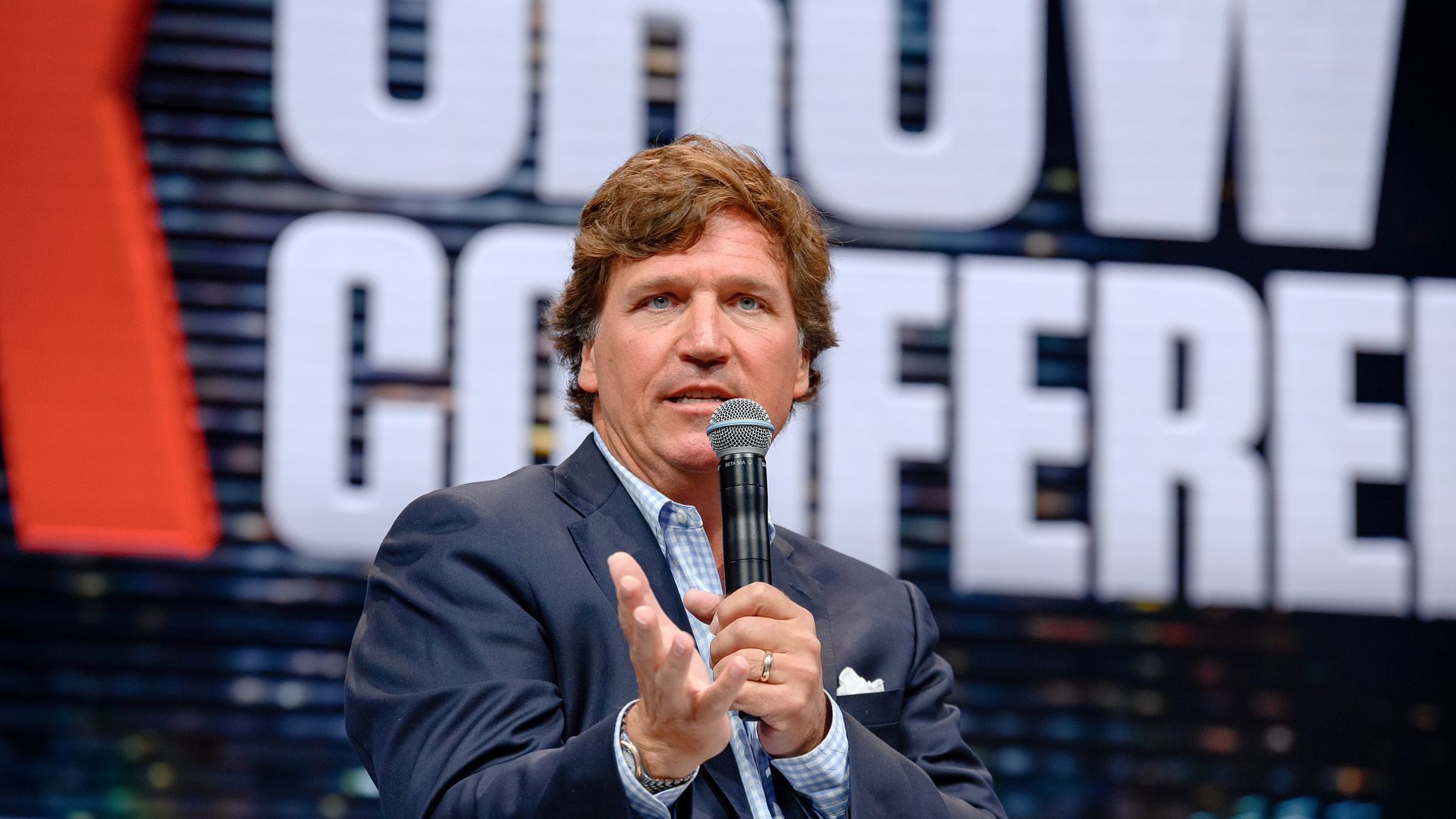
While net worth estimates from financial publications combine generational trusts, historic cable earnings, book royalties, and recent private equity valuations, the figure represents far more than luxury living. In modern media, a personal balance sheet of this scale is operational capital. It allows an anchor to transition from an employee subject to corporate network standards into an autonomous media mogul capable of self-funding international news gathering.
The Anatomy of the $150 Million Net Worth
To grasp the operational scale of Carlson’s enterprise, it is essential to understand where the reported $150 million valuation originates. Carlson’s wealth is not concentrated in liquid cash sitting idle in a bank account; it is diversified across several key assets:
- Legacy Cable Contracts: At the height of his tenure at Fox News, Carlson was earning an estimated $15 million to $20 million annually, alongside substantial retention bonuses and packaging fees.
- The Fox Buyout Settlement: When Fox abruptly took him off the air in April 2023, Carlson remained under a lucrative multi-year contract that paid out millions while negotiations over non-compete clauses took place.
- Publishing Advances: Multi-book deals with Threshold Editions (a division of Simon & Schuster) yielded eight-figure advances and consistent backlist royalties.
- Private Equity and Network Equity: Through Last Country, Inc., the parent entity of the Tucker Carlson Network (TCN), Carlson and co-founder Neil Patel have attracted private investments and secured a rapidly escalating corporate valuation.
What Tucker Carlson’s $150 Million Fortune Really Means for His Empire
In traditional television, a commentator is constrained by three primary entities: the network brass, the corporate advertisers buying commercial blocks, and the cable distribution providers. Personal wealth exceeding $100 million fundamentally breaks all three constraints.
First and foremost, capital independence shields Carlson from advertiser boycotts. For years, organized campaigns targeted brands running commercials on Carlson's primetime show. Today, the Tucker Carlson Network bypasses corporate ad agencies entirely. By underwriting initial production costs out of pocket and building a direct-to-consumer subscription model, Carlson does not answer to consumer-brand boards or ratings agencies.
Second, financial independence provides legal resilience. Independent journalism and hard-hitting commentary carry significant legal exposure, from defamation threats to platform copyright strikes. Legacy networks routinely force talent to temper reporting to avert institutional liability. With an empire backed by a $150 million financial buffer, Carlson possesses the balance sheet required to retain elite legal counsel and withstand protracted litigation without folding under financial pressure.
The Technology Stack: Building a Sovereign Platform
Launching a subscription-based digital network requires substantial upfront technical infrastructure. Rather than relying solely on third-party video aggregators like YouTube or X, TCN invested heavily in bespoke web architecture, app development, and sovereign content delivery networks (CDNs).
A multi-million-dollar war chest enabled Carlson to hire veteran television producers, experienced digital video editors, and specialized web developers away from legacy networks. The result is a video product that matches linear television in audio-visual fidelity while retaining the editorial agility of a podcast.

DTC Economics: Moving Beyond Ad-Supported Cable
The traditional television business relies on dual revenue streams: carriage fees paid by cable subscribers (whether they watch the channel or not) and advertising spots. The digital subscriber model employed by Carlson’s empire flips this paradigm entirely.
- High-Value Direct Subscribers: Instead of collecting pennies per household from cable operators, TCN charges subscribers around $9 per month or $72 per year. Securing even 250,000 paid subscribers produces upwards of $18 million in annual recurring revenue.
- Affiliate and Exclusive Sponsorships: Rather than relying on programmatic network ads, Carlson’s team sells premium, long-form integrations to brands that explicitly align with his demographic.
- Syndication and Licensing: Carlson leverages free platforms like X (formerly Twitter) as marketing funnels, converting millions of view impressions into paying TCN community members.
Because Carlson self-funded early stage growth, he avoided giving up controlling equity to venture capital firms that might demand editorial moderation or rapid profitability at the expense of long-term audience trust.
Global Geopolitics and Independent Foreign Reporting
Perhaps the most visible demonstration of Carlson's capital power is his international travel schedule. Traditional news bureaus have slashed international coverage over the past decade because sending producers, security teams, fixers, and camera crews overseas is cost-prohibitive.
Carlson's wealth allows his network to function like an agile, privately funded foreign bureau. High-profile sit-downs with world leaders—including Russia's Vladimir Putin, Argentina's Javier Milei, and Hungary's Viktor Orbán—require massive logistical coordination, private aviation, and round-the-clock security details. Where cable networks increasingly rely on wire services, Carlson's self-funded operation flies directly to geopolitical hotspots, delivering high-impact interviews that dominate the global news cycle.
The Broader Impact on the Conservative Media Landscape
Carlson’s self-sufficient empire presents a formidable challenge to legacy conservative institutions. Outlets like Fox News and talk radio networks once enjoyed an effective monopoly over center-right commentary. Carlson’s success proves that marquee talent no longer needs the backing of a legacy media family to maintain cultural relevance.
Moreover, his model exerts competitive pressure on peer ventures like The Daily Wire, Megyn Kelly’s Devil May Care Media, and independent creators across the political spectrum. When commentators see that nine-figure wealth can be maintained—and grown—outside institutional newsrooms, the incentive to sign long-term restrictive contracts diminishes dramatically.
The Bottom Line
Tucker Carlson’s fortune is not just a personal milestone; it is an operational fortress. In the modern attention economy, having tens of millions of dollars in personal liquidity provides absolute editorial sovereignty. It transforms a commentator into an institution, insulating their platform from deplatforming, advertiser attrition, and corporate oversight. As Carlson continues to expand his digital footprint, his empire stands as a benchmark for what post-network media will look like in the years ahead.


