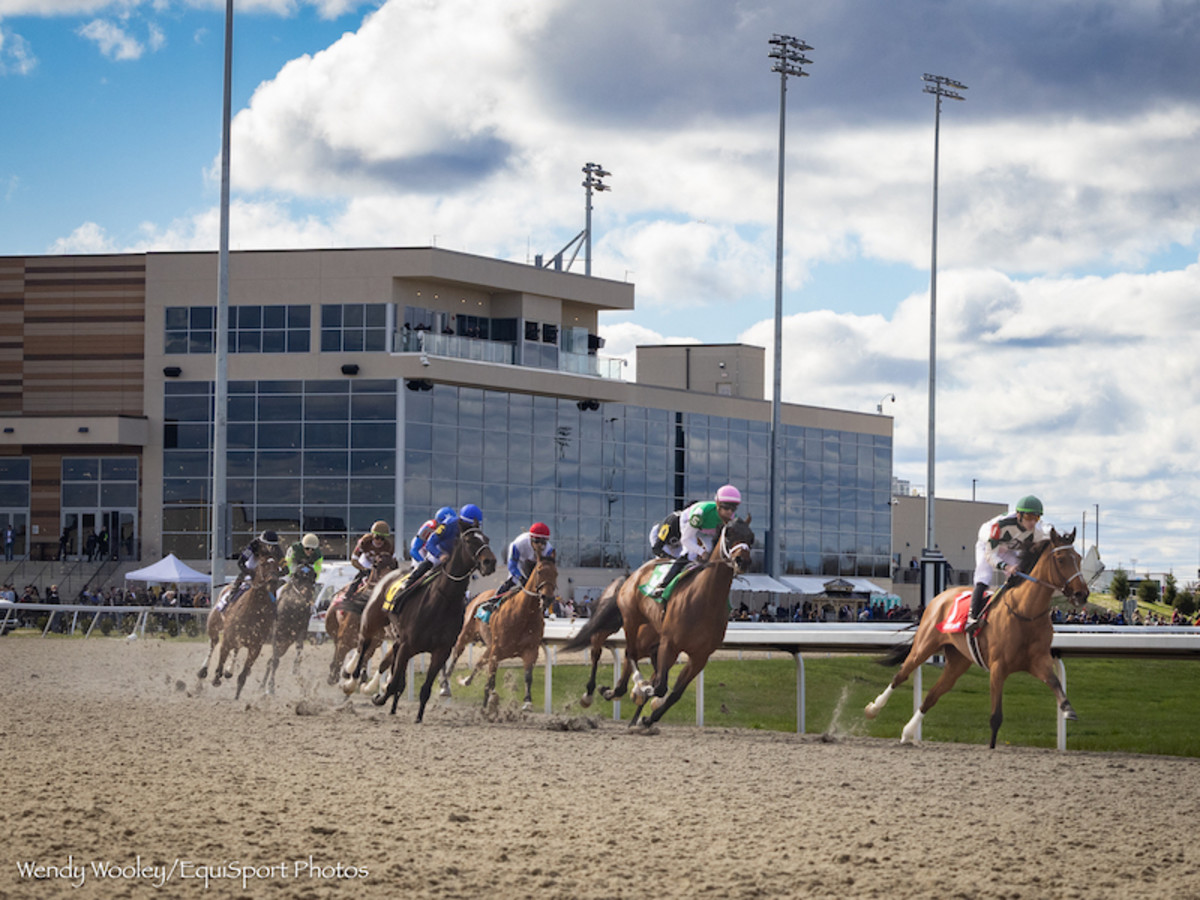
Turfway Horse Racing Results: Did Weather Impact?
Bettors and horsemen closely reviewing the card often ask a critical question regarding recent Turfway horse racing results: Did weather impact the outcome? The facts are here. Operating in Florence, Kentucky throughout the harshest winter months, Turfway Park presents a unique handicapping puzzle where freezing temperatures, sleet, snow, and driving winds constantly intersect with high-stakes Thoroughbred racing.

While traditional dirt tracks turn into sloppy, sealed surfaces that drastically favor front-runners during wet winter storms, Turfway relies on an all-weather synthetic Tapeta surface. Understanding how weather variables alter this synthetic footing—and how those changes dictate the running style of winning horses—is essential for any handicapper seeking clarity on recent finishes.
Understanding Turfway Park's Tapeta Surface in Winter
To evaluate how weather shapes race outcomes, you must first understand what horses are running on. In late 2020, Churchill Downs Incorporated replaced Turfway Park's aging Polytrack with a modern Tapeta synthetic surface. Tapeta is an engineered blend of silica sand, synthetic fibers, recycled rubber, and a specialized wax coating designed to mimic the root structure of turf while resisting severe weather.
Unlike standard natural dirt, which absorbs moisture and becomes heavy or greasy, the Tapeta track features a vertical drainage system capable of handling several inches of rain per hour. Water percolates through the porous surface into perforated pipes below, preventing standing water and mud. Consequently, Turfway rarely suffers from the severe, off-track conditions that derail racing cards at traditional venues.
However, "all-weather" does not mean "unaffected by weather." The physical properties of the wax, moisture levels, and atmospheric temperatures still produce measurable shifts in performance.
Turfway Horse Racing Results: Did Weather Impact the Outcome? The Facts Are Here
When examining recent race charts, track variants, and finishing times at Turfway, the data demonstrates that weather conditions do influence outcomes, though not in the ways many casual bettors expect. Here is how specific environmental factors directly shape race results on the track.
1. Freezing Temperatures and Wax Firmness
The wax coating that binds the sand and synthetic fibers together is sensitive to ambient temperature. When Northern Kentucky temperatures plunge below freezing—frequently dipping into the teens during January and February evening cards—the wax tightens. This structural change makes the surface firmer and faster.
On sub-freezing nights, speed figures often rise, and horses racing near the lead tend to perform above their baseline. When the surface firms up, front-runners exert less energy sustaining their stride because the footing offers greater rebound and minimal cupping out. Conversely, when afternoon thaws bring temperatures into the 50s, the wax softens, creating a deeper, more demanding cushion that rewards late-running stamina horses.
2. Heavy Rain vs. Snow and Slush
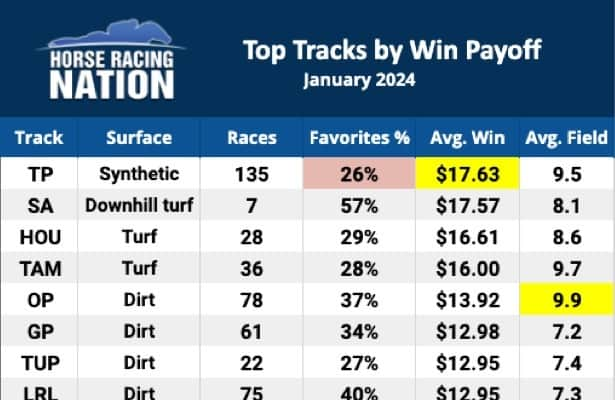
Rainfall alone rarely compromises Turfway's surface integrity. In fact, moderate rain often tightens synthetic tracks, producing uniform conditions across all lanes and limiting surface kickback. Horses that dislike having wet dirt kicked into their faces on traditional tracks routinely run career-best efforts over wet Tapeta.
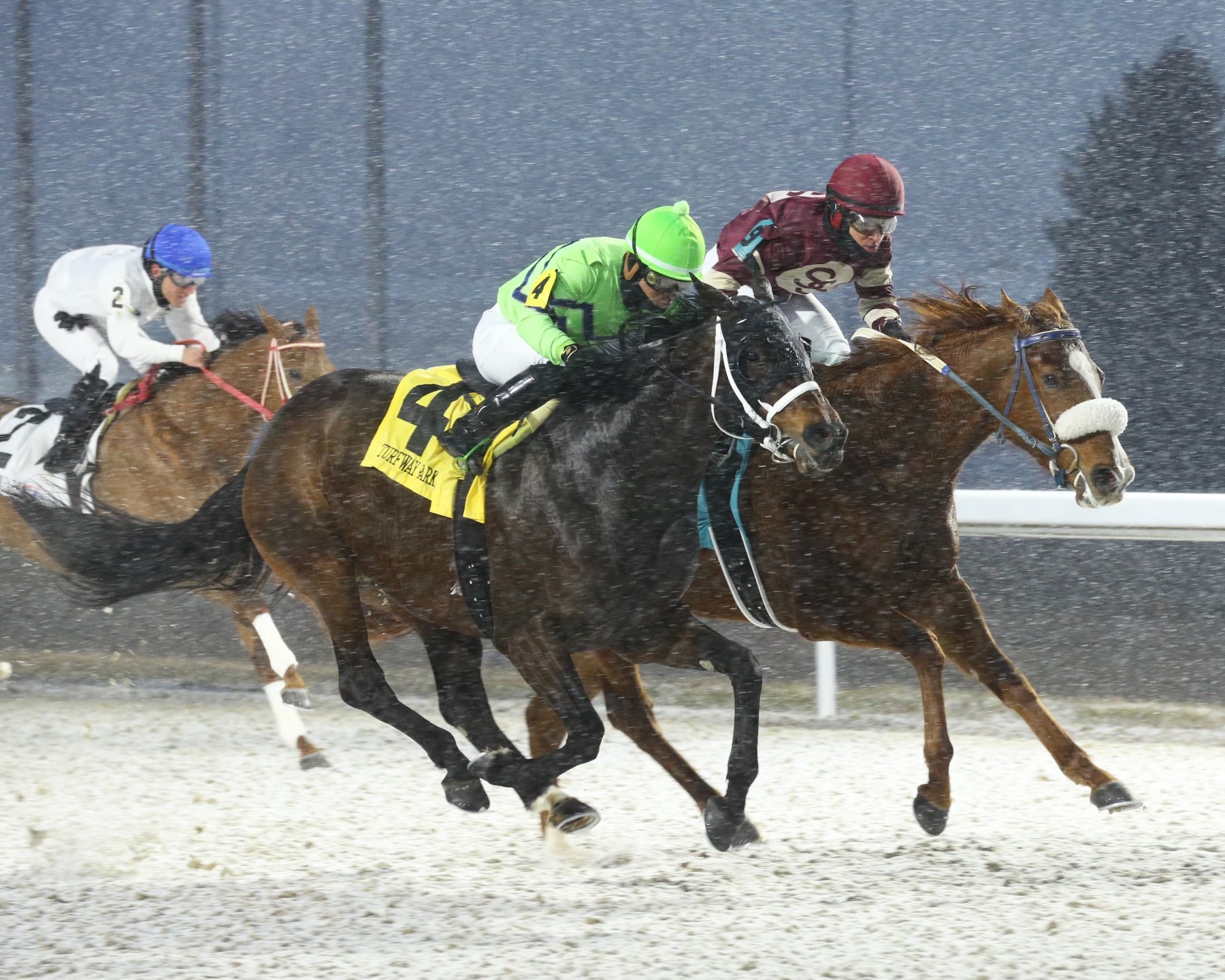
Snow and sleet, however, present a completely different logistical challenge:
- Slush Accumulation: If frozen precipitation falls rapidly during a live card, it can mix into the top layer faster than the maintenance crew can harrow it out, temporarily creating a heavier, deadened surface.
- Inside Rail Drag: Heavy moisture mixed with slush occasionally drifts toward the inner rail before draining, which can cause the inside path to become noticeably slower than the 3-wide or 4-wide paths.
- Scratch Rates: Inclement winter travel causes elevated veterinary and trainer scratches, thinning field sizes and dramatically altering projected pace scenarios.
3. Wind Shear and Stretch Battles
Turfway Park's open configuration exposes the homestretch to severe gusts sweeping across the Ohio River Valley. Wind speeds of 15 to 25 mph frequently play a decisive role in close finishes.
A sustained headwind blowing down the lane punishes pacesetters who contest fast opening fractions, creating an environment where deep closers sweep past exhausted leaders in the final sixteenth of a mile. When the wind shifts to a tailwind pushing horses home, front-runners become nearly impossible to catch, posting lower-than-average final quarter times while holding off challengers.
Analyzing Track Bias: Speed vs. Closers at Turfway
Examining recent race result sheets reveals that track bias at Turfway correlates directly with daily meteorological shifts. Handicappers tracking the meet have noted clear patterns based on prevailing weather profiles:
- Cold, Dry Evenings: Favor tactical speed and stalkers positioned within three lengths of the lead turning for home. The firmer footing reduces fatigue for horses setting modest early splits.
- Wet, Raining Cards: Tend to provide the fairest racing conditions. With minimal kickback and optimal vertical drainage, horses can win from on the lead, along the rail, or sweeping wide around the turn.
- Thawing, Humid Conditions: Favor horses with proven synthetic stamina. As the footing loosens, early leaders face greater energy expenditure, allowing sustained closing kicks to prevail from off the pace.
Handicapping Takeaways: How to Adjust for Weather at Turfway
Rather than avoiding Turfway cards during adverse weather, smart handicappers use weather data to uncover value that the general betting public overlooks. Before placing wagers, consider these concrete steps:
- Check the Track Temperature, Not Just Air Temp: A track that absorbed sun all afternoon may race soft early in the card, only to tighten dramatically as temperatures plummet after sundown under the lights.
- Monitor Early Fractions and Variants: Pay close attention to the opening quarter and half-mile splits in races 1 and 2. If horses setting fast paces are maintaining momentum through the wire, the surface is playing firm and speed-friendly.
- Discount Dirt Form in Wet Conditions: Never assume a horse with poor form on a "sloppy" dirt track will struggle on a wet Tapeta track. Synthetic tracks behave far more like turf when wet, making grass pedigree a much stronger predictor of success.
- Watch for Wind Direction: Check real-time local weather observations for Florence, KY. A 20 mph headwind in the homestretch favors stamina over pure early speed every time.
The Final Verdict
Did weather impact recent Turfway horse racing results? The factual answer is yes, but through subtle biomechanical and physics-based shifts rather than the chaotic mud baths seen on traditional dirt ovals. By factoring temperature-driven wax density, precipitation type, and wind velocity into your race analysis, you can anticipate track behavior accurately and capitalize on mispriced horses all winter long.