U-Haul Trailer Hitch Installation: What to Expect
Understanding U-Haul Trailer Hitch Installation Services

Adding a trailer hitch to your vehicle opens up a world of possibilities, from towing utility trailers and boats to mounting bike racks for weekend getaways. When it comes to sourcing and mounting towing equipment, many drivers turn to the nation's largest moving and storage network. A professional uhaul trailer hitch installation is one of the most popular choices for vehicle owners who want a seamless, reliable setup without crawling under their car in the driveway.
Whether you purchase a custom-fit Class 1, Class 2, Class 3, or heavy-duty hitch, understanding the installation process, costs, and component requirements will help you prepare your vehicle properly. Here is a comprehensive breakdown of what you need to know before booking your appointment.
Types of Trailer Hitches and Weight Classes
Before any physical work begins, you need to ensure you are getting the right hitch for your vehicle and your towing needs. U-Haul primarily installs custom-fit hitches manufactured by top brands like Curt and Draw-Tite, designed specifically to bolt onto your vehicle's frame without requiring drilling or welding in most cases.
Hitch Classes Explained
- Class 1: Rated up to 2,000 pounds Gross Trailer Weight (GTW) with a 200-pound tongue weight. Ideal for light-duty towing with smaller cars and compact crossovers.
- Class 2: Rated up to 3,500 pounds GTW and 350-pound tongue weight. Commonly installed on mid-sized sedans and smaller SUVs.
- Class 3: Rated up to 5,000 to 8,000 pounds GTW (or higher with weight distribution). Perfect for trucks, large SUVs, and crossovers towing campers, utility trailers, or boats.
- Class 4 and 5: Heavy-duty hitches designed for full-sized pickup trucks handling massive loads exceeding 10,000 pounds.
The Professional Installation Process
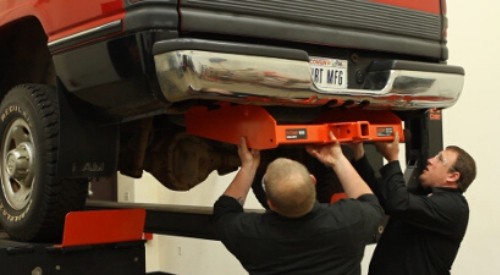
Opting for professional installation at a U-Haul authorized center typically takes between one to two hours, depending on your vehicle's make and model. Some vehicles require the temporary removal of rear bumper fascias, exhaust lowering, or heat shield trimming, which can add time to the job.
When you drop off your vehicle, trained technicians follow a strict safety protocol:
- Vehicle Inspection: Technicians inspect the vehicle frame, suspension, and electrical system to ensure it can safely support the intended hitch class.
- Alignment and Mounting: The custom-fit hitch is raised into position against the vehicle's factory mounting points. High-strength fasteners and torque wrenches are used to secure the unit to factory specifications.
- Electrical Integration: If you are towing anything with working tail lights, brake lights, or turn signals, a custom wiring harness is integrated into your vehicle's electrical system.
- Final Quality Check: The installation is inspected for proper torque, secure wiring connections, and overall structural integrity before handing the keys back to you.
Towing Wiring and Lighting Requirements
A physical hitch is only half the equation. To tow legally and safely on public roads, your trailer lights must synchronize with your vehicle. During your service, you will likely need to add a lighting package alongside your hitch setup.
Tail Light Converters

Modern vehicles often use separate circuits for turn signals and brake lights, while traditional trailers use a combined circuit. Technicians install a powered tail light converter module that safely bridges this gap without overloading your car's sensitive onboard computer system or blowing fuses.
Flat-4 vs. 7-Way Connectors
- 4-Way Flat Plug: The standard connection for basic utility trailers, cargo carriers, and small boat trailers, controlling running lights, brake lights, and turn signals.
- 7-Way Round Plug: Required for larger campers and heavy utility trailers equipped with electric brakes and auxiliary power feeds.
Cost Breakdown: Parts and Labor
Pricing for a complete setup depends on your vehicle type, the hitch class required, and whether you need custom wiring. When budgeting, expect costs to break down into three primary categories:
- The Hitch Component: Prices generally range from $150 to $350 for standard light-to-medium-duty hitches.
- Installation Labor: Professional labor fees usually range from $75 to $150, though some promotional periods offer reduced or free installation when you purchase the hitch directly from the facility.
- Wiring Harness: A standard plug-and-play wiring kit costs between $50 and $100 for parts, plus a small labor fee if installed concurrently.
DIY vs. Professional Installation
While DIY mechanics can technically order a hitch online and install it in a home garage, professional installation offers distinct advantages. Working underneath a suspended vehicle without a proper hydraulic lift can be physically demanding and dangerous. Furthermore, custom-fit hitches are heavy—often weighing 40 to 60 pounds—making them awkward to hold in place while threading bolts into blind frame holes.
Additionally, professional setups often come with nationwide warranties on both parts and labor, providing valuable peace of mind when you hit the highway with a heavy load behind you.
Tips for Preparing Your Vehicle
To ensure a smooth service appointment, take a few simple steps before heading to your local center:
- Clear the Trunk: Remove heavy items, spare tires (if mounted in the trunk floor), and clutter to give technicians easy access to interior wiring pathways if necessary.
- Clean the Underbody: If your vehicle has been driven through mud, heavy road salt, or snow, take it through a car wash with an undercarriage spray to remove debris around the frame mounting points.
- Verify Your Towing Capacity: Check your vehicle owner's manual to confirm your exact Gross Combined Weight Rating (GCWR). Do not rely solely on the hitch rating; your car can only tow as much as its manufacturer allows.
Final Thoughts
Equipping your vehicle with the right towing hardware expands its utility exponentially. By opting for a professional setup, you ensure that structural components are torqued to exact safety standards and electrical integrations will not damage your car's computer. Schedule an appointment, verify your vehicle's towing limits, and you will be ready to hit the road safely with your trailer in tow.