Understanding Antonym Severity in Language and NLP
When we think of opposites, words like hot and cold or alive and dead immediately come to mind. However, language is rarely as simple as binary black-and-white choices. Words exist on a rich, nuanced spectrum of meaning and intensity. This brings us to the concept of antonym severity, a linguistic and computational framework that measures not just whether two words are opposites, but how extreme, moderate, or subtle that opposition actually is.
Whether you are a writer looking to sharpen your prose, a linguist mapping semantic fields, or an AI developer training a large language model, understanding how antonyms scale in severity is essential for precise communication.
The Spectrum of Opposites: Types of Antonyms
To understand the severity of an antonym, we first need to look at how antonyms are classified in traditional linguistics. Not all opposites behave the same way:
- Binary (Complementary) Antonyms: These are absolute opposites with no middle ground. Something is either true or false, dead or alive, on or off. There is no real concept of severity here; an organism cannot be moderately dead.
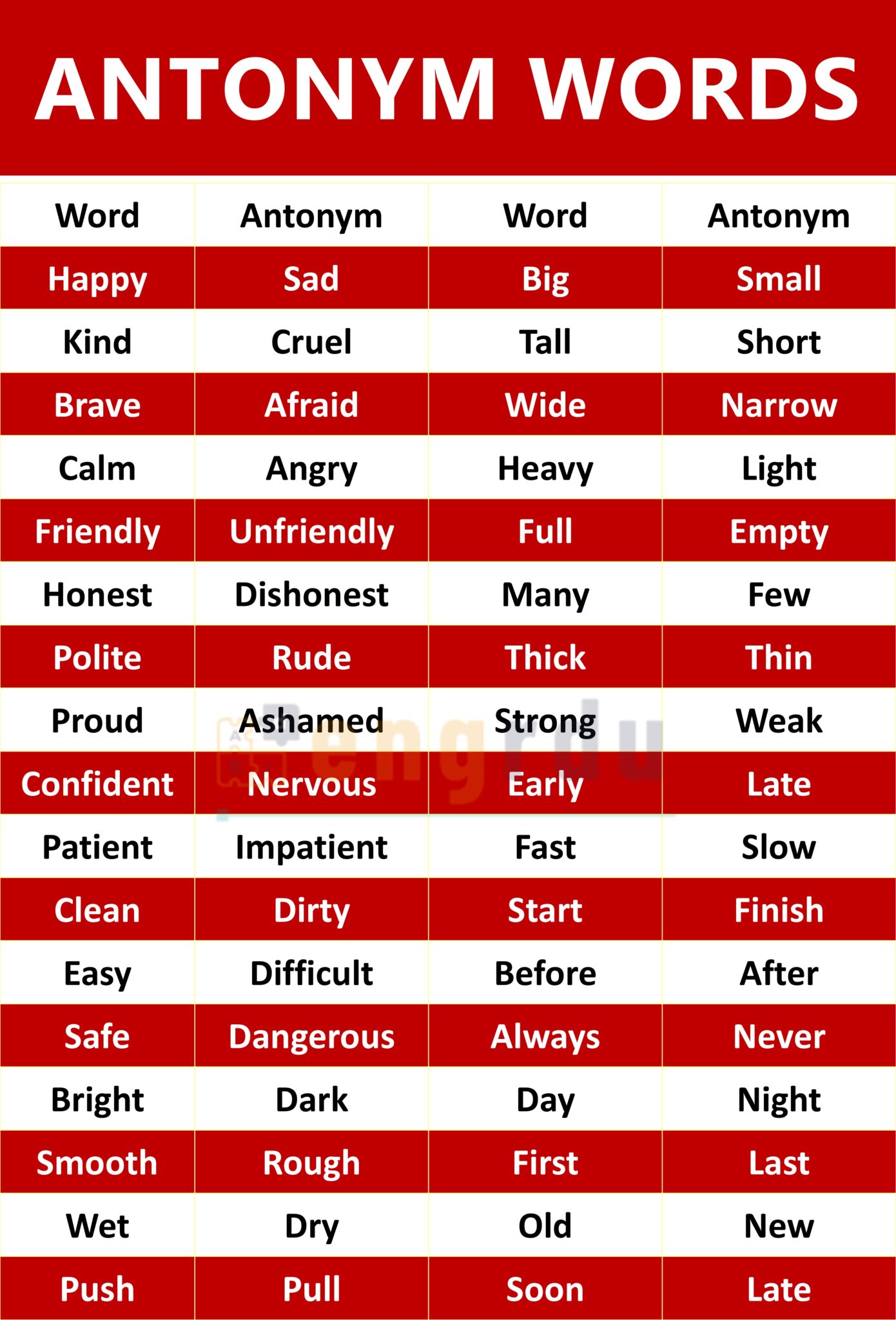
- Gradable Antonyms: This is where severity comes into play. Gradable opposites exist on a continuum. Words like warm and cool, or happy and sad, allow for degrees of intensity and comparison. You can be very hot, slightly warm, or freezing.
- Relational (Converses) Antonyms: These pairs describe a relationship from two different perspectives, such as teacher/student or borrow/lend. While they don't scale by intensity, they rely entirely on contextual symmetry.
Gradable antonyms form the backbone of antonym severity because they allow speakers to dial the emotional or physical intensity of a statement up or down.
How Antonym Severity Works in Daily Language
In everyday communication, we constantly manipulate the severity of antonyms to convey precise emotional weight, urgency, or scale. Consider how shifting from a moderate adjective to an extreme one changes the entire tone of a sentence.
Take the baseline concept of size. If you describe a house as small, the antonym is large. However, if you escalate the severity, you might use minuscule and gigantic, or even microscopic and colossal. Each step up the ladder changes the cognitive impact on the listener.
Emotional Intensity and Gradation
Emotional vocabulary relies heavily on subtle shifts in opposite scales. Consider the spectrum between happiness and despair:
- Mild: Content vs. Discontented
- Moderate: Happy vs. Sad
- Severe: Ecstatic vs. Devastated
By understanding antonym severity, writers can avoid weak modifiers like "very" or "extremely" and instead select the exact lexical item that matches the intended gravity of the situation.
Antonym Severity in Natural Language Processing (NLP)
While humans intuitively grasp that freezing is a more intense opposite of sweltering than cold is of warm, teaching this to a computer is a different challenge. In Natural Language Processing and machine learning, accounting for antonym severity is critical for tasks like sentiment analysis, text summarization, and machine translation.
Early AI models often treated word embeddings as flat vector spaces where opposites were simply pointing in different directions. Modern semantic models, however, incorporate scalar dimensions. They analyze context windows to determine whether a text demands a mild contrast or an extreme reversal.
Challenges in Semantic AI
Computational linguists face several hurdles when programming machines to recognize the severity of opposing terms:
- Contextual Shift: The severity of an antonym often depends entirely on the noun it modifies. A "heavy rain" implies something very different from a "heavy loss," shifting the baseline for what constitutes an extreme opposite.
- Cultural and Regional Nuance: Intensifiers change across dialects. What is considered a severe antonym in one region might be a casual understatement in another.
- Sarcasm and Irony: Humans frequently use severe antonyms ironically (e.g., calling a disaster "just fantastic"), requiring advanced pragmatic reasoning from AI models.
Practical Applications for Writers and Editors
Mastering the nuances of contrasting intensities can dramatically improve your writing style. Relying on the same basic opposites can make prose feel flat, whereas leveraging a wider vocabulary of degrees brings scenes and arguments to life.
When editing your work, look for opportunities to replace standard adjectives with calibrated opposites. Instead of writing, "The weather went from bad to good," specify the exact degree of change: "The weather shifted from treacherous to idyllic." This precision eliminates ambiguity and paints a clearer picture for your audience.
Conclusion
Antonym severity proves that language is rarely binary. By looking beyond simple opposites and examining the gradations, scales, and intensities that exist between words, we unlock a deeper appreciation for how human communication works. Whether you are crafting a compelling narrative or building the next generation of semantic AI, respecting the fine shades of opposite meanings is the key to true precision.