Understanding ATP Consumption and Production in Cells
Introduction to ATP and Cellular Energy

Cellular metabolism relies on a continuous balancing act of energy currency. When students and science enthusiasts look for the exact mechanism behind this balance, they often ask: which statement best describes atp consumption and production in living organisms? To answer this accurately, we must examine how adenosine triphosphate (ATP) acts as the primary energy carrier, driving everything from muscle contraction to active transport across cell membranes.
At any given moment, your cells are simultaneously breaking down and building up molecules. Understanding this dynamic relationship requires a closer look at the biochemical pathways responsible for making ATP and the cellular processes that spend it.
The Core Relationship: Production vs. Consumption
The most accurate statement describing ATP dynamics is that ATP production and consumption occur in a continuous, balanced cycle where energy released from nutrient breakdown is captured to synthesize ATP, which is then immediately hydrolyzed to power cellular work.
Rather than existing as a static storage battery that fills up and empties completely, the ATP pool in a human body turns over rapidly. A single ATP molecule may be recycled thousands of times per day, especially in high-demand tissues like skeletal muscle and the brain.
How Cells Produce ATP
ATP production is the process of adding a phosphate group to adenosine diphosphate (ADP), a reaction known as phosphorylation. The three main pathways for generating ATP include:
- Glycolysis: Occurs in the cytoplasm, breaking down glucose into pyruvate and yielding a net gain of two ATP molecules without requiring oxygen.
- The Krebs Cycle (Citric Acid Cycle): Takes place in the mitochondrial matrix, producing electron carriers and a small amount of ATP.
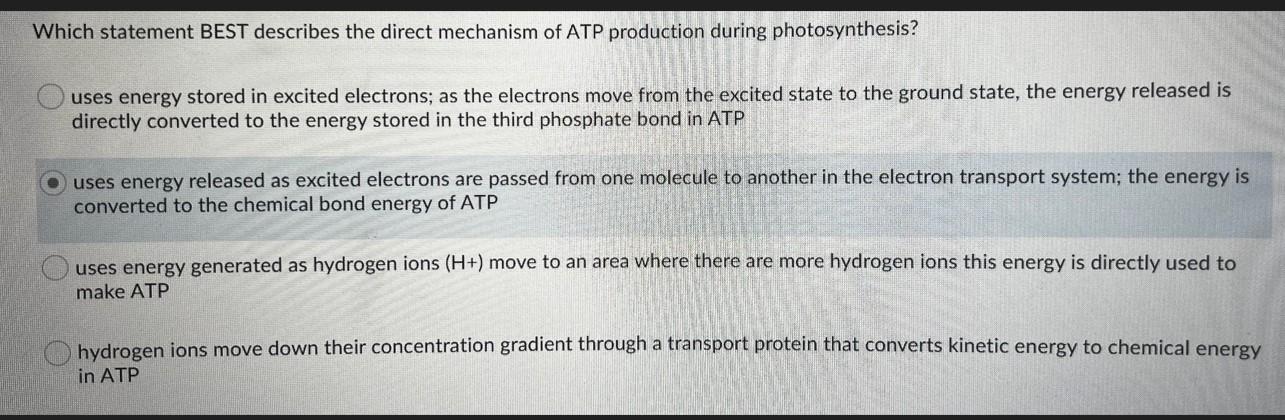
- Oxidative Phosphorylation: The major ATP producer, driven by the electron transport chain and chemiosmosis in the mitochondria, yielding roughly 28 to 32 ATP molecules per glucose.
How Cells Consume ATP
Video: ATP! ENERGY! EXPLAINED! #atp #bioenergetics #biochemistry #physiology #mitochondria #cell #cells

ATP consumption happens whenever a cell needs to perform endergonic (energy-requiring) reactions. Through a process called hydrolysis, the terminal phosphate bond of ATP is broken, releasing free energy and converting ATP into ADP and an inorganic phosphate ($P_i$). Common uses include:
- Active Transport: Moving ions and molecules against their concentration gradients, such as the sodium-potassium pump ($Na^+/K^+-ATPase$).
- Mechanical Work: Muscle contraction, where myosin heads use ATP to walk along actin filaments.
- Chemical Synthesis: Building complex macromolecules like proteins, lipids, and nucleic acids from simpler precursors.
Dynamic Equilibrium in Metabolism
To fully grasp which statement best describes ATP consumption and production, one must understand metabolic homeostasis. Cells do not stockpile massive reserves of ATP because the molecule is relatively unstable and heavy in bulk. Instead, they maintain a steady-state concentration.
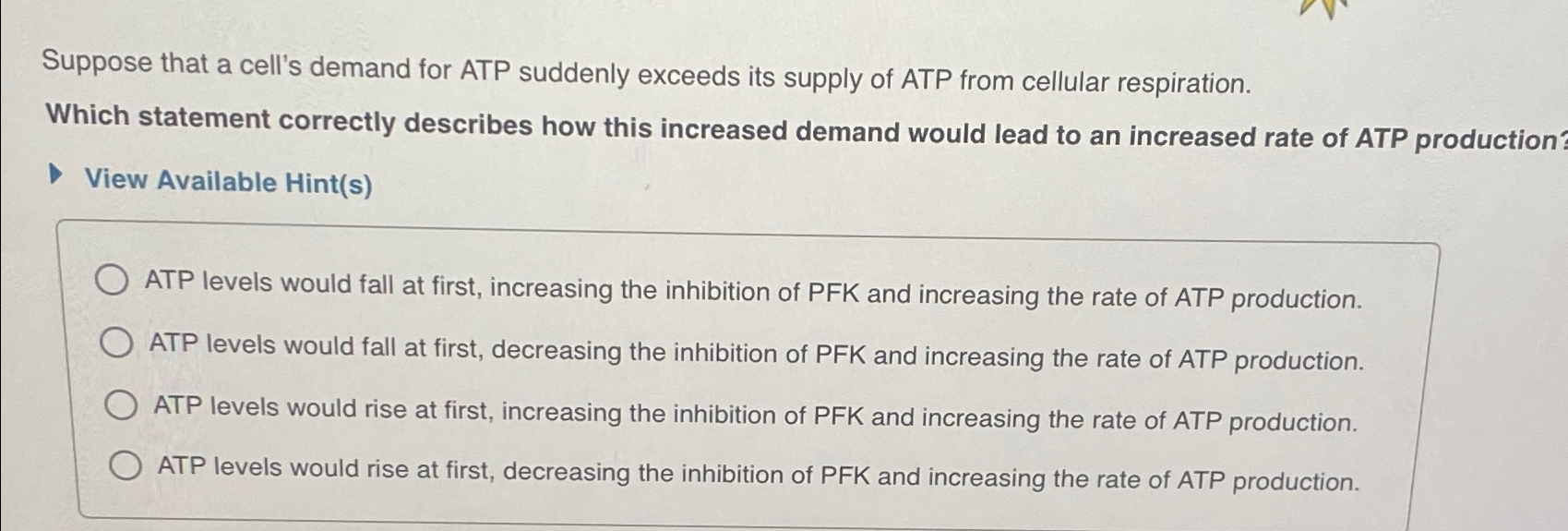
When energy demand increases—such as when you begin sprinting—the rate of ATP consumption spikes. This sudden depletion of ATP and accumulation of ADP signals metabolic pathways to accelerate ATP production. Conversely, when the body is at rest, ATP production slows to match basal consumption levels.
Common Misconceptions About ATP
Several myths surround how biological energy functions. Clearing these up helps reinforce the true nature of cellular energy exchange:
- Myth: ATP is a long-term energy storage molecule. Fact: Molecules like glycogen and triglycerides store energy long-term; ATP is strictly short-term, immediate currency.
- Myth: ATP is stored in large quantities. Fact: A resting human has only about 100 grams of ATP in their entire body at any given time, meaning continuous recycling is mandatory for survival.
- Myth: Production and consumption are separate phases. Fact: They happen concurrently; cells are constantly spending ATP while simultaneously generating it elsewhere in the cytoplasm and mitochondria.
Conclusion
Ultimately, the best statement describing ATP consumption and production is that they form an unbroken, simultaneous loop of biochemical regeneration and utilization. By coupling exergonic breakdown pathways with endergonic cellular work, living organisms maintain the energy flow necessary to sustain life.