Understanding BACE: The Enzyme Behind Amyloid Plaques
In the study of neurodegenerative disorders, few molecular targets have drawn as much scientific scrutiny and investment as BACE (beta-site amyloid precursor protein cleaving enzyme). Often referred to simply as beta-secretase, BACE plays a pivotal role in the initiation of Alzheimer's disease pathology. By executing the primary cut in the biochemical cascade that produces toxic amyloid-beta peptides, this transmembrane aspartic protease became one of modern medicine's most sought-after therapeutic targets.

Despite decades of intense research, BACE remains a complex biological paradox. While eliminating its activity can dramatically reduce the buildup of brain plaques, complete inhibition causes unexpected neurological and physiological disruptions. Understanding how BACE functions—both in disease and in normal brain physiology—reveals why targeted neurotherapeutics require extraordinary precision.
What Is BACE? Structure and Biological Function
BACE belongs to the family of pepsin-like aspartic proteases. In humans, the enzyme exists primarily in two distinct isoforms:
- BACE1: Abundantly expressed in neurons within the central nervous system, particularly in the hippocampus and cerebral cortex. It is the primary enzyme responsible for generating the amyloid-beta (Aβ) peptides linked to Alzheimer's disease.
- BACE2: A close homolog expressed primarily in peripheral tissues, such as the pancreas, colon, and kidneys, with lower levels found in glial cells within the brain. BACE2 plays crucial roles in pigmentation and pancreatic β-cell function.
Structurally, BACE1 is a type-I transmembrane glycoprotein. Its active catalytic site resides on the luminal or extracellular side of cellular membranes, positioned perfectly to interact with surface receptors and transmembrane proteins as they cycle through endosomes and the secretory pathway. Because endosomes maintain an acidic microenvironment (pH 4.5 to 5.5), BACE1 operates at peak efficiency within these intracellular sorting compartments.
The Amyloid Cascade: How BACE Drives Pathology
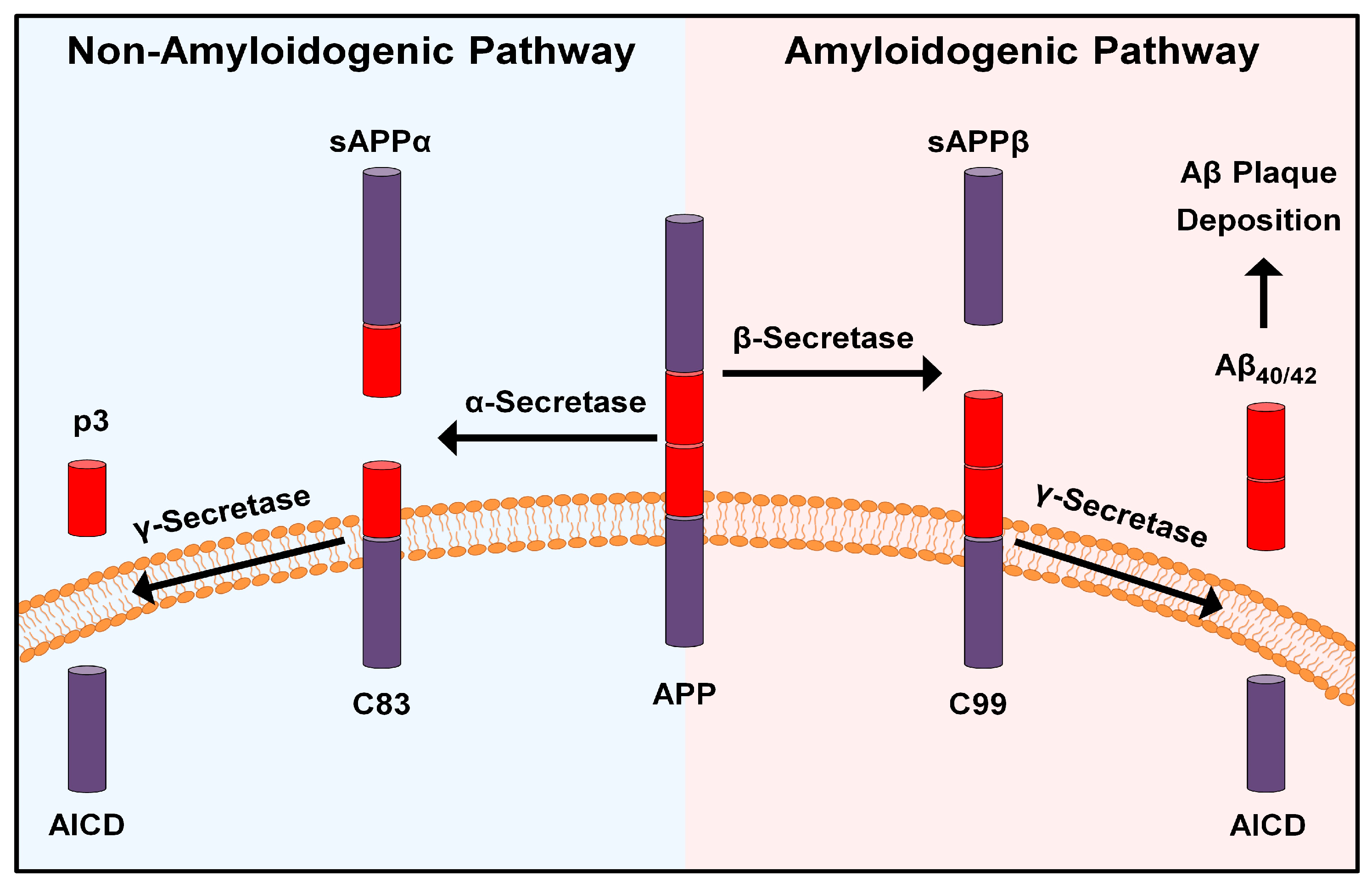
To understand the clinical significance of BACE, one must look at how brain cells process amyloid precursor protein (APP), an integral membrane protein found throughout the nervous system. The cellular fate of APP follows one of two mutually exclusive pathways:
1. The Non-Amyloidogenic Pathway (Protective)
Under healthy conditions, the majority of APP is cleaved by an enzyme called α-secretase. This cleavage takes place right through the middle of the amyloid sequence, preventing toxic peptides from ever forming. The result is a neuroprotective fragment known as soluble APP alpha (sAPPα).
2. The Amyloidogenic Pathway (Pathological)
When APP encounters BACE1 instead, the enzyme cleaves the protein at the N-terminus of the amyloid sequence, yielding a soluble fragment (sAPPβ) and leaving behind a membrane-bound fragment (C99). Subsequently, another enzyme complex called γ-secretase cuts the C99 fragment within the cell membrane.
This sequential cleavage liberates hydrophobic amyloid-beta peptides, most notably Aβ40 and the highly aggregation-prone Aβ42. Once free in the extracellular space, these monomers assemble into oligomers, protofibrils, and eventually dense senile plaques. These plaques contribute to synaptic dysfunction, neuroinflammation, hyperphosphorylation of tau protein, and widespread neuronal death.
The Race for BACE Inhibitors in Alzheimer's Disease
Because BACE1 performs the rate-limiting initial step in Aβ production, pharmaceutical companies spent over two decades developing small-molecule BACE inhibitors. The hypothesis was straightforward: if medicine could block BACE1, it could shut down the production line of amyloid plaques before neurodegeneration began.
Between 2010 and 2020, several potent, orally bioavailable, brain-penetrant BACE inhibitors advanced to large-scale Phase II and Phase III clinical trials, including:
- Verubecestat (MK-8931)
- Atabecestat (JNJ-54861911)
- Lanabecestat (AZD3293)
- Elenbecestat (E2609)
- Umibecestat (CNP520)
Biochemically, these molecules were a triumph. In clinical trials, they lowered Aβ concentrations in cerebrospinal fluid by 70% to more than 90%. Yet, despite achieving their primary biochemical goal, almost all major late-stage trials were terminated early due to lack of clinical efficacy or unexpected adverse events.
Why Did Early BACE Inhibitor Trials Stumble?

The failure of first-generation BACE inhibitors provided critical lessons about human neurobiology and the complexity of therapeutic timing.
1. Broad Physiological Substrates
Researchers initially assumed that APP was the primary substrate for BACE1. However, proteomic studies revealed that BACE1 processes dozens of other functional neural proteins. Critical among these is Neuregulin-1 (NRG1), a signaling protein required for proper myelination of peripheral nerves and synaptic plasticity, as well as neural cell adhesion molecules (NCAMs) and voltage-gated sodium channel subunits. Completely blocking BACE1 disrupted these pathways, causing side effects such as reversible cognitive blunting, sleep disturbances, weight loss, and changes in hair pigmentation.
2. The Problem of Intervention Timing
Many early trials enrolled individuals who already exhibited mild-to-moderate Alzheimer's dementia. By this stage, extensive synaptic loss and neuronal death have already occurred. Even if an inhibitor halts new plaque generation, clearing existing damage or restoring lost neural architecture cannot be achieved by blocking BACE alone.
3. Off-Target BACE2 Inhibition
Several early drug candidates lacked strict selectivity, inhibiting both BACE1 and BACE2. Because BACE2 regulates processing of pigment-related proteins (like PMEL17) and supports pancreatic health, cross-reactivity triggered unintended skin, hair, and metabolic side effects.
The Modern Outlook: Rethinking BACE Targeting
The setbacks of early trials did not invalidate BACE as an important biological target; rather, they refined how scientists approach it. Modern therapeutic strategies are shifting toward smarter, safer modalities:
Low-Dose and Partial Inhibition
Genetic evidence from humans carries immense weight in this revised strategy. A rare protective mutation discovered in Iceland (the APP A673T mutation) reduces BACE1 cleavage of APP by merely 20% to 30%. Individuals with this variant experience lifelong protection against Alzheimer's disease and maintain superior cognitive health into their nineties without noticeable adverse effects. Consequently, modern researchers argue that clinical candidates should not aim for 90% shutdown; a modest 20% to 40% reduction may provide meaningful prevention with negligible side effects.
Preclinical and Prodromal Prevention
With advances in blood-based biomarkers (such as plasma p-tau217 and Aβ42/40 ratios), clinicians can now identify individuals accumulating amyloid pathology years before symptoms emerge. Initiating mild BACE modulation during this silent, preclinical window could delay or prevent the onset of cognitive decline.
Substrate-Specific and Allosteric Modulation
Rather than locking up the catalytic pocket entirely, structural biologists are working on allosteric modulators. These compounds selectively interfere with BACE1's ability to bind APP while sparing non-amyloid substrates like Neuregulin-1, dramatically lowering the risk of neurological toxicity.
Summary: A Vital Piece of the Neurodegenerative Puzzle
BACE remains one of the most thoroughly characterized enzymes in modern neurobiology. While the journey from basic enzyme discovery to clinical application has highlighted the delicate balance of brain biochemistry, it has also provided invaluable clarity. As medicine shifts from reactive dementia treatment to proactive prevention, precision modulation of BACE may still offer a path forward in protecting long-term cognitive health.