Understanding Court Date Rescheduling in North Carolina
When you are summoned to appear before a judge, missing that appointment can derail your life, lead to significant fines, or even result in an arrest warrant. However, genuine emergencies, scheduling conflicts, and procedural delays happen every day. Understanding court date rescheduling in North Carolina is critical for anyone navigating the state’s unified court system, whether you are dealing with a minor traffic citation, a family court dispute, or a serious criminal charge.

In North Carolina jurisprudence, rescheduling a court appearance is formally known as requesting a continuance. Continuances are not automatic, nor are they an inherent right. They require strict adherence to local rules, statutory guidelines, and judicial discretion. Here is what you need to know to handle the process properly and protect your legal standing.
Continuances: The Legal Basis for Rescheduling
Under the North Carolina General Statutes and general court practice, the presiding judge holds broad discretion over whether to grant or deny a request to move a court date. In civil proceedings, Rule 40(b) of the North Carolina Rules of Civil Procedure governs continuances, stating that a court may grant a continuance only for good cause shown and upon such terms as justice may require.
In criminal proceedings, constitutional protections—such as the Sixth Amendment right to effective assistance of counsel and a speedy trial—intersect with statutory timelines. If an attorney was only recently retained or appointed, the court often permits an initial continuance so the defense can review discovery materials. However, judges are increasingly mindful of docket management and case backlog reduction targets established by the North Carolina Administrative Office of the Courts (NCAOC).
Valid Grounds for Requesting a Continuance
Judges will not grant a continuance simply because a court date is inconvenient. You must demonstrate legitimate, verifiable cause. Commonly accepted grounds in North Carolina courtrooms include:
- Medical Emergencies: Sudden hospitalization, acute contagious illness, or severe physical incapacitation affecting the defendant, a primary party, or a necessary witness. Written medical documentation is almost always required.
- Attorney Conflict: Under North Carolina practice rules, attorneys who have overlapping trial schedules must prioritize courts based on a clear hierarchy (e.g., appellate courts take precedence over superior courts, which take precedence over district courts).
- Pending Discovery: In criminal or complex civil litigation, if the state or opposing counsel has not provided mandatory evidence or forensic lab reports in a timely manner, the court routinely grants time to obtain and review these materials.
- Recent Retention of Legal Counsel: If you appear for an initial setting and intend to hire a private attorney, District Court judges usually grant a one-time continuance to allow you to retain counsel.
- Family Emergencies: Bereavement, the death of an immediate family member, or urgent child-protection crises.
Procedural Steps to Reschedule a Court Date
Rescheduling a court date is a multi-step administrative and legal process. Following the proper sequence can mean the difference between an approved extension and an order for your arrest.
1. Check County-Specific Local Rules
North Carolina is divided into numerous judicial districts, and each district has its own set of Local Administrative Rules. For example, Mecklenburg County (District 26) and Wake County (District 10) have formal, written continuance policies with strict deadlines, often requiring applications to be submitted at least five to ten business days before the scheduled session. Never assume the rules in one county apply to another.
2. Confer with Opposing Counsel or the District Attorney
A continuance request faces far less judicial resistance if it is "uncontested" or filed by consent. In a civil dispute, your attorney should contact opposing counsel to determine if they object to moving the date. In criminal or traffic cases, defense counsel typically confers with the assistant district attorney (ADA) assigned to that courtroom. If both sides agree, the request is submitted as a "Consent Motion for Continuance."
3. Draft and File a Formal Written Motion
Except in sudden morning-of emergencies, continuances should never be requested orally by phone. A formal written document—titled a Motion for Continuance—must be filed with the Clerk of Superior Court in the county where the matter is pending. The motion should clearly state:
- The current court date, file number, and courtroom assignment.
- The specific, factual justification for the request.
- The position of the opposing party (consented, opposed, or uncontacted despite due diligence).
- A proposed new date or session that aligns with court calendar availability.
4. Obtain a Signed Judicial Order
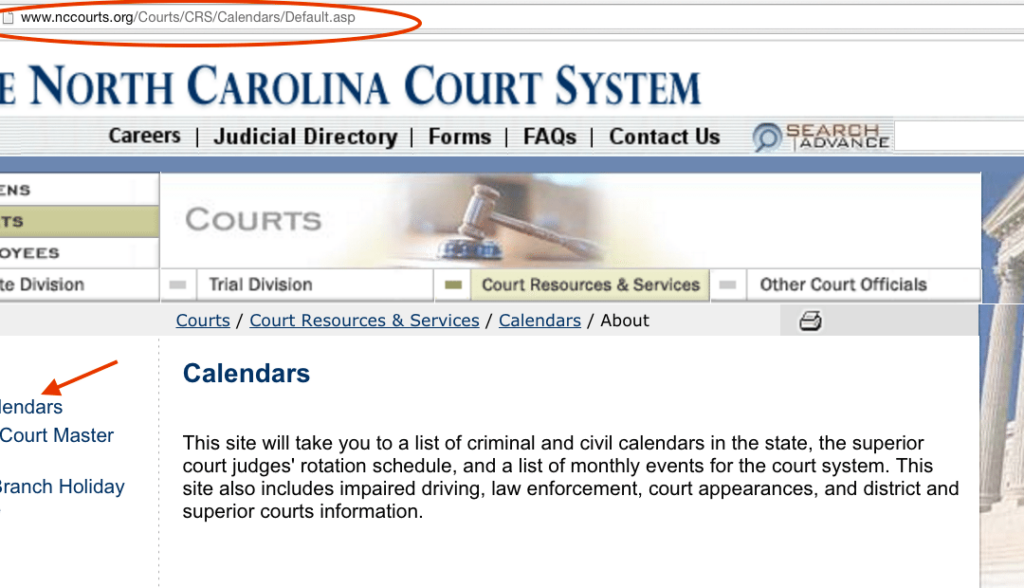
Filing a motion does not mean your court date is moved. You must receive a formal order signed by a judge granting the continuance. Until that order is entered into the NCAOC computerized record system, your original court date remains legally binding.
Nuances in Understanding Court Date Rescheduling in North Carolina
The type of case you are dealing with dramatically dictates how difficult it is to obtain a continuance.
Traffic Infractions and Minor Misdemeanors
For standard traffic violations—such as speeding or failing to yield—the Clerk of Court or the District Attorney’s office often maintains an administrative continuance policy. In many counties, a defendant or their attorney can obtain a single, 30-day administrative continuance through the clerk’s office without presenting formal legal arguments to a judge, provided the request is made well before the court date.
Civil and Domestic Relations Cases
In family court (child custody, equitable distribution, child support), delays can cause significant hardship to the parties involved. Family court judges scrutinize continuance motions heavily. If you seek to reschedule a custody trial, you must be prepared to show extraordinary cause, especially if the matter has lingered on the docket for months.
Superior Court Felony Cases
In Superior Court, where felony indictments and high-stakes civil litigation are heard, continuances are tightly monitored through administrative scheduling orders. Trial dates are set months in advance, and witnesses—including expert witnesses and law enforcement investigators—are subpoenaed. Moving these dates disrupts large numbers of people, so judges will demand compelling evidence before altering a trial calendar.
The Consequences of an Unexcused Absence (Failure to Appear)
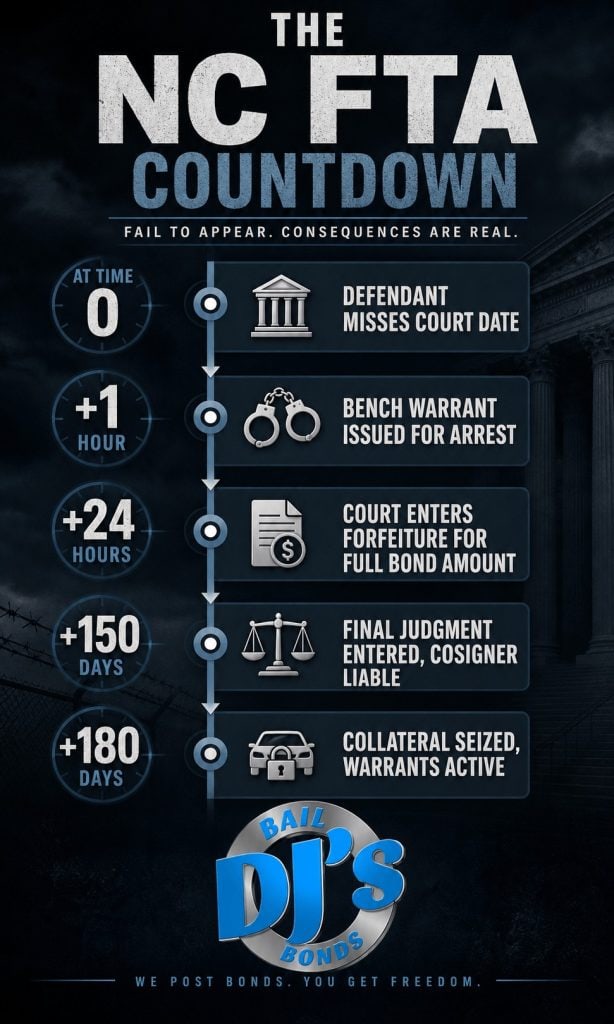
If you fail to reschedule your date correctly and choose simply not to show up, the repercussions in North Carolina are swift and punitive.
- Order for Arrest (OFA): In criminal cases, the judge will immediately revoke your bond and issue an OFA. Law enforcement officers can arrest you at home, at your workplace, or during a routine traffic stop.
- Failure to Appear (FTA) Penalties: Under N.C.G.S. § 7A-304(a)(6), the court can levy an automatic $200 failure-to-appear penalty in criminal and infraction cases if you do not resolve the matter or obtain an appearance within 20 days.
- Driver's License Revocation: The NCAOC will notify the North Carolina Division of Motor Vehicles (NCDMV) of your failure to appear for a traffic or motor vehicle offense. The DMV will then suspend your driving privileges indefinitely until the court clears the record.
- Civil Default or Dismissal: In civil litigation, failing to appear can lead the judge to enter a default judgment against you if you are the defendant, or dismiss your claims entirely with prejudice if you are the plaintiff.
What to Do During a Last-Minute Emergency
If you experience a genuine emergency on the morning of your court date—such as an automobile accident on the way to the courthouse or an unexpected hospitalization—take the following steps immediately:
- Call Your Attorney: If you are represented, inform your attorney right away. They can appear on your behalf, explain your absence to the judge, and make an oral motion to hold the matter open or continue it.
- Contact the Clerk of Superior Court: If you are unrepresented, call the criminal or civil division of the Clerk of Court in your county as early as possible. Explain your situation, provide your case number, and ask for a message to be conveyed to the courtroom clerk.
- Preserve Tangible Evidence: Collect emergency room discharge summaries, towing slips, police incident reports, or mechanic receipts. You or your lawyer will need to present these to the judge at the earliest opportunity to request that any issued Failure to Appear or Order for Arrest be stricken ("recalled").
Final Thoughts
North Carolina courts place a high value on docket efficiency and personal accountability. While rescheduling a court date is entirely achievable under legitimate circumstances, it requires proactive communication, an understanding of statutory requirements, and attention to local procedural timelines. Whenever possible, consult a licensed North Carolina attorney to handle your continuance request to ensure your rights remain intact.