Understanding Log 10: Value, Rules, and Uses
When studying mathematics, science, or engineering, you will inevitably encounter logarithmic functions. Among these, the common logarithm stands out as the most widely used. A common question that students and professionals often ask involves evaluating expressions like 1 log 10, understanding what they mean, and applying them correctly in calculations.
In this guide, we will break down the mechanics of base-10 logarithms, explain the exact value of this expression, and explore why logarithms remain an indispensable tool for measuring everything from sound intensity to earthquake magnitudes.
What Does Log 10 Mean?
Before evaluating complex expressions, it helps to understand the fundamental definition of a logarithm. Essentially, a logarithm answers a specific question: To what power must I raise the base to get this number?
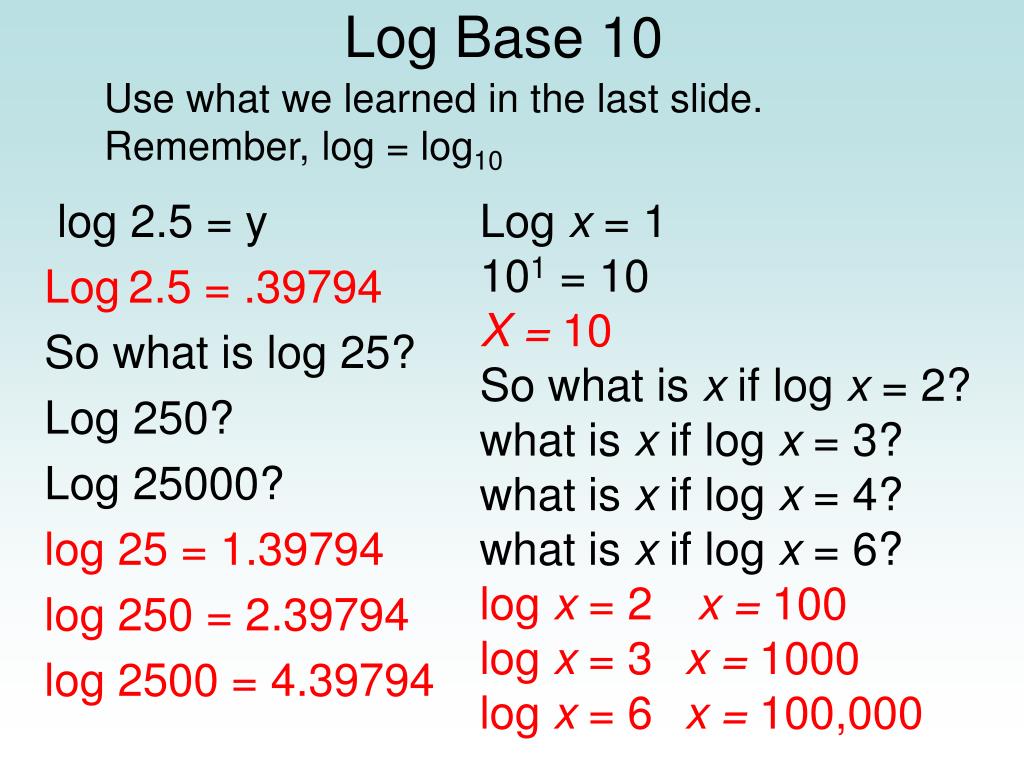
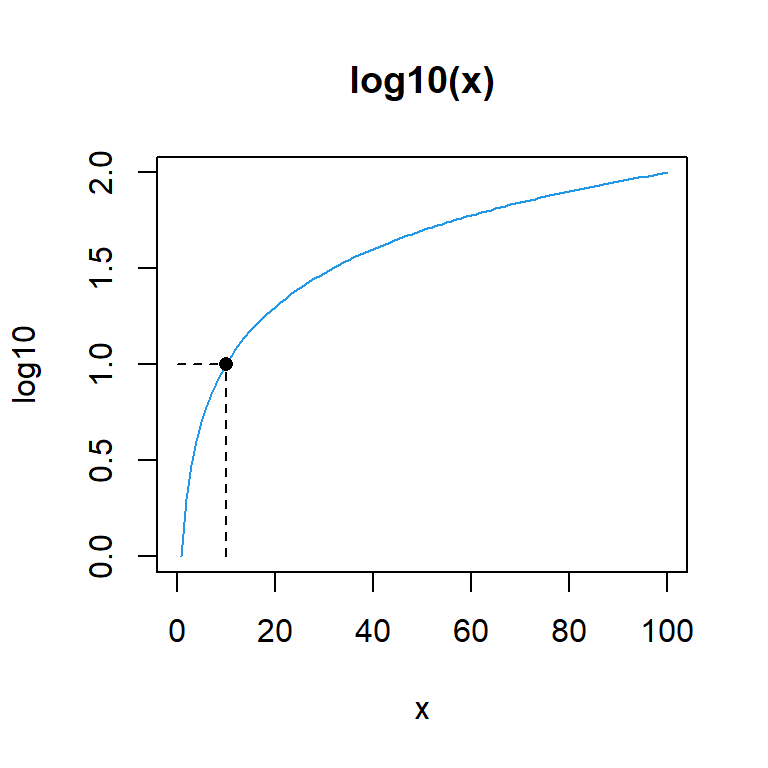
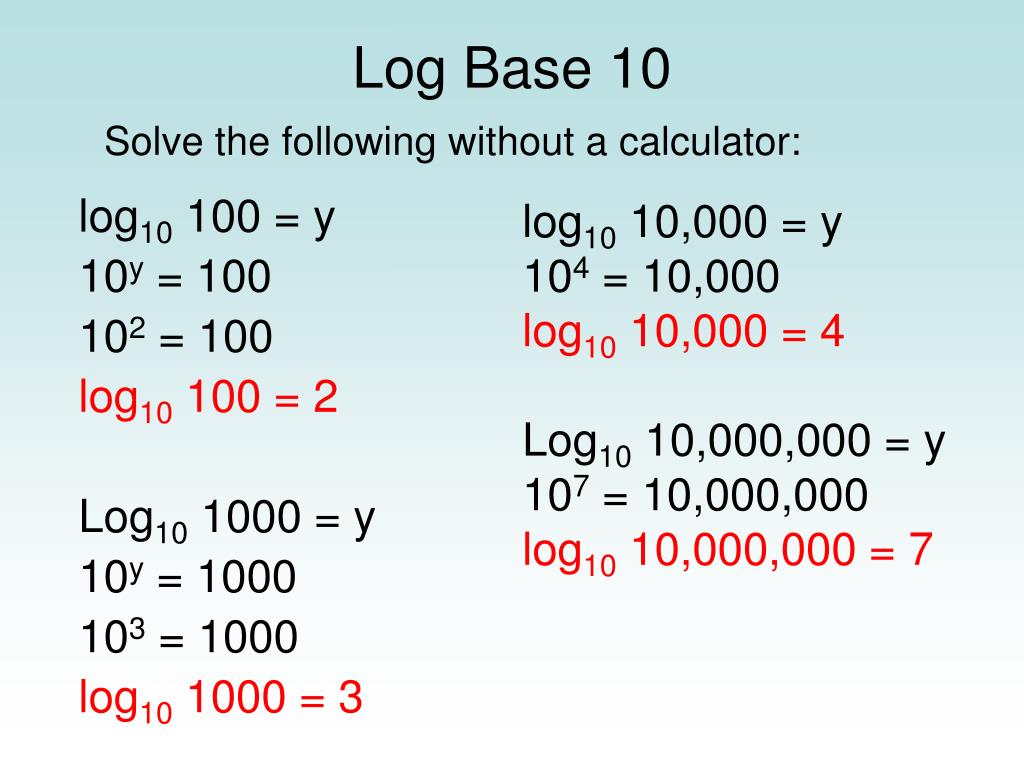
Mathematically, if $\log_{b}(x) = y$, it means that $b^y = x$. When working with the common logarithm, the base is always 10. In fact, calculators and textbooks often write the common logarithm simply as "log(x)" without explicitly writing the base 10 subscript. Therefore, $\log(10)$ asks the question: 10 raised to what power equals 10?
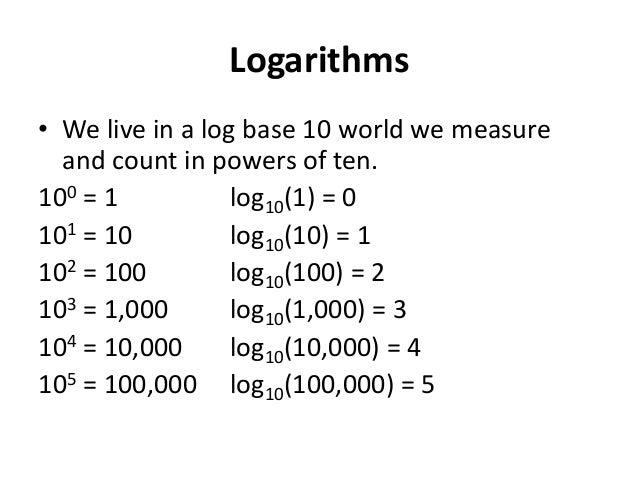
Since $10^1 = 10$, the value of $\log(10)$ is precisely 1.
Evaluating the Expression 1 Log 10
When you see the expression 1 log 10, it typically represents the product of the number 1 and the common logarithm of 10. Following standard mathematical order of operations:
- First, evaluate the logarithmic part: $\log_{10}(10) = 1$.
- Next, multiply that result by the coefficient in front: $1 \times 1 = 1$.
Thus, the final numerical value of the expression 1 log 10 is simply 1. While this sounds straightforward, recognizing this relationship simplifies many algebraic equations and logarithmic identities.
Key Rules and Properties of Base-10 Logarithms
Logarithms have unique algebraic properties that make multiplying large numbers easier by converting them into addition. Understanding these rules helps clarify why expressions like 1 log 10 behave the way they do.
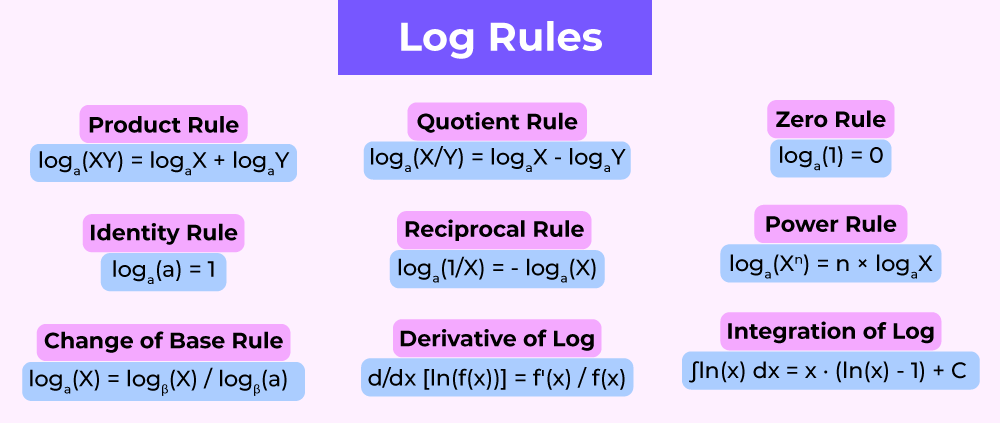
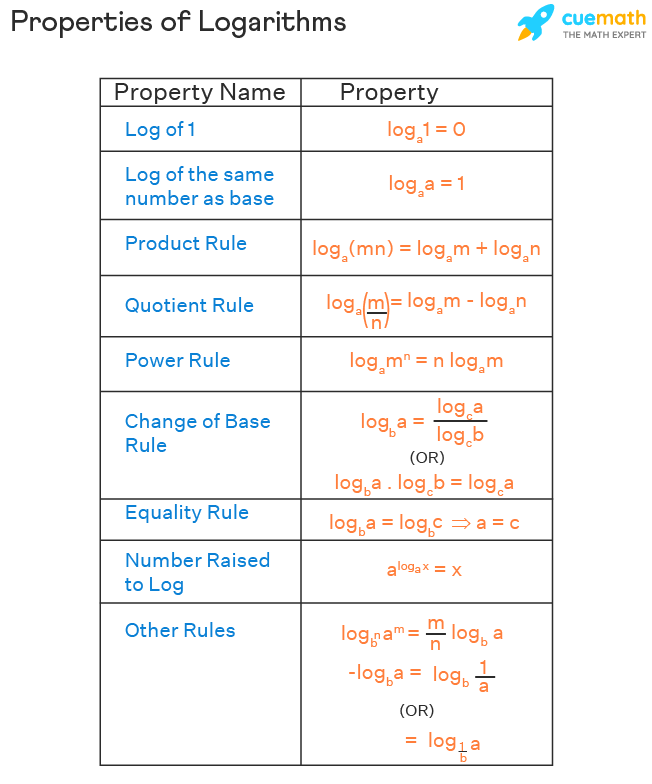
- The Identity Property: $\log_{b}(b) = 1$. For base 10, $\log_{10}(10) = 1$. This is the core principle behind our target expression.
- The Power Rule: $\log_{b}(x^n) = n \cdot \log_{b}(x)$. For example, $\log_{10}(10^3) = 3 \cdot \log_{10}(10) = 3(1) = 3$.
- The Product Rule: $\log_{b}(xy) = \log_{b}(x) + \log_{b}(y)$. Logarithms turn multiplication into addition.
- The Quotient Rule: $\log_{b}(x/y) = \log_{b}(x) - \log_{b}(y)$. Logarithms turn division into subtraction.
Real-World Applications of Base-10 Logarithms
Logarithms were originally invented to simplify tedious manual calculations before the advent of digital computers. Today, base-10 logarithms are vital because human senses and natural phenomena often span vast numerical ranges. Instead of writing out massive numbers, scientists use logarithmic scales to compress data.

1. The Richter Scale for Earthquakes
Earthquake magnitudes are measured using a base-10 logarithmic scale. An earthquake measuring 7.0 on the Richter scale is not just one unit larger than a 6.0 earthquake; it is 10 times more powerful in terms of ground motion amplitude. A magnitude 8.0 earthquake is $10^2$ (or 100 times) stronger than a 6.0 earthquake. The underlying math relies directly on base-10 principles similar to $\log_{10}(10) = 1$.
2. The Decibel Scale for Sound
Human hearing operates over an incredible range of sound pressures. To make these measurements manageable, acousticians use the decibel (dB) scale, which is logarithmic. Sound intensity levels are calculated using base-10 logarithms to reflect how the human ear perceives loudness on a relative scale rather than a strictly linear one.
3. Chemistry and pH Levels
In chemistry, the pH scale measures the acidity or alkalinity of a aqueous solution. The "p" stands for the negative logarithm (base 10) of the hydrogen ion concentration: $\text{pH} = -\log_{10}[H^+]$. Because it is a logarithmic scale, a drop of just one pH unit represents a tenfold increase in hydrogen ion concentration.
Common Misconceptions and Errors
Working with logarithms can occasionally lead to confusion, especially when mixing up different bases or misunderstanding notation.
One common error is confusing the common logarithm (base 10) with the natural logarithm (base $e$, written as $\ln$). While $\log_{10}(10) = 1$, the natural logarithm of 10 ($\ln(10)$) is roughly 2.3025 because it asks what power of $e$ (Euler's number, approximately 2.718) equals 10.
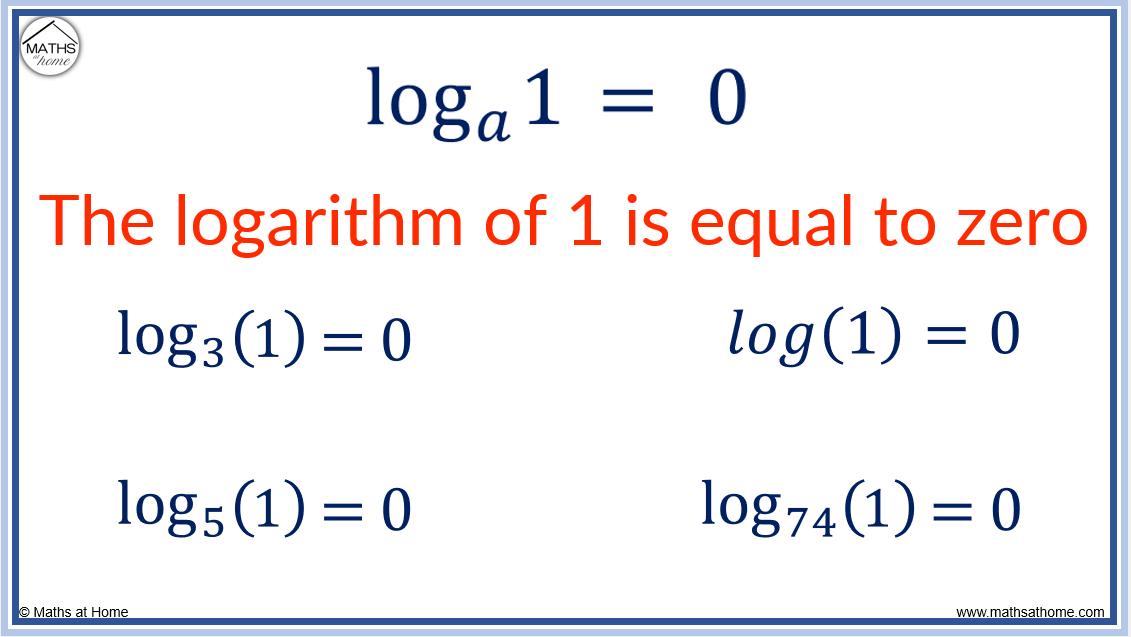
Another error involves forgetting that the logarithm of 1 is always 0, regardless of the base. Since $10^0 = 1$, $\log_{10}(1) = 0$. Do not confuse $\log_{10}(1)$ with $\log_{10}(10)$, which equals 1.
Conclusion
Mastering expressions like 1 log 10 builds a strong foundation for advanced mathematics and technical fields. Because $\log_{10}(10)$ equals 1, multiplying it by 1 leaves the value unchanged. Whether you are scaling seismic activity, calculating decibels, or solving algebra problems, understanding how base-10 logarithms operate makes complex numbers manageable and meaningful.