Understanding Moon Rising Times: A Complete Guide
When you look up at the night sky, the moon rarely appears at the exact same hour two nights in a row. Unlike the sun, which follows a fairly consistent daily schedule depending on the season, the moon operates on its own unique rhythm. Understanding moon rising times requires looking at celestial mechanics, specifically the interplay between Earth's rotation and the moon's orbit.

Whether you are an avid stargazer, a nightscape photographer, or simply curious about the night sky, knowing when the moon will crest the horizon can help you plan your activities. This guide breaks down the science of lunar movement, how daily schedules shift, and how you can easily track moonrise wherever you are.
The Science Behind Moon Rising Times
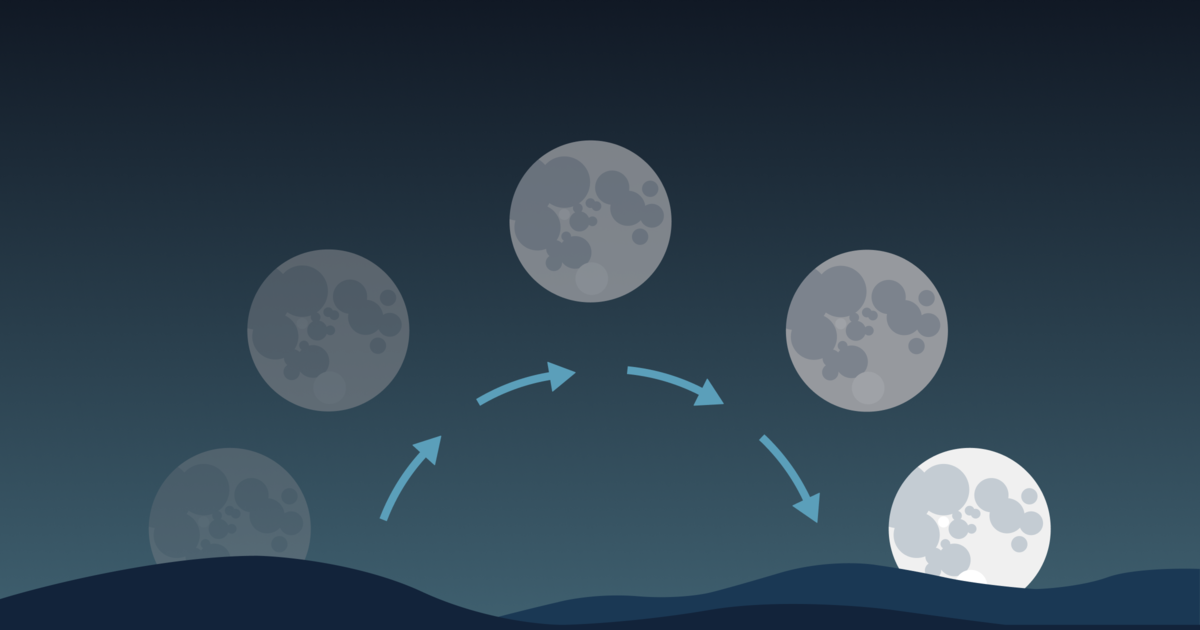
To understand why the moon rises at different times each day, we have to look at orbital mechanics. Earth rotates on its axis once every 24 hours, which gives us our standard day and night cycle. As Earth spins, different parts of the planet rotate toward and away from celestial bodies like the sun and the moon.
However, the moon is not stationary. While Earth is spinning, the moon is actively orbiting our planet in the same direction that Earth rotates. Because the moon keeps moving along its orbital path, Earth has to rotate a little bit further—about 13 degrees more—for an observer to see the moon in the same position on the horizon again.
Why the Moon Rises 50 Minutes Later Each Day
Because Earth needs extra time to catch up to the moving moon, the daily schedule shifts. On average, moon rising times occur about 50 minutes later each successive day. This delay is not uniform throughout the month, but 50 minutes is the standard baseline rule of thumb used by astronomers.
Here is how the shift plays out over a few days:
- Day 1: Moonrise at 6:00 PM
- Day 2: Moonrise at 6:50 PM
- Day 3: Moonrise at 7:40 PM
- Day 4: Moonrise at 8:30 PM
Because of this daily delay, there are times of the month when the moon rises during daylight hours and sets during the night, and other times when it rises at night and sets during the day.
How Moon Phases Affect Moonrise
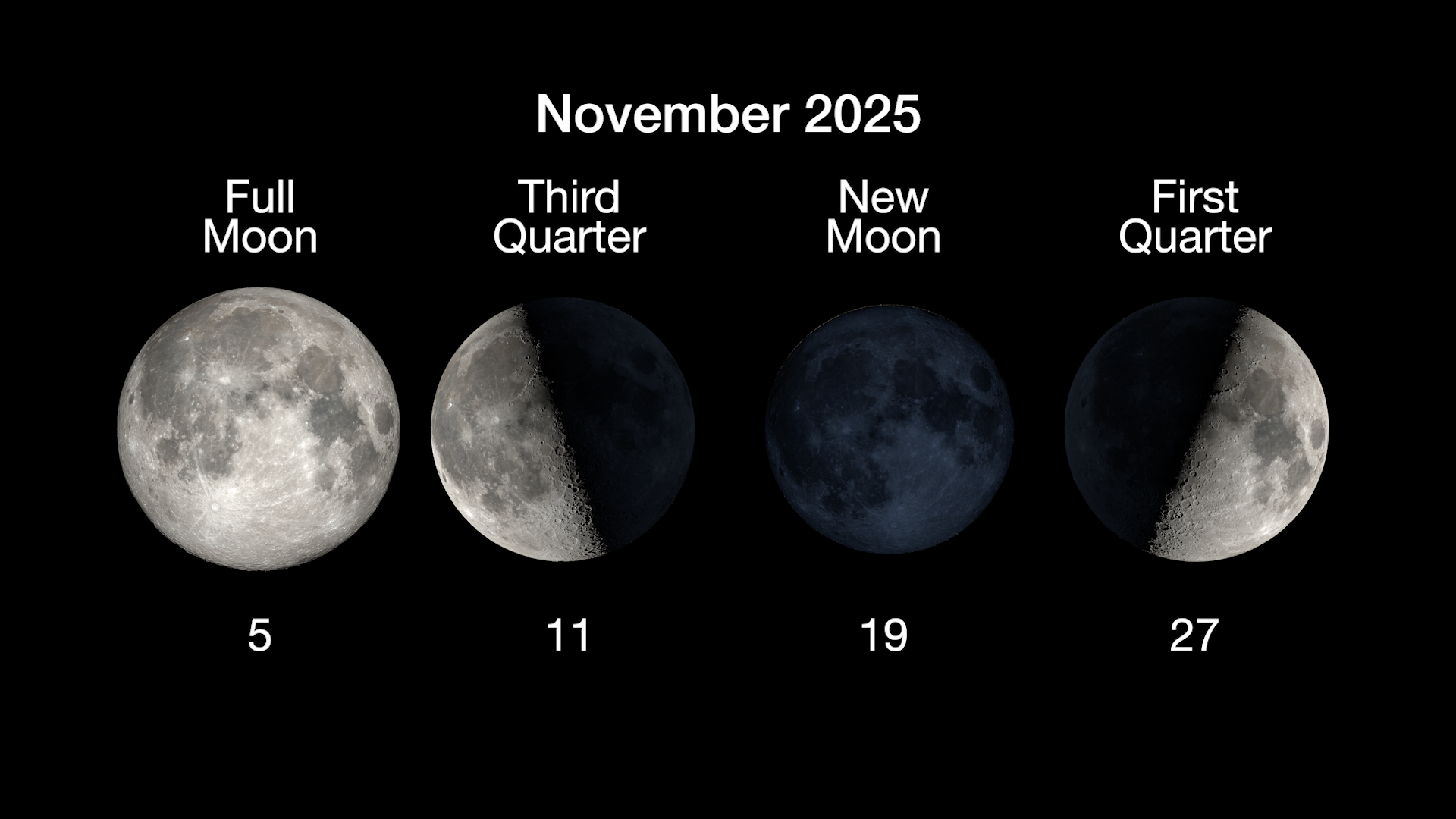
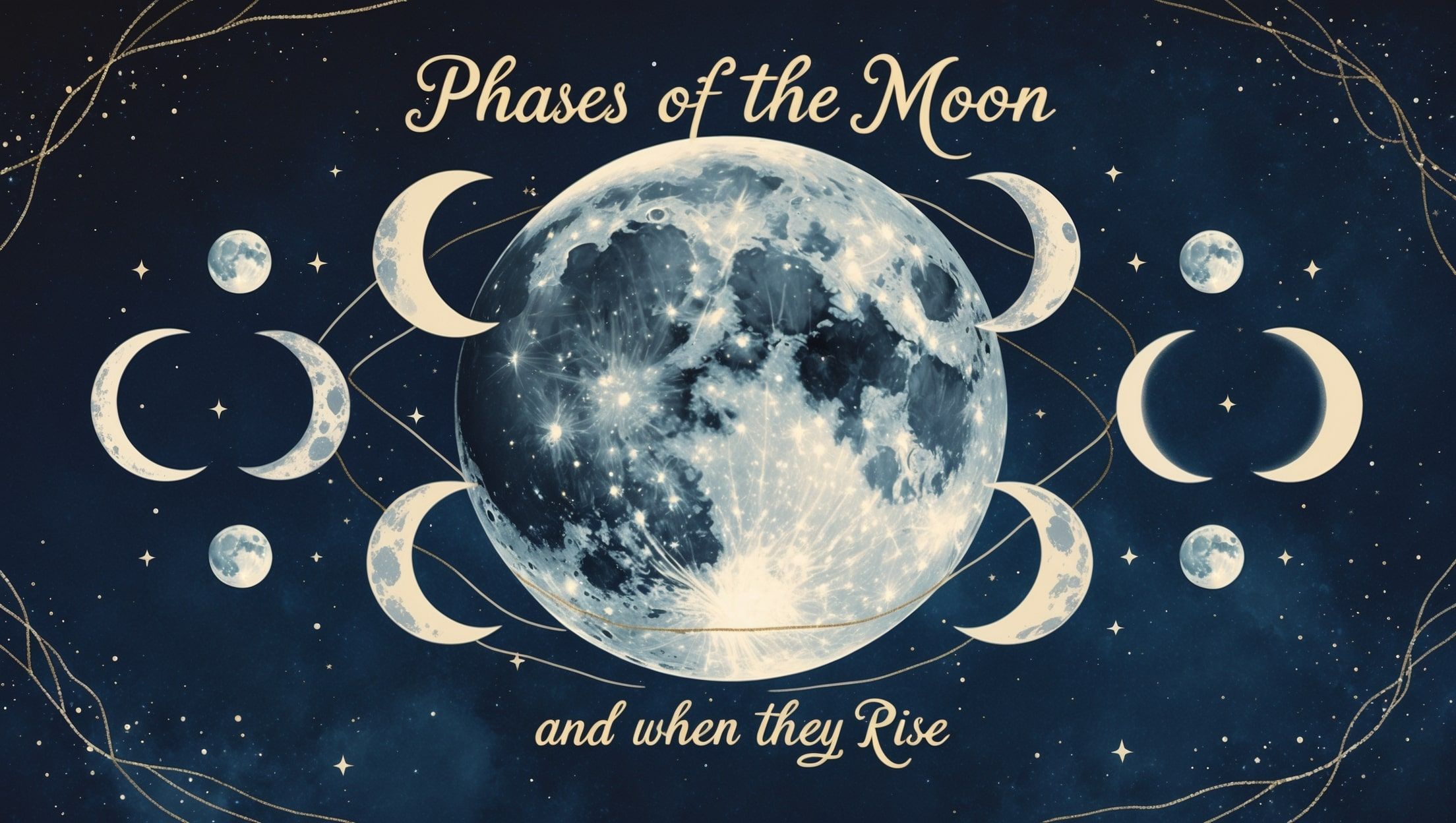
The phase of the moon directly dictates when it will rise and set. Because lunar phases are determined by the relative positions of the Earth, moon, and sun, each phase occupies a predictable slot on the 24-hour clock.
New Moon
During a new moon, the moon sits directly between the Earth and the sun. Its illuminated side faces away from us, making it invisible to the naked eye. Because it travels alongside the sun during this phase, a new moon rises at approximately sunrise (6:00 AM) and sets at sunset (6:00 PM).
First Quarter
At the first quarter phase, the moon is at a 90-degree angle relative to the sun from our perspective. This means it rises around midday (12:00 PM), reaches its highest point in the sky at sunset, and sets around midnight (12:00 AM).
Full Moon
The full moon is positioned opposite the sun, with the Earth in the middle. As the sun sets in the west, the full moon rises in the east. Therefore, a full moon always rises around sunset (6:00 PM) and sets around sunrise (6:00 AM), making it visible all night long.
Third (Last) Quarter
During the third quarter phase, the moon rises around midnight (12:00 AM), is highest in the sky at sunrise, and sets around midday (12:00 PM).
Exceptions to the 50-Minute Rule
While the 50-minute daily shift is a great general rule, it is not exact. Several variables cause variations in daily moonrise schedules:
- Geographic Latitude: The further you are from the equator, the more pronounced the variations in moonrise times become. At high northern or southern latitudes, the angle of the moon's orbit relative to the horizon can cause extreme shifts.
- Orbital Eccentricity: The moon's orbit is elliptical, not a perfect circle. When the moon is closest to Earth (perigee), it travels faster in its orbit, altering the timing of moonrise. When it is furthest (apogee), it moves slower.
The Harvest Moon Phenomenon
One of the most famous exceptions occurs around the time of the autumn equinox, known as the Harvest Moon. For observers in the mid-latitudes, the angle of the moon's orbit aligns very flatly with the eastern horizon. Instead of the usual 50-minute delay, the moon rises only 20 to 30 minutes later for several consecutive nights. This creates a succession of bright evening moonlights that historically helped farmers extend their harvest work after sunset.
How to Find Accurate Moon Rising Times
Because local geography, elevation, and atmospheric refraction can alter when you actually see the moon crest the horizon, checking a reliable local source is always best. You do not need to rely on complex math to figure out when the moon will appear.
Modern technology makes tracking very simple. Weather apps, dedicated astronomy software, and online almanacs provide exact daily schedules based on your precise GPS coordinates. When checking these tables, remember to adjust for daylight saving time if applicable in your region.
By understanding how lunar mechanics and phases interact, you can easily predict moon rising times and make the most of your next stargazing or night photography session.