Understanding Ovotesticular DSD & True Hermaphroditism
When people search online for true hermaphroditism images, they are often seeking to understand a rare and complex biological variation in human sexual development. However, modern medical terminology has evolved significantly to provide accurate, respectful, and scientifically precise descriptions for these conditions. Today, what was historically called "true hermaphroditism" is clinically classified as ovotesticular differences of sex development (ovotesticular DSD).

Understanding this condition requires looking past sensationalized internet searches and examining the actual genetics, embryology, and medical science. This article explores what ovotesticular DSD is, why terminology matters, and how these medical conditions present physically and genetically.
What is Ovotesticular DSD?
Ovotesticular DSD is a rare congenital condition in which an individual possesses both ovarian and testicular tissue. This means a person may have an ovotestis (a gonad containing both ovarian and testicular tissue), an ovary on one side and a testis on the other, or a combination of both types of gonads.
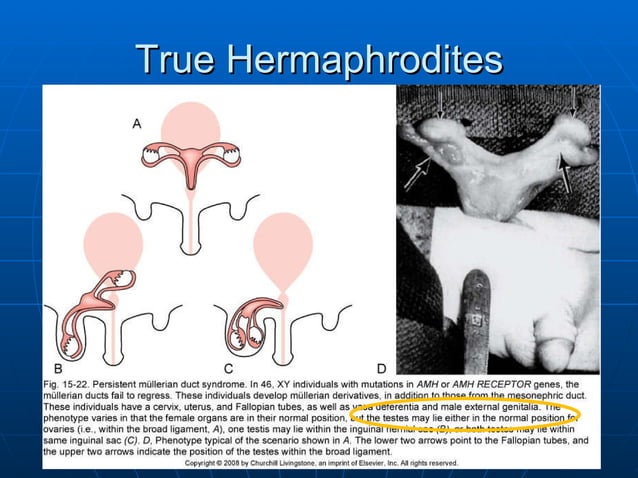
The internal and external genitalia of individuals with ovotesticular DSD can vary widely. Because human sexual development is a multi-step process involving chromosomes, hormones, and cellular receptors, variations can manifest in numerous ways. While historical texts often relied on simplistic illustrations, real-world medical cases show an immense spectrum of physical presentations.
Genetics and Chromosomes
The genetic makeup of individuals with ovotesticular DSD is diverse. Unlike standard chromosomal pairings of XX (typically female) or XY (typically male), genetic testing in these cases often reveals:
- 4XX karyotype: The most common genetic finding in individuals with this condition.
- 46,XY karyotype: Occurs in a smaller percentage of cases.
- Chimerism or Mosaicism: Some individuals have a mixture of cell lines, meaning some cells carry XX chromosomes while others carry XY chromosomes.
This genetic diversity explains why external appearances and internal organ development vary so drastically from one person to another.
Why "True Hermaphroditism" is Outdated Terminology
In modern medicine, the term "true hermaphroditism" is largely obsolete and discouraged by clinicians and intersex advocacy groups alike. Here is why the terminology shifted:
- Clinical Accuracy: "Ovotesticular DSD" accurately describes the anatomical reality—the presence of both ovarian and testicular tissue—without relying on mythological or stigmatizing language.
- Patient Dignity: Terms like "hermaphrodite" have historically been used pejoratively against intersex humans. Medical nomenclature now prioritizes respectful, precise language that supports patient well-being.
- Broadening Understanding: The term DSD (Differences of Sex Development) encompasses a wide range of congenital variations, framing them as natural biological diversities rather than anomalies to be sensationalized.
Physical Presentation and Diagnosis
Because physical characteristics vary so widely, looking for generic online pictures is rarely educational or clinically accurate. Diagnosis typically occurs through a comprehensive medical evaluation.
How is Ovotesticular DSD Diagnosed?
Diagnosis often happens at birth due to ambiguous external genitalia, though some individuals may not discover the condition until puberty or adulthood when experiencing unexpected hormonal changes, fertility struggles, or atypical secondary sex characteristics.
- Physical Examination: Assessing external genital development.
- Chromosomal Analysis (Karyotyping): Blood tests to determine the individual's genetic makeup.
- Imaging Studies: Ultrasounds, MRIs, or pelvic scans to evaluate internal reproductive structures like the uterus, fallopian tubes, vas deferens, and gonads.
- Gonadal Biopsy: In some cases, a microscopic examination of the tissue is required to definitively identify both ovarian follicles and testicular tubules within the gonads.
- Hormone Profiling: Measuring testosterone, estrogen, and other related hormone levels.
Medical Management and Care
Medical management of ovotesticular DSD has changed dramatically over recent decades. In the past, physicians often rushed into irreversible surgeries during infancy to assign a specific gender. Today, pediatric endocrinologists, geneticists, and ethicists advocate for a much more cautious, patient-centered approach.
Modern clinical guidelines emphasize:
- Delaying Non-Emergency Surgeries: Allowing individuals to participate in bodily autonomy decisions whenever possible, rather than performing cosmetic surgeries on infants.
- Hormonal Support: Managing puberty and long-term health through hormone replacement therapy tailored to the individual's functional gonadal tissue and personal identity.
- Multidisciplinary Care: Involving psychological support, endocrinology, and social work to support both the individual and their family.
Conclusion
While curiosity often drives people to search for images and medical explanations regarding rare human variations, ovotesticular DSD is a complex medical condition best understood through science rather than speculation. Moving away from outdated labels like "true hermaphroditism" allows for a more compassionate, scientifically accurate understanding of human biology and the diverse ways sex development can unfold.