Understanding the 6 to 10 Day Forecast
Demystifying the 6 to 10 Day Forecast

When you need to plan an outdoor wedding, schedule a construction project, or pack for an upcoming vacation, a standard 3-day weather report simply isn't enough. That is where a 6 to 10 day forecast becomes essential. Extended weather outlooks bridge the gap between short-term daily weather and long-range climate predictions. However, looking nearly a week and a half into the future requires a completely different approach to meteorology than predicting tomorrow's rain.
While short-term forecasts rely heavily on direct observations from radar and surface stations, extended forecasts depend on sophisticated computer models. Understanding how these predictions are generated helps you make better decisions without falling victim to sudden, inevitable shifts in the weather pattern.
How Meteorologists Predict Extended Weather
Creating a reliable outlook for days six through ten is a marvel of modern computing and atmospheric science. Meteorologists do not simply guess what the temperature will be; instead, they process vast amounts of global atmospheric data to identify overarching trends.
Numerical Weather Prediction Models
Supercomputers run complex mathematical equations based on the laws of physics to simulate the atmosphere. The two primary global models used by forecasters are the Global Forecast System (GFS), operated by the United States, and the Integrated Forecasting System (IFS), run by the European Centre for Medium-Range Weather Forecasts (ECMWF). These models ingest millions of data points from weather balloons, satellites, commercial aircraft, and ocean buoys to map out pressure systems, jet stream tracks, and moisture levels.
Ensemble Forecasting Explained
Because the atmosphere is chaotic—meaning tiny changes can lead to drastically different outcomes—running just one computer model is not enough for an accurate 6 to 10 day forecast. Instead, forecasters use ensemble prediction systems. An ensemble model runs dozens of simulations simultaneously, with each run starting with slightly randomized initial conditions.
- High Agreement: If all 50 ensemble runs show a high-pressure system moving over your region, meteorologists have high confidence in the forecast.
- High Divergence: If half the runs show a heatwave and the other half show a cold front, the forecast has low confidence, indicating a volatile weather pattern.
Decoding Temperature and Precipitation Trends
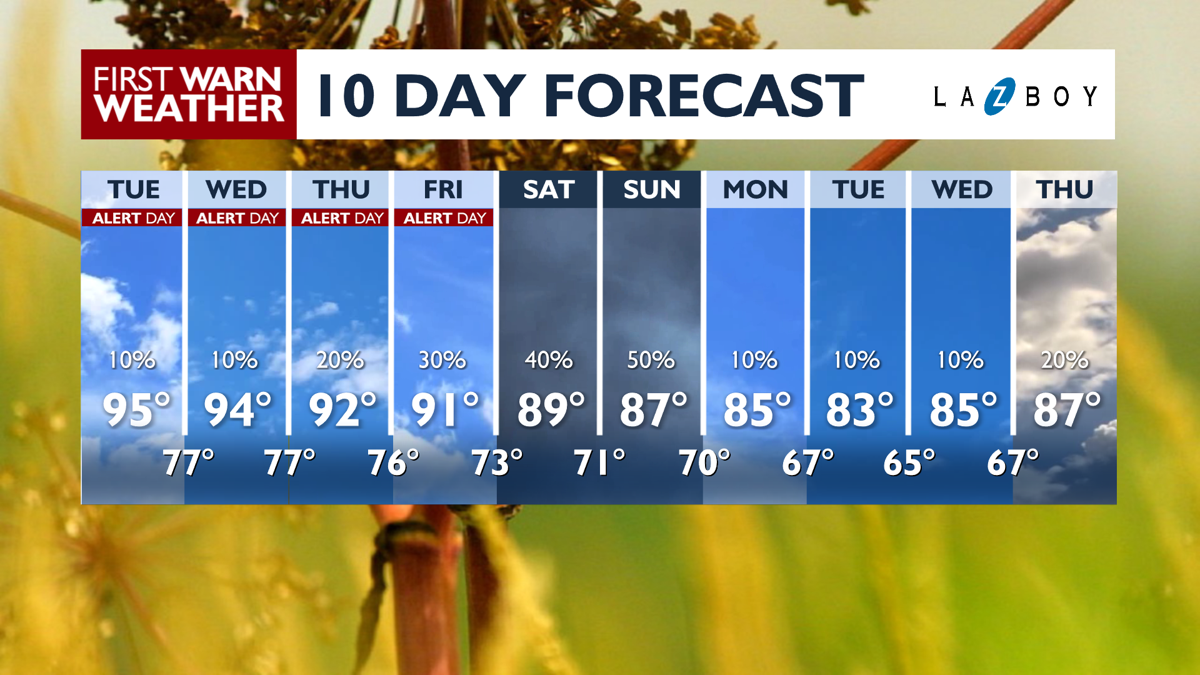
Video: 10-Day Forecast

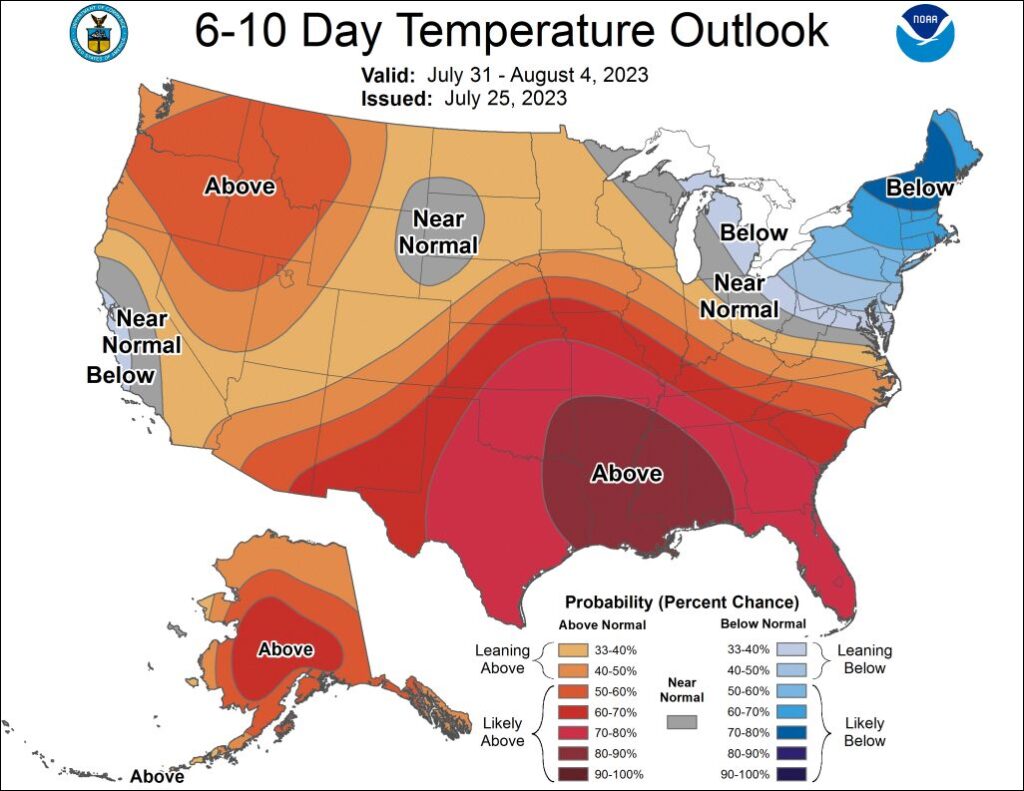
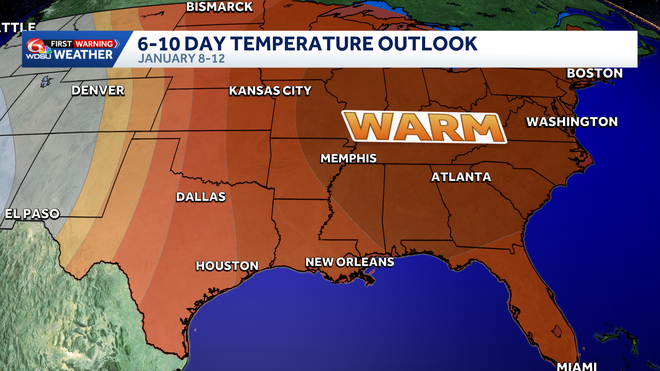
When looking at a forecast that stretches up to ten days out, you will notice that professional meteorological agencies, such as the Climate Prediction Center (CPC), present data differently than they do for tomorrow's weather. Instead of saying it will be exactly 72 degrees with a 40% chance of rain at 2:00 PM, extended outlooks speak in terms of probabilities and anomalies.
Anomalies compare expected conditions against historical averages for that specific time of year. You might see a map indicating that your area has a "leaning above normal" chance for temperatures. This means the overall trend points toward warmer-than-average weather, even if one specific day turns out to be unexpectedly cool due to a passing storm.
Limitations and Accuracy of Extended Forecasts
It is vital to understand the limitations of looking this far ahead. The atmosphere has a theoretical limit of predictability of about two weeks, often referred to as the "chaos limit." Beyond that window, even the most advanced supercomputers lose predictive skill.
As a rule of thumb, accuracy degrades the further out you look:
- Days 1 to 3: Highly accurate, pinpointing exact timing and local impacts.
- Days 4 to 7: Moderately accurate, capturing the arrival of major weather systems like cold fronts or storm tracks.
- Days 8 to 10: Trend-based accuracy, highlighting broad shifts in temperature regimes and precipitation probability rather than exact daily conditions.
Sudden stratospheric warmings, shifts in the Arctic Oscillation, or unexpected tropical development can completely upend a model run halfway through the week. Therefore, treating a 10-day outlook as a rigid itinerary is a recipe for frustration.
How to Use Extended Forecasts Effectively
Despite their inherent uncertainty, extended weather reports are incredibly valuable if you use them correctly. Rather than focusing on specific numbers, look for the big picture.
If you are planning an event, use the 6 to 10 day forecast to identify potential red flags, such as an incoming trough that could bring heavy rain or severe cold. Instead of canceling plans based on a single model run, monitor the ensemble trends over 48 hours. If the consensus holds steady, you can begin making contingency plans, such as booking a backup indoor venue or renting a tent.
Ultimately, combining daily updates with a long-range outlook gives you the best of both worlds: the broad perspective needed for early planning and the precise detail required for final execution.