Understanding Your Capricorn Natal Chart: Beginner's Guide
Whether you are a newcomer to astrology or looking to decode the nuances of your birth wheel, having a beginner's guide to understanding your Capricorn natal chart can transform how you view your ambitions, boundaries, and personal evolution. While popular horoscopes often reduce Capricorn to a rigid workaholic caricature, the actual mechanics of this sign in a natal chart reveal a deeply resilient, strategic, and protective energy designed to build things that endure.

To truly understand how Capricorn functions in your chart, you must look beyond surface stereotypes. Astrology operates as a complex language of signs, planets, houses, and aspects. By analyzing how Capricorn expresses itself through these components, you gain a practical blueprint for self-mastery.
The Capricorn Archetype: Earth, Cardinality, and Saturn
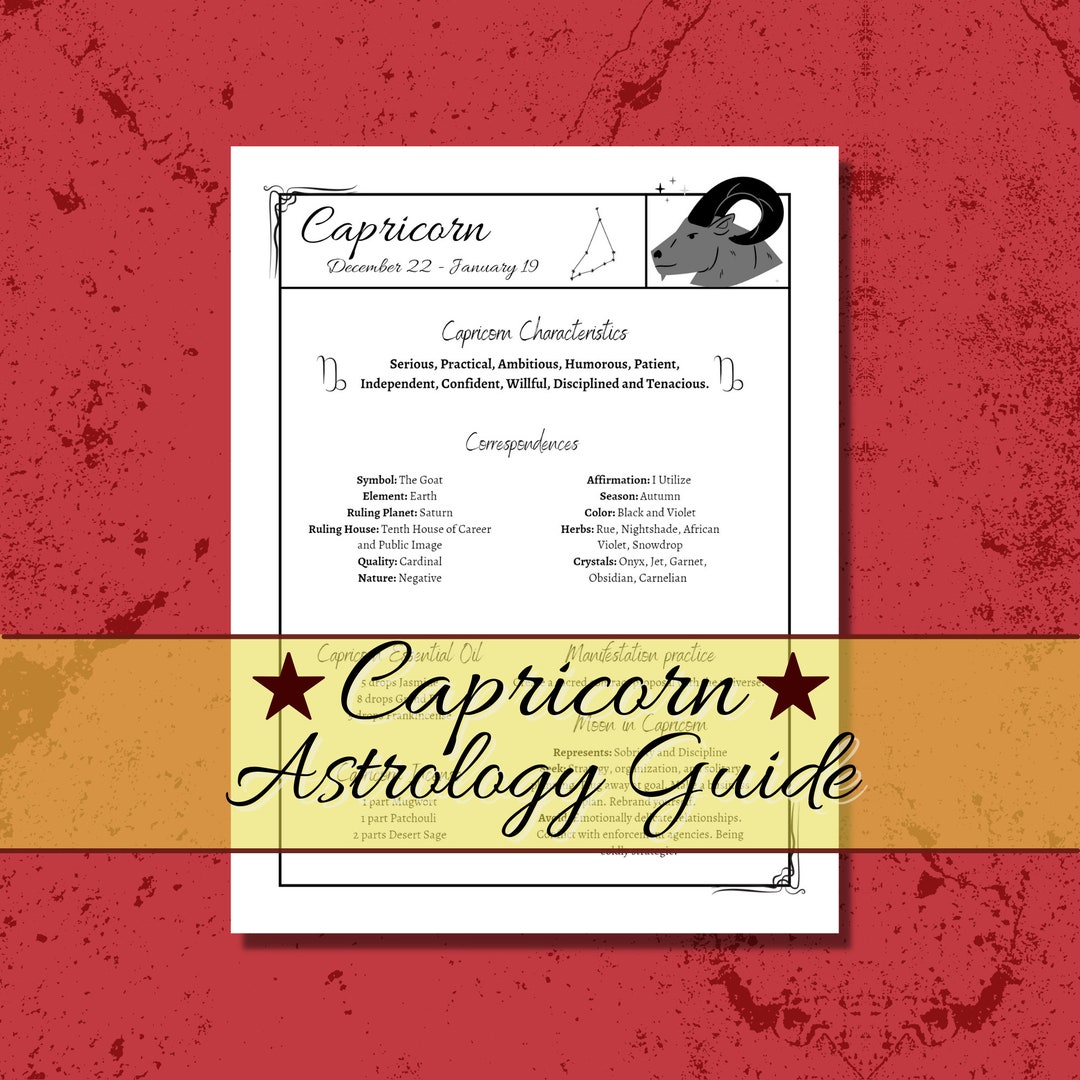
Every astrological sign is defined by an element, a modality, and a planetary ruler. Capricorn is a Cardinal Earth sign ruled by Saturn, the cosmic taskmaster associated with time, responsibility, and structure.
As an earth sign, Capricorn is grounded in physical reality. It concerns itself with tangible outcomes, material security, and practical systems. As a cardinal sign, it initiates action—it does not wait for opportunities to appear, but actively constructs them. Symbolized by the Sea-Goat (a mythical creature with the body of a goat and the tail of a fish), Capricorn embodies both the spiritual depths of intuition and the sheer grit required to scale the highest mountain peaks.
Saturn provides the operating manual for this sign. In a birth chart, Saturn represents where you encounter limits, learn hard lessons, and ultimately develop undeniable authority through patience and effort. When Capricorn shapes a placement in your chart, Saturn's steady, non-negotiable standards guide that area of your life.
A Beginner's Guide to Understanding Your Capricorn Natal Chart
When analyzing your chart, begin with your "Big Three"—the Sun, Moon, and Ascendant (Rising sign). If Capricorn occupies any of these pivotal positions, its archetype will form the backbone of your psychological makeup and daily experience.
Capricorn Sun: Purpose and Core Identity
If your Sun is in Capricorn, your core identity is fueled by competence, growth, and legacy. You feel most alive when working toward long-term milestones. You likely possess a natural maturity, often feeling "older" than your peers in youth, only to loosen up and grow lighter in spirit as you age. Your journey involves learning that your worth is intrinsic, not solely tied to your external achievements.
Capricorn Moon: Emotional Landscape
The Moon governs inner emotional responses, instinctual needs, and comfort zones. In Capricorn, the Moon is in its "detriment," meaning it sits opposite Cancer, its home sign. This does not mean a Capricorn Moon lacks emotion; rather, it processes feelings through an analytical, pragmatic filter.
Those with a Capricorn Moon often instinctively conceal vulnerability behind a calm, capable facade. They equate safety with self-sufficiency and emotional control. Healing and growth for this placement come from allowing trusted people to see beyond the armor and understanding that needing support is not a failure.
Capricorn Rising: The Outer Interface and Chart Ruler
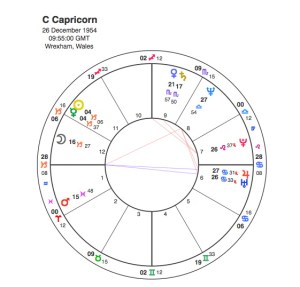
Your Rising sign determines the layout of your twelve astrological houses and establishes your chart ruler. If your Ascendant is Capricorn, Saturn is the ruler of your entire chart. The sign, house placement, and aspects of your natal Saturn will dramatically influence your life path.
To the world, Capricorn Risings project an aura of calm competence, reliability, and dry wit. You likely approach new situations with cautious evaluation rather than impulsive enthusiasm, preferring to assess the terrain before making your move.
Interpreting Capricorn Through the Astrological Houses
Even if you do not have personal planets (Sun, Moon, Mercury, Venus, or Mars) in Capricorn, every single natal chart contains this sign somewhere. The house that contains the Capricorn cusp indicates the specific life arena where you are called to apply discipline, accept responsibility, and build lasting foundations.
- 1st to 3rd Houses: Emphasizes discipline in self-presentation, financial security, resource management, and precise, methodical communication.
- 4th to 6th Houses: Points to heavy family responsibilities, ancestral foundations, structured creative pursuits, and a strict daily routine or work ethic.
- 7th to 9th Houses: Calls for maturity and commitment in partnerships, formal contractual matters, and a rigorous, structured pursuit of higher philosophy or education.
- 10th to 12th Houses: The natural domain of Capricorn. Highlights public status, professional authority, leadership within community networks, and confronting subconscious fears of failure.
Decoding a Capricorn Stellium
If your chart contains three or more planets grouped together in Capricorn, you have what astrologers call a stellium. A Capricorn stellium concentrates immense cardinal earth energy in one sector of your chart.
Individuals with this configuration are often remarkably industrious, laser-focused, and capable of executing complex, multi-year plans. However, a stellium here can also amplify hyper-independence, chronic work stress, and difficulty delegating tasks. Understanding the specific planets involved—such as Mercury (structured thinking) or Venus (selective, enduring relationships)—helps you channel this intense focus without burning out.
Managing the Shadow Side of Capricorn Placements
Every astrological placement comes with inherent challenges. The drive to build and endure can turn counterproductive when left unexamined. Common pitfalls associated with prominent Capricorn energy include:
- Chronic Imposter Syndrome: Because Capricorn holds itself to exceptionally high standards, it frequently downplays its own victories, moving goalposts before taking time to celebrate progress.
- Rigidity and Emotional Guarding: Fear of losing control can lead to emotional detachment or an unwillingness to adapt when unexpected circumstances disrupt carefully laid plans.
- Equating Productivity with Worth: Believing that your value depends entirely on what you produce leads directly to physical and mental exhaustion.
To balance these tendencies, astrologers look to Capricorn's polar opposite: Cancer. While Capricorn provides the structural walls, Cancer brings the emotional warmth inside the home. Integrating Cancerian energy into a Capricorn chart means prioritizing rest, nurturing personal relationships, and honoring intuitive instincts alongside rational strategies.
How to Work With Your Chart Moving Forward
Understanding your chart is not an intellectual exercise to file away; it is a practical diagnostic tool. To integrate your Capricorn placements constructively:
- Track Saturn Transits: Pay attention to where Saturn is currently traveling through your chart. These periods highlight where you are being tested and asked to build greater maturity.
- Define Your Own Success: Disentangle your ambitions from societal or familial expectations. Ensure the mountain you are climbing is one you actually want to summit.
- Schedule Recovery: Treat rest with the same seriousness as a business deadline. True sustainability requires deliberate downtime.
Your Capricorn natal placements do not condemn you to an unending grind; they offer you the patience, strategic clarity, and perseverance needed to build a life of genuine substance and lasting impact.