Union Jack Flag Printable for Kids Arts and Education
Finding hands-on materials for world history and geography can transform an ordinary lesson into an interactive adventure. Using a Union Jack flag printable for kids arts and education is one of the most effective ways to introduce children to the history, culture, and geography of the United Kingdom. Whether you are preparing a classroom unit on European nations, celebrating a British royal event, or looking for a rainy-day craft at home, a printable template offers a versatile canvas for learning.

The History Behind the Flag (Made Simple for Young Learners)
Before handing out crayons and markers, sharing the story behind the flag gives the activity purpose. The national flag of the United Kingdom is unique because it is not just one design—it is three flags layered on top of one another. Each cross represents a patron saint of a nation within the union:
- England: Represented by the Cross of St. George, a bold red cross on a crisp white background.
- Scotland: Represented by the Cross of St. Andrew (the Saltire), a diagonal white cross on a sky-blue field.
- Ireland: Represented by the Cross of St. Patrick, a diagonal red cross on a white field.
Children often ask: Where is Wales? This question provides a wonderful teachable moment. When the first version of the Union Flag was created in 1606, Wales was already legally united with the Kingdom of England. While the Welsh Red Dragon does not appear on the official national flag, discussing it helps children understand how political maps change over centuries.
Using a Union Jack Flag Printable for Kids Arts and Education
Printable flag outlines do far more than keep small hands busy. When integrated intentionally into lesson plans, a Union Jack flag printable for kids arts and education serves as a cross-curricular bridge connecting art, literacy, and social studies.
1. Geography and Mapping Units
Pair the printable outline with a blank map of the British Isles. Have students colour the flag, cut it out, and pin it to London on their maps. You can also explore how the Union Jack appears in the canton (top-left corner) of other world flags, such as those of Australia, New Zealand, and Fiji, prompting discussions about global maritime history.
2. Cultural Celebrations and Royal Holidays
From the King’s official birthday celebrations and Trooping the Colour to major sporting events like the Olympic Games and Wimbledon, Britain has a rich tradition of pageantry. Printing flags for children to wave during school parades or sports days fosters international awareness and cultural enthusiasm.
3. Sensory Fine-Motor Practice
For preschoolers and early primary students, flag outlines are ideal for honing fine-motor skills. The clean straight lines and intersecting diagonals offer a structured challenge for scissor practice, line tracking, and spatial awareness.
Creative Art and Craft Ideas with Printable Flags
You do not need to limit your project to standard wax crayons. Here are four engaging ways to elevate a simple flag template into a multi-sensory art piece:
Torn-Paper Mosaic Flag
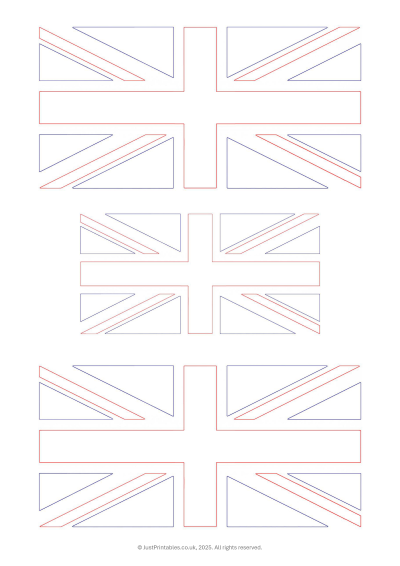
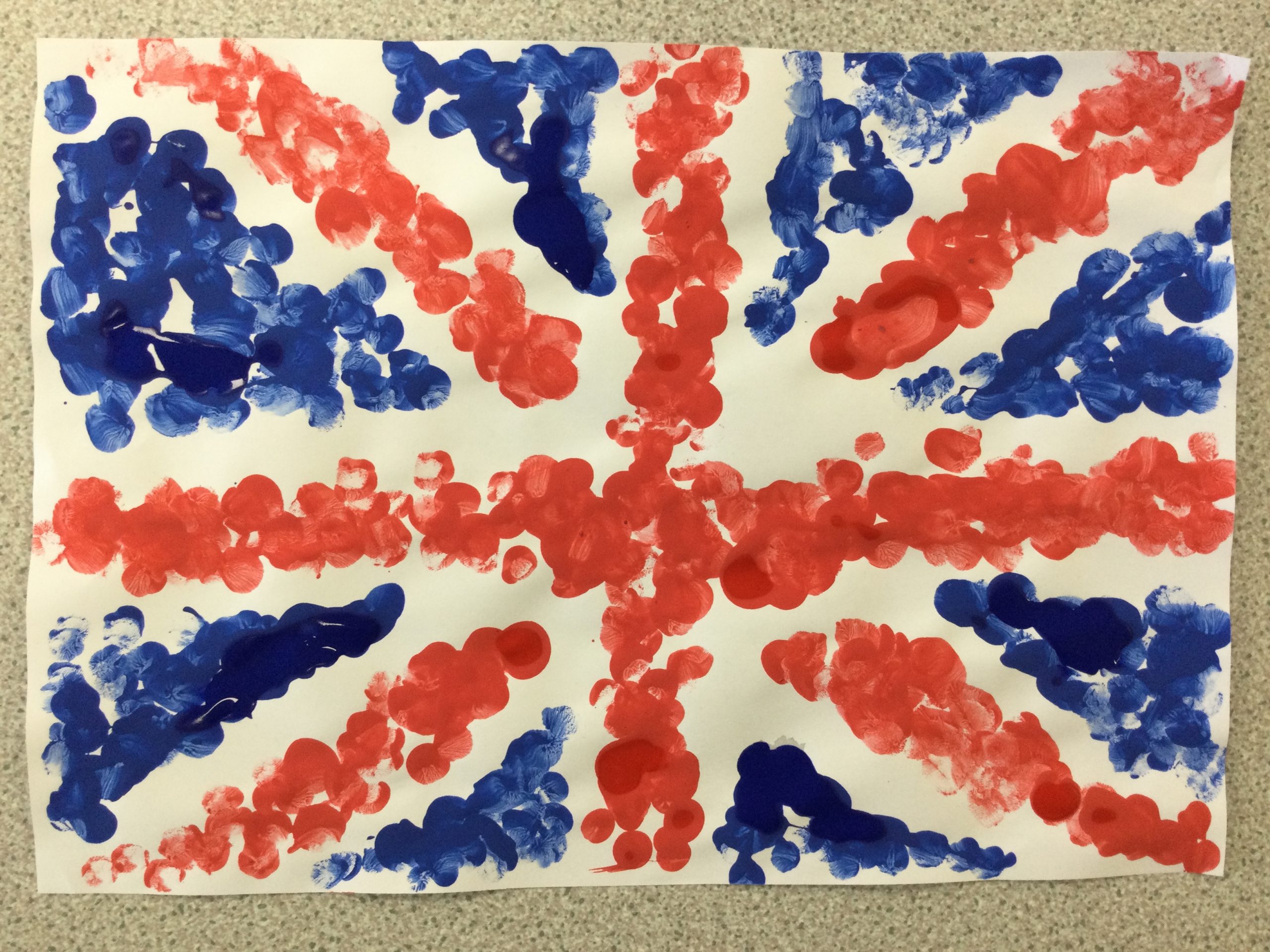
Instead of colouring, gather scrap paper, old magazines, or construction paper in red, white, and dark blue. Have children tear the paper into small pieces (about the size of a postage stamp) and glue them inside the designated sections. Tearing paper strengthens the intrinsic muscles of the hand, preparing younger children for writing grip.
Texture-Collage Flag
Give the flag a tactile dimension using everyday craft supplies:
- Red sections: Red felt strips, yarn, or shiny red sequins.
- Blue sections: Navy tissue paper crumpled into small, soft balls.
- White sections: Cotton wool pads stretched thin, buttons, or plain white cardstock.
Flag Bunting for Classrooms
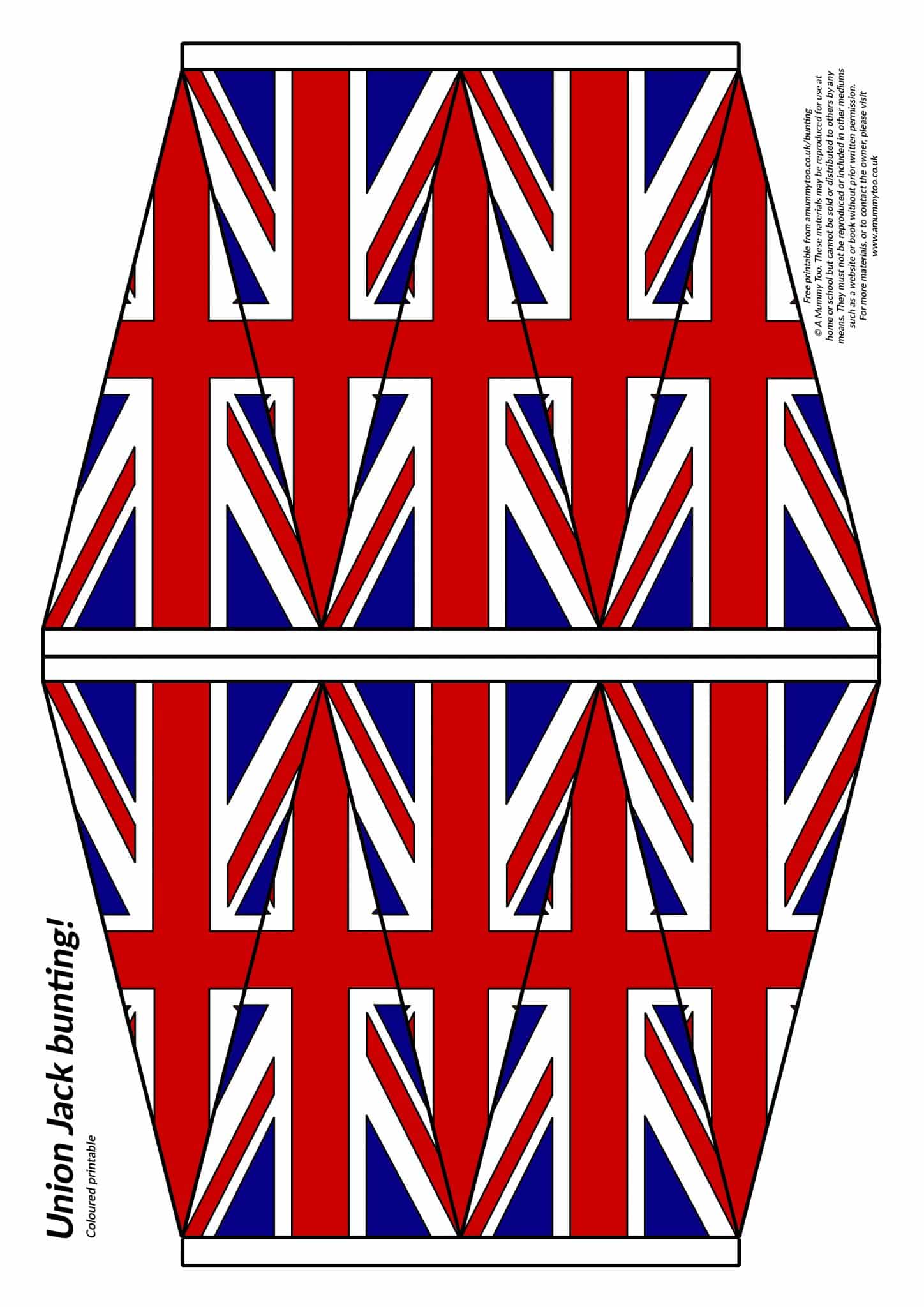
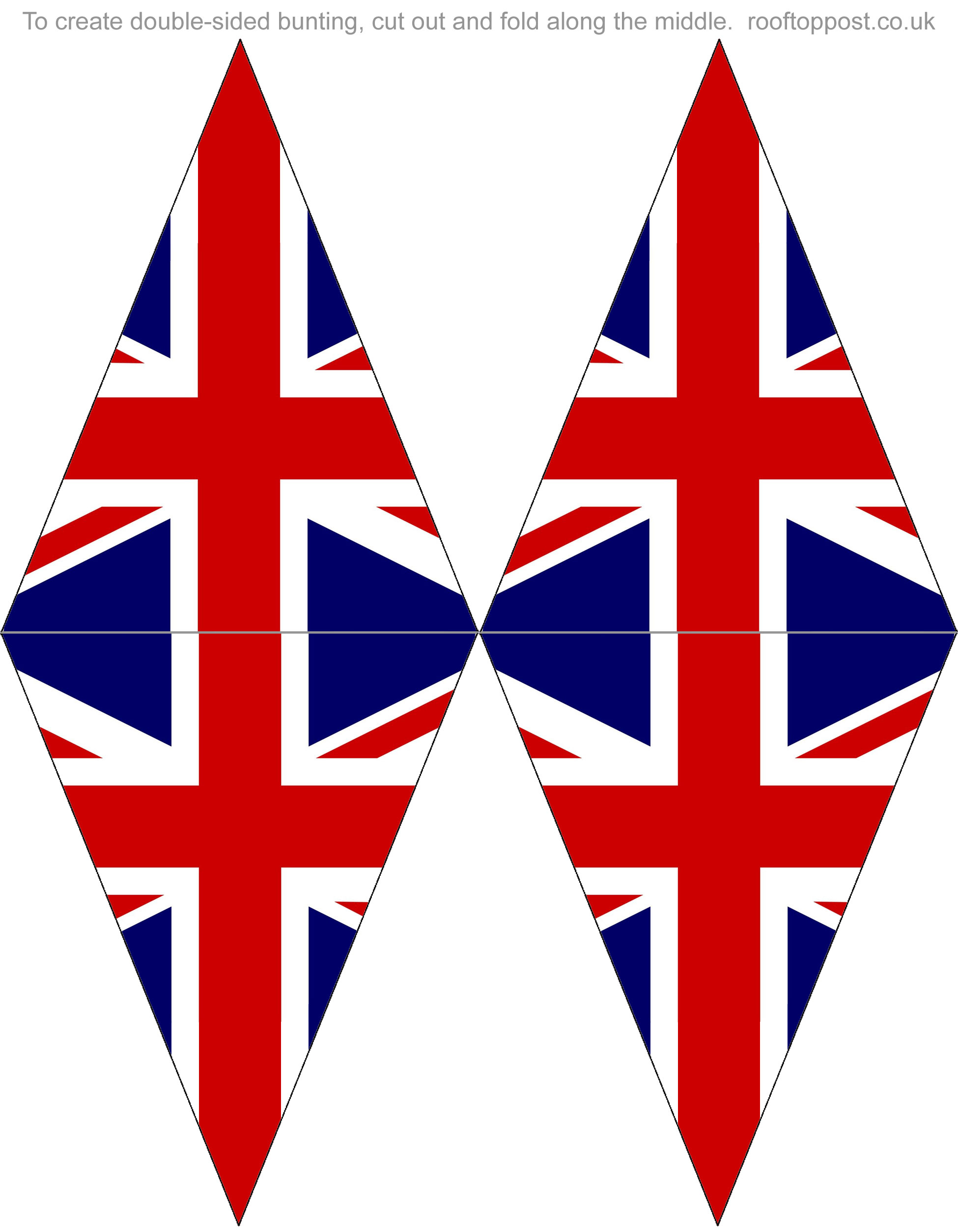
Print several copies of the flag onto cardstock. After students finish colouring, cut out the rectangles or trim them into pennant shapes (triangles). Punch two holes along the top edge of each flag and thread a piece of twine or red ribbon through them. Hang the bunting across the classroom ceiling or over a mantelpiece for an instant festive display.
How to Colour the Union Jack Correctly
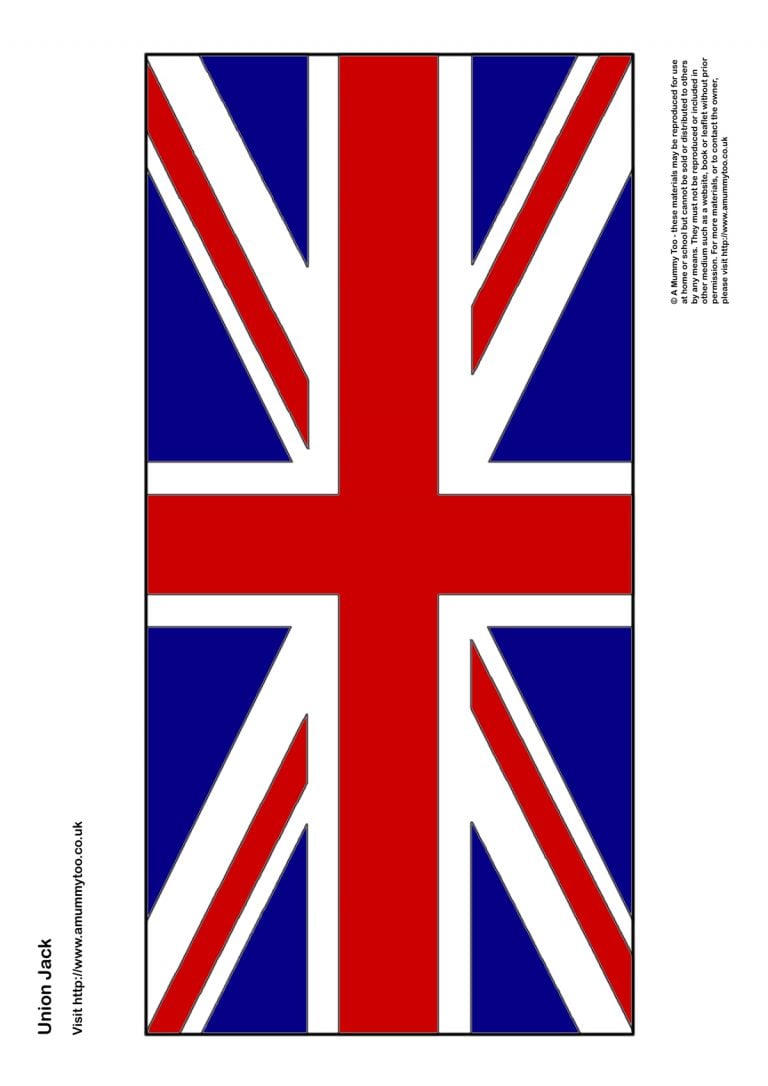
One of the most common mistakes children—and adults—make is assuming the red diagonal lines run straight through the centre of the white diagonals. The Union Jack is actually counterchanged, meaning the diagonal lines are intentionally asymmetrical.
- Start with the Blue: Colour the four corner background triangles with a rich navy blue.
- Preserve the White Borders: The central red cross has a wide white border, and the diagonal red stripes sit inside a wider white saltire. Remind children to leave these spaces blank if printing on white paper.
- The Diagonal Trick: The red diagonal cross (St. Patrick's) does not split the white saltire evenly. On the side closest to the flagpole (the left side), the red line sits beneath the white stripe; on the fly side (the right side), it sits on top. While younger kids can simply colour the lines, older students love discovering this subtle official design rule!
Quick Facts Kids Love to Share
Keep children engaged while they work by reading aloud these fun, bite-sized historical facts:
- Is it "Union Jack" or "Union Flag"? Technically, it is only called a "Jack" when flown from the jackstaff (a pole on the bow) of a warship. On land, its formal name is the "Union Flag," though Parliament has confirmed that either name is acceptable in modern speech.
- Upside-Down Distress: Flying the flag upside down is an international signal of distress. Because of the subtle asymmetry in the diagonal stripes, it is surprisingly easy to hang upside down by accident!
- No Yellow, Green, or Black: The entire design relies strictly on three primary and neutral colours: Royal Blue (Pantone 280), Red (Pantone 186), and pure White.
Tips for Printing and Materials
To get the best results from your printable templates, keep these practical tips in mind:
Choose the Right Paper: If students are using markers, tempera paint, or PVA glue, print on 160–200 gsm cardstock instead of standard copy paper. Cardstock prevents bleed-through and resists curling when wet.
Scale to Fit: When printing for very young children, scale your printer settings to print one large flag per landscape page to provide wide, forgiving sections. For older students making garlands or lapbook projects, print two or four to a page to create miniature versions.
Combining hands-on art with foundational history gives children a memorable visual anchor for world geography. With a quality printable template and a few basic craft materials, you can turn a rainy afternoon into a lively journey across British history.