Unlock Context Clues for Better Reading Comprehension
Stumbling across an unfamiliar word can instantly disrupt your reading flow. Stopping to check a dictionary breaks focus, while skipping past the word risks missing critical nuance. Fortunately, proficient readers rely on a built-in decoding system: the surrounding text. When you learn how to unlock context clues for better reading comprehension, you transform challenging passages into manageable puzzles, accelerating your vocabulary acquisition and sharpening your analytical thinking.

What Are Context Clues and Why Do They Matter?
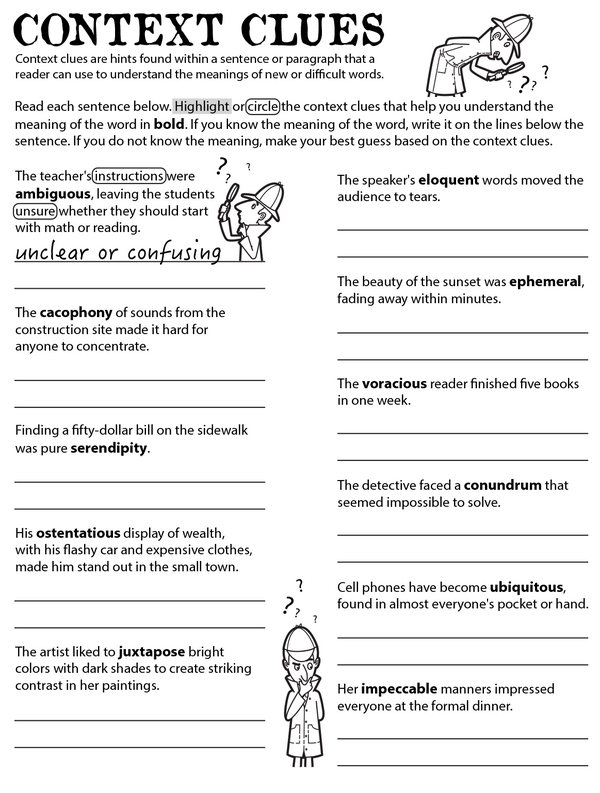
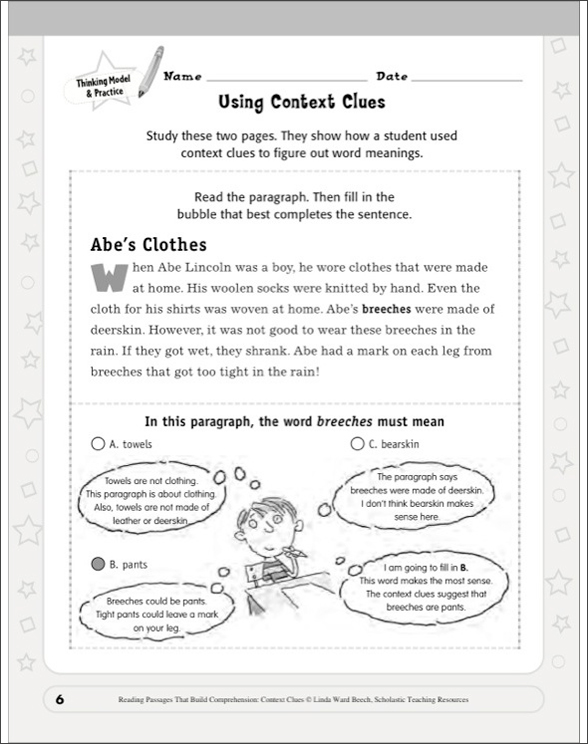
Context clues are hints found within a sentence, paragraph, or passage that allow a reader to deduce the meaning of an unfamiliar word or phrase. Rather than viewing an unknown word in isolation, an active reader examines the linguistic environment—including nearby nouns, descriptive adjectives, transitional adverbs, and punctuation marks.
Relying on context clues offers three distinct cognitive advantages:
- Maintains Cognitive Momentum: Constantly switching between a book and a dictionary app fractures working memory. Deciphering meaning in-place preserves your train of thought.
- Deepens Retention: Working out a definition through textual evidence creates richer neural pathways than simply reading a pre-written definition.
- Improves Standardized Test Scores: High-stakes exams like the SAT, ACT, GRE, and TOEFL routinely test your ability to determine meaning from context under strict time constraints.
The 5 Primary Types of Context Clues
Authors naturally leave breadcrumbs when introducing specialized or complex vocabulary. Recognizing the five primary categories of context clues makes identifying these hints instinctive.
1. Definition and Restatement Clues
In many informational and academic texts, the author provides the definition right after introducing a term. These clues often use signal words such as is defined as, means, or refers to, or they set the definition apart using commas, parentheses, or dashes.
Example: "The doctor suspected an aneurysm—an abnormal bulge in the wall of an artery—and ordered an immediate scan."
The punctuation marks (dashes) directly deliver the working definition without ambiguity.
2. Synonym Clues
A synonym clue repeats the central idea of the difficult word using simpler, more familiar language nearby. Look for connecting words like also, likewise, that is, or similarly.
Example: "The CEO was notoriously parsimonious; she scrutinized every receipt, insisted on off-brand supplies, and was equally stingy with department bonuses."
The word stingy acts as a direct synonym for parsimonious, confirming its meaning.
3. Antonym and Contrast Clues
Authors frequently clarify an obscure concept by contrasting it with its opposite. Signal words such as however, unlike, conversely, on the other hand, and whereas point toward a contrasting relationship.
Example: "Unlike his loquacious brother, who talked endlessly at family dinners, David remained quiet and reserved."
By contrasting the subject with someone who is "quiet and reserved," you can infer that loquacious means talkative or wordy.

4. Example Clues
Writers often illustrate a broad or difficult term by listing concrete examples. Indicators include for instance, such as, including, and specifically.
Example: "The coastal town relies on aquaculture, such as farming salmon, harvesting oysters, and cultivating edible seaweed, to sustain its local economy."
The examples (farming fish, harvesting shellfish, growing seaweed) tell you that aquaculture involves cultivating aquatic organisms for food.
5. Inference and General Context Clues
Sometimes there is no direct synonym or punctuation signal. Instead, you must combine the broad scenario, tone, and your existing background knowledge to deduce the meaning.
Example: "After three straight days of hiking through freezing rain with soggy boots, the campers were in wretched spirits."
Common sense suggests that cold, damp hikers would feel miserable, dejected, or unhappy. That logical deduction accurately captures the meaning of wretched.
How to Unlock Context Clues for Better Reading Comprehension: A 4-Step Method
To turn this knowledge into a functional habit, follow a structured process when encountering an unfamiliar word.
- Identify the Part of Speech: Determine whether the mystery word functions as a noun, verb, adjective, or adverb. Knowing its grammatical role narrows down the type of definition you are searching for.
- Expand Your Perimeter: Do not look only at the sentence containing the word. Scan the sentence immediately preceding it and the sentence that follows. Authors often explain an idea across paragraph or sentence boundaries.
- Spot the Signposts: Look for contrast markers (but, yet), equivalence markers (or, in other words), or cause-and-effect indicators (because, consequently).
- The Substitution Test: Formulate a guess, insert your provisional word into the original sentence, and check whether the overall passage still makes logical sense. If the flow remains smooth and coherent, your inference is likely correct.
Common Pitfalls When Interpreting Context
While context clues are potent tools, readers should guard against a few common missteps:
- Ignoring Connotation: A word can carry positive, neutral, or negative emotional weight. For instance, both slender and emaciated mean thin, but using context to recognize an unhealthy tone prevents you from misinterpreting emaciated as flattering.
- Assuming Without Verification: If a word appears in a pivotal legal, medical, or academic argument where precise terminology matters, write your inference in the margin and confirm it later with a dictionary.
- Overlooking Word Roots: Context clues work best when paired with structural analysis. Combining contextual hints with prefixes, suffixes, and base roots (morphology) dramatically increases decoding accuracy.
Putting It into Practice
Consider this excerpt:
"The committee reached an impasse; neither the union representatives nor the management negotiators were willing to concede their demands, bringing the contract discussions to a total standstill."
Applying the 4-step framework:
- Part of speech: Noun (preceded by the article "an").
- Clue identification: The semicolon introduces an explanatory clause, and the phrase "total standstill" serves as an appositive restatement.
- Substitution: Replacing impasse with deadlock or standstill preserves the exact meaning.
Conclusion
Developing reading comprehension is not merely about memorizing thousands of static flashcards. It is about learning to navigate text dynamically. As you intentionally apply these strategies across novels, trade journals, and technical manuals, decoding becomes second nature. By training your eye to extract surrounding evidence, you empower yourself to conquer dense texts with confidence, autonomy, and speed.