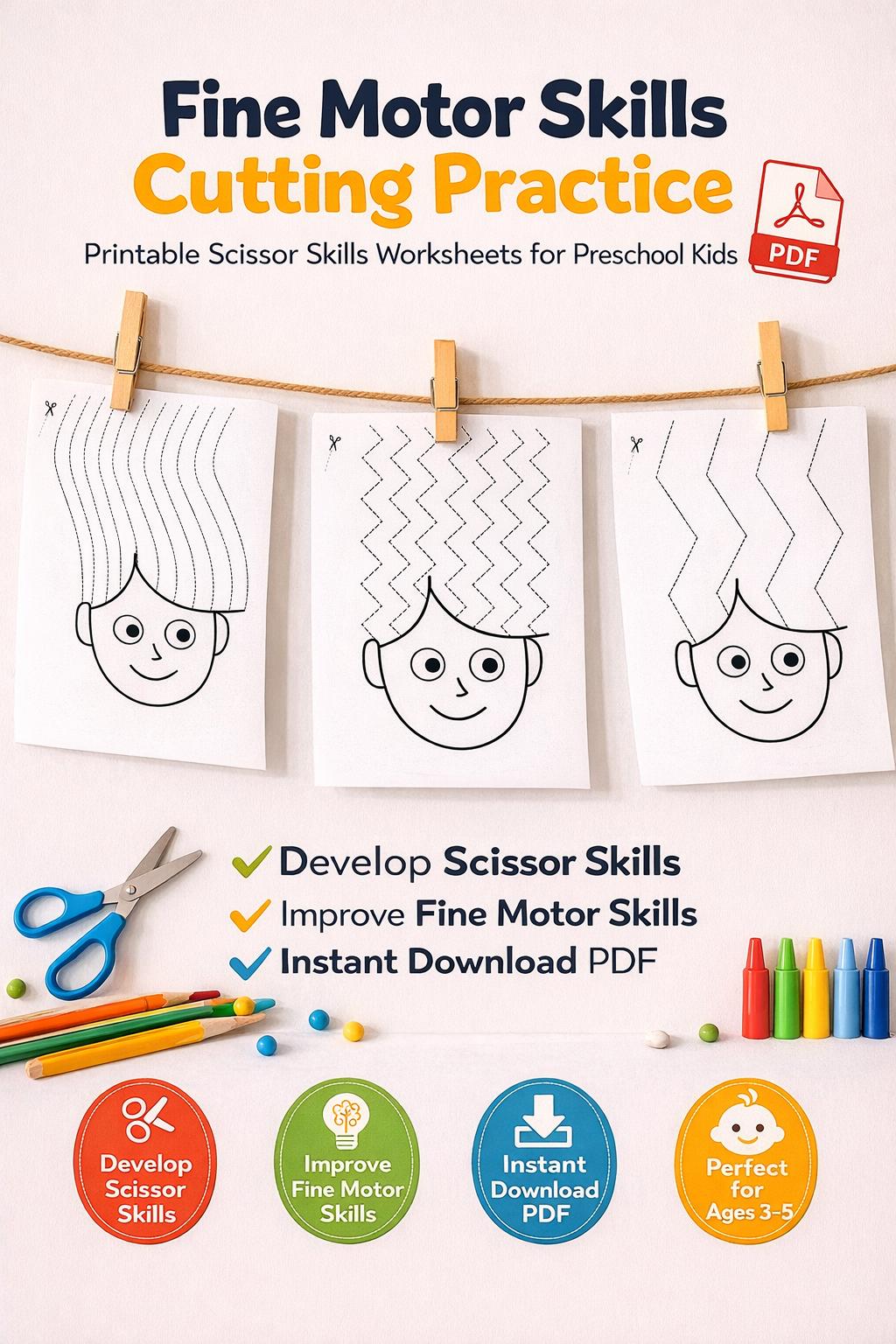
Unlock Instant Scissor Practice for Little Ones
Watching a young child try to maneuver a pair of safety scissors for the very first time can be both adorable and nerve-wracking. You hold your breath, hoping they don't chop their hair or the family rug, while they squeeze with all their might just to make a tiny snip. Using scissors is a massive milestone in early childhood development. It requires bilateral coordination, hand-eye coordination, and a surprising amount of finger strength. Fortunately, you can easily unlock instant scissor practice for little ones using simple household items and zero complicated preparation.

Why Scissor Skills Matter for Early Development
Cutting with scissors is far more than just a fun craft activity. It is a foundational exercise that prepares children for writing, drawing, and daily self-care tasks like buttoning clothes and tying shoes. When children open and close scissors, they exercise the small intrinsic muscles in their hands and fingers.
Furthermore, scissor cutting is a bilateral task. This means the hands must perform two completely different jobs at the same time: the dominant hand opens and closes the scissors, while the non-dominant hand holds, turns, and stabilizes the paper. Mastering this coordination takes time, but starting with the right techniques makes the learning curve much smoother.
How to Choose the Right First Scissors
Before diving into practice, equipment matters immensely. Frustration often stems from tools that simply do not work well for small, developing hands.
- True Safety Scissors: Look for blunt-tipped metal scissors that actually cut paper rather than the cheap plastic loops that only bend and fold the sheet. If paper bends instead of cutting, toddlers quickly lose interest.
- Spring-Loaded Scissors: For absolute beginners, spring-loaded trainers are a game-changer. These scissors automatically pop back open after a snip, allowing the child to focus entirely on the closing motion without struggling to reset the blades.
- Proper Sizing: Ensure the finger holes fit comfortably. The thumb goes in the top smaller hole, and the middle and ring fingers go in the larger bottom hole (with the index finger often resting outside the bottom loop for extra stability).
Simple Ways to Unlock Instant Scissor Practice for Little Ones
You do not need expensive workbooks or elaborate lesson plans to get started. In fact, everyday items often make the best cutting media because they offer immediate sensory feedback and require very little setup.
1. The Playdough Snip Station
Playdough is arguably the best secret weapon for beginning cutters. Roll playdough into thick snakes or logs and let your child snip them into tiny pieces. Playdough offers gentle resistance that helps build hand strength, and it is much easier to cut than paper because it does not require precise alignment.
Video: Easy teaching tip for little kids learning how to use scissors! #backtoschool #mom

2. Straw Cutting Chaos
Gather a handful of colorful plastic drinking straws and place them in a shallow bowl. Ask your child to snip the straws into confetti-sized pieces. The tube shape of the straw provides an easy target, and the satisfying crunch sound they make when cut provides instant auditory feedback that keeps kids engaged.
3. Fringe Cutting Thick Paper
Standard printer paper is often too flimsy for beginners because it flops over and frustrates little hands. Instead, use cardstock, old file folders, or lightweight cardboard shipping boxes. Draw straight lines about one to two inches apart on the edge of the paper and invite your child to make 'fringe' by cutting up to a designated stop line.
Safety Guidelines for Beginner Cutters
Safety is the top priority when introducing sharp tools, even blunt-edged ones. Establish clear boundaries from day one so your child develops healthy respect for tools.
- Always Sit Down: Make it a strict rule that scissors are only used while seated at a table or on the floor. Running with scissors is an absolute no-go.
- Supervise Closely: Keep your child within arm's reach during cutting sessions. This allows you to gently guide their hand and correct their grip before bad habits form.
- Designated Cutting Zones: Keep scissors stored in a specific cup or drawer so children know they cannot just grab them whenever and wherever they please.
Troubleshooting Common Frustrations
If your child is struggling, do not force them to keep going. Take a break and try adjusting the medium or posture. Often, a child's thumb will naturally point downward toward the floor rather than pointing up toward the ceiling. You can place a small smiley face sticker on their thumbnail and tell them the 'smiley face must always look up at the sky' to help them remember proper hand positioning.
By keeping sessions short, fun, and pressure-free, you will build your child's confidence naturally. Soon, you will find little paper snippets all over the house—a sure sign of success!