Unlocking the Secrets of the Air Force Enlisted Pay Chart
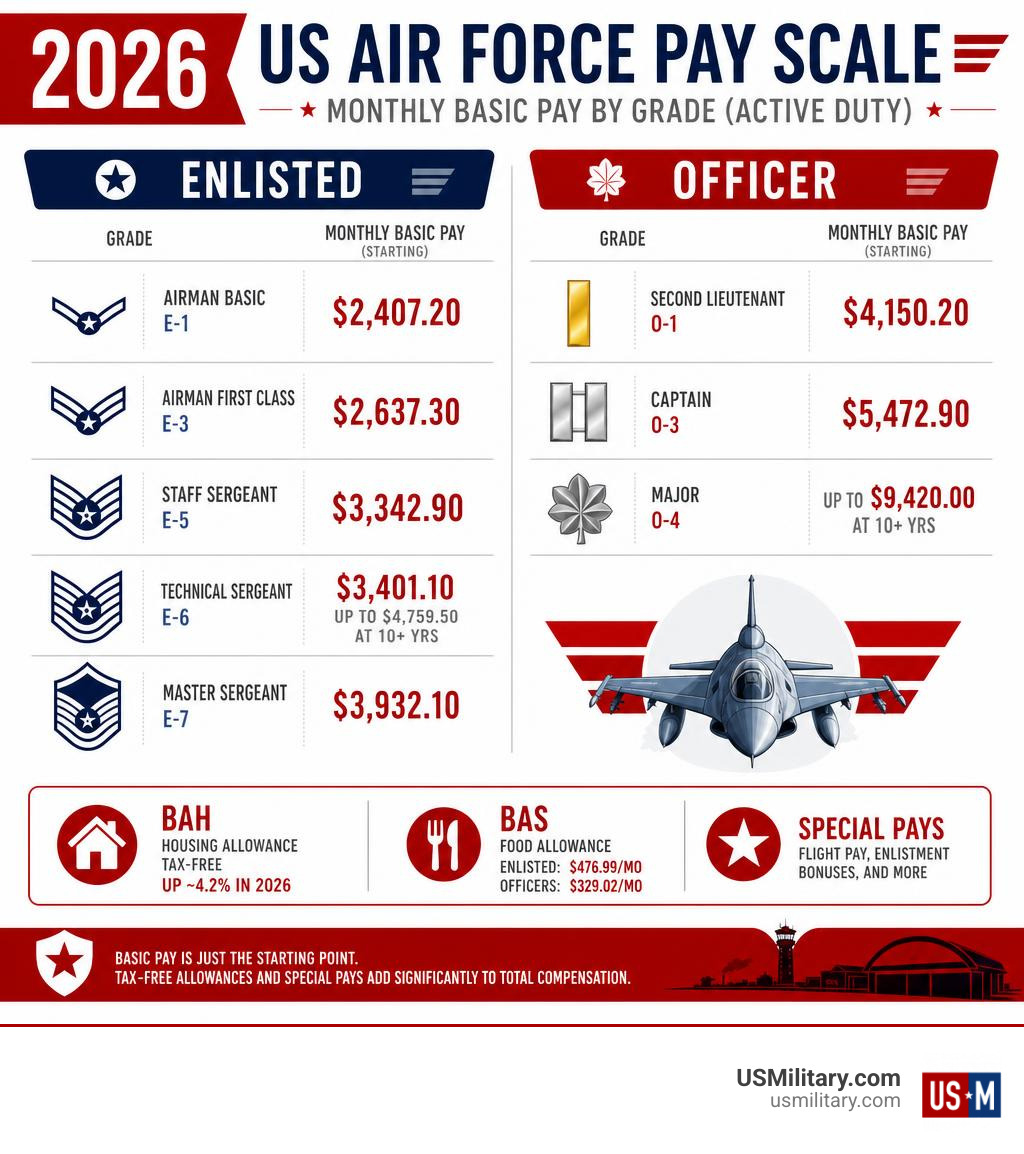
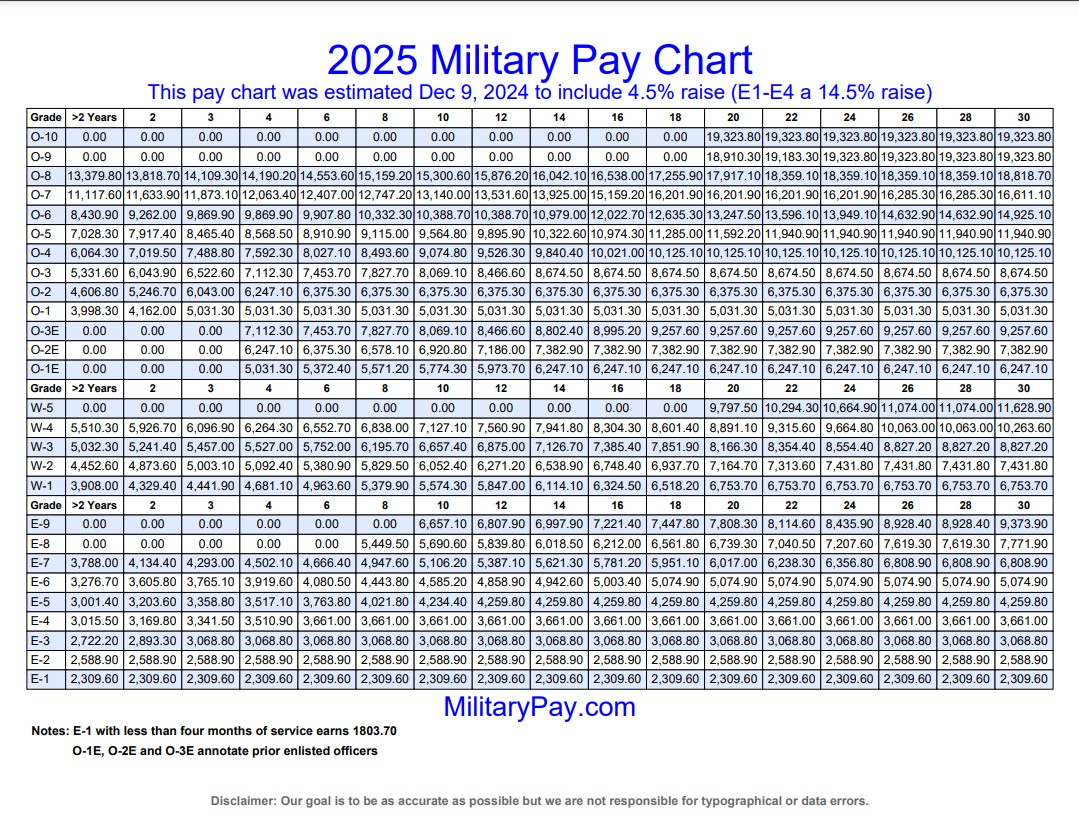
When prospective recruits and new airmen first look at standard Department of Defense pay tables, the numbers can seem surprisingly modest. A first-year Airman Basic earning under $2,100 a month in basic pay might wonder how service members afford housing, vehicles, and savings. However, unlocking the secrets of the Air Force enlisted pay chart requires understanding that basic pay is only the baseline of a sophisticated, multi-component compensation ecosystem.
To evaluate what an Air Force career actually pays, you have to look beyond line-item base salary and evaluate how time in service, promotion velocity, tax advantages, and specialized allowances interact to form your total military compensation.
Decoding the Matrix: Pay Grades and Longevity Steps
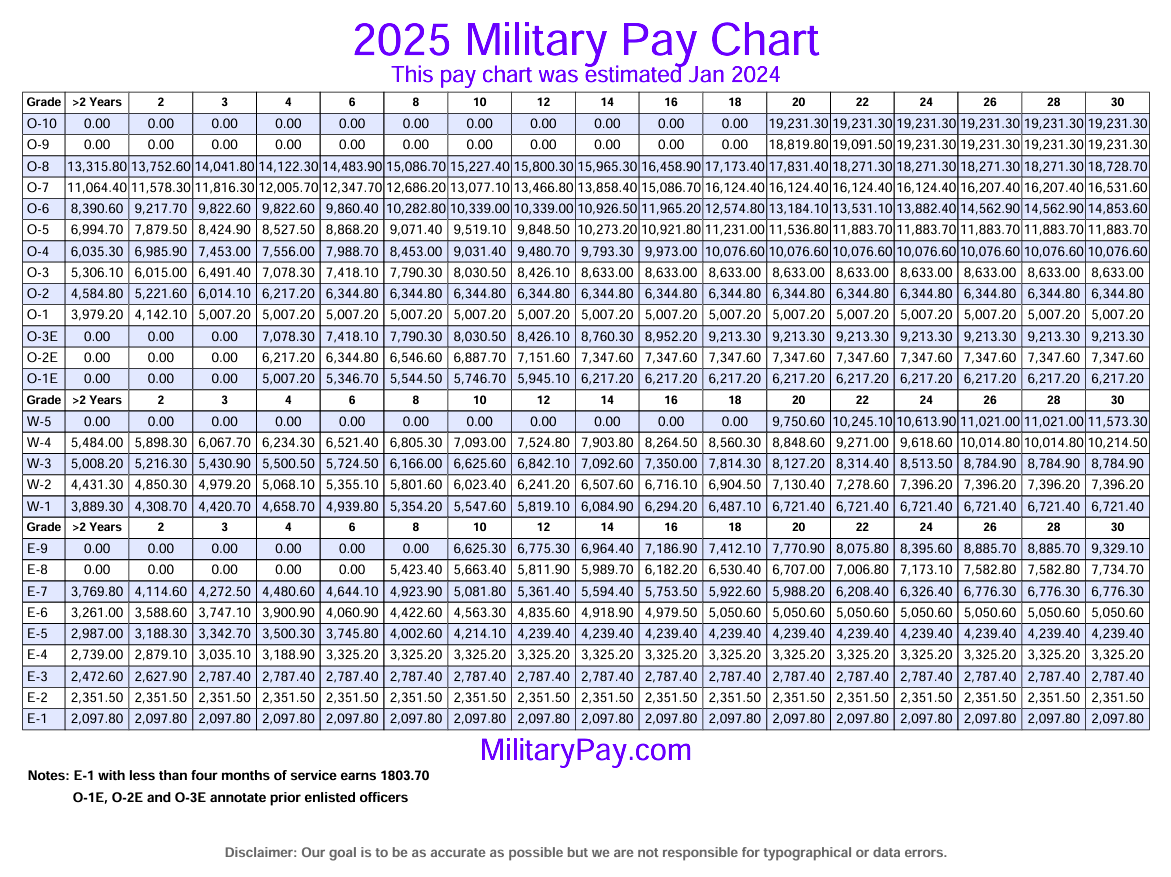
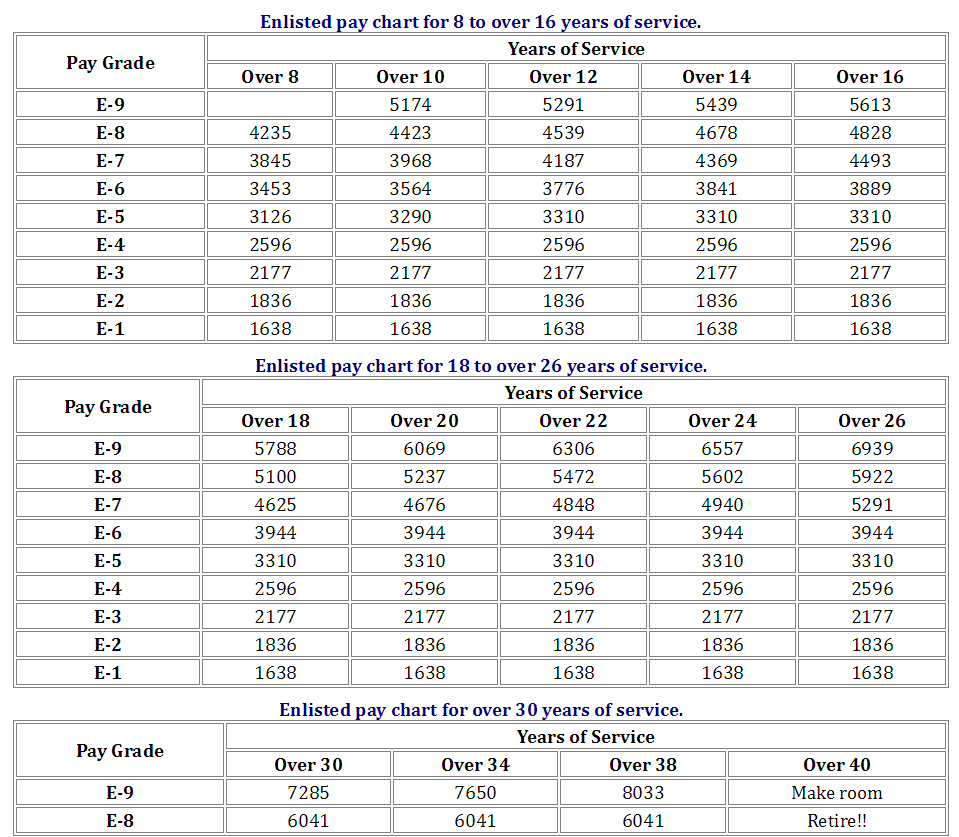
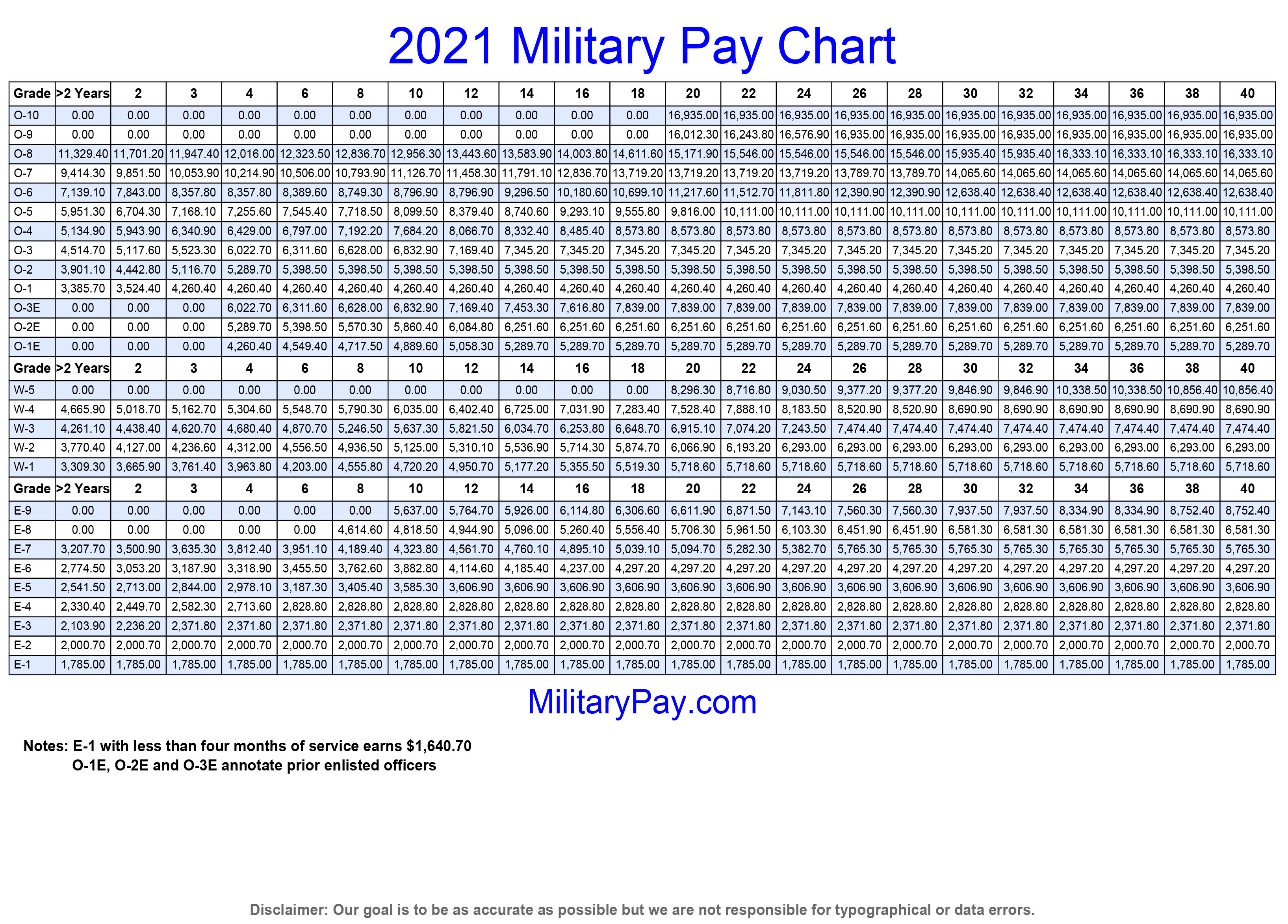
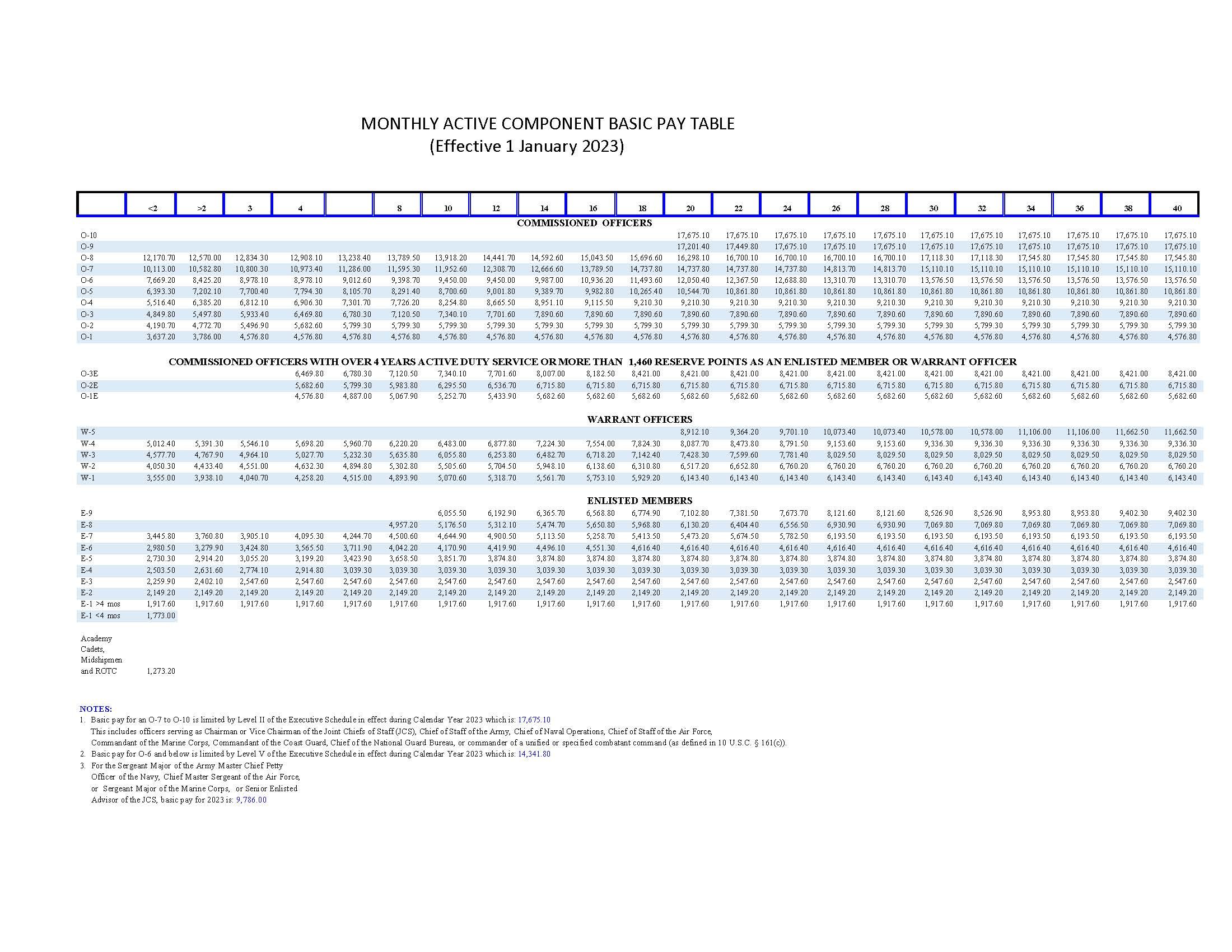
The standard military pay chart is organized as a grid. On the vertical axis are pay grades, designated from E-1 (Airman Basic) up to E-9 (Chief Master Sergeant). On the horizontal axis is Time in Service (TIS), typically segmented into two-year increments.
Pay increases through two distinct mechanisms:
- Longevity Increases: Automatic raises triggered when you hit specific service milestones (e.g., crossing 2, 3, 4, or 6 years of service). These acknowledge your growing operational experience regardless of rank.
- Promotion Increases: Raises earned by advancing in grade, such as testing and promoting from Senior Airman (E-4) to Staff Sergeant (E-5). These reflect greater leadership responsibility and technical mastery.
One structural detail often missed by newcomers is the "pay cap" built into junior tiers. For example, an E-3 (Airman First Class) stops receiving longevity raises after three years of service, and an E-4 tops out at six years. The system is deliberately engineered to incentivize professional progression; if you want continued income growth, you must advance in rank.
Unlocking the Secrets of the Air Force Enlisted Pay Chart: Beyond Base Pay
The single biggest mistake people make when reading an enlisted pay table is equating base pay with gross salary. In the civilian sector, your salary must cover rent, utilities, and groceries before taxes are applied. In the Air Force, critical living expenses are subsidized through non-taxable allowances.
Basic Allowance for Housing (BAH)
BAH is an untaxed monthly stipend designed to cover equitable housing costs when government quarters are not provided. The amount varies based on geographic duty location, pay grade, and dependency status.
Because BAH reflects local rental markets rather than a flat military rate, an E-5 stationed in high-cost areas like Los Angeles AFB or Joint Base Pearl Harbor-Hickam will receive substantially higher BAH than the same airman stationed at Minot AFB or Dyess AFB. Because this allowance is completely exempt from federal, state, and FICA taxes, its purchasing power often matches or exceeds a significantly higher civilian wage.
Basic Allowance for Subsistence (BAS)
BAS is an untaxed allowance intended to offset the cost of the service member's meals. Unlike BAH, BAS does not adjust based on location or dependents. It adjusts annually based on the USDA food cost index. Once enlisted members move out of the dining facilities (dormitories) and prepare their own meals, BAS appears as a reliable monthly credit on their Leave and Earnings Statement (LES).
Video: Every US Military Pay Grade Explained

The Regular Military Compensation (RMC) Advantage
Because BAH and BAS are non-taxable, an airman's gross taxable income looks deceptively low to the IRS. When calculating your Regular Military Compensation (RMC)—the civilian equivalent salary required to match military net take-home pay—the difference is often $10,000 to $25,000 more per year than base pay alone indicates.
Special and Incentive (S&I) Pays
Beyond base compensation and standard living allowances, the Air Force offers targeted financial incentives tied to career fields, danger levels, and mission requirements.
- Special Duty Assignment Pay (SDAP): Airmen performing high-stress or critical duties—such as Basic Military Training Instructors (MTIs), recruiters, combat controllers, or pararescuemen—can earn an extra monthly stipend ranging from $75 to $450.
- Selective Retention Bonuses (SRB): Critical, high-demand Air Force Specialty Codes (AFSCs)—such as cyber operations, linguistic analysis, and aircraft maintenance specialties—often feature lucrative reenlistment bonuses that can reach tens of thousands of dollars.
- Hazardous Duty and Flight Pay: Airmen who fly, jump from aircraft, or handle explosives receive specialized monthly incentive pays that compensate for operational risk.
- Hostile Fire / Imminent Danger Pay: Deployed airmen serving in designated combat zones receive temporary tax exemptions on their earnings alongside specific danger stipends.
Wealth Accumulation: The Blended Retirement System (BRS)
Modern airmen participate in the Blended Retirement System, which blends a traditional pension with a defined-contribution investment vehicle through the Thrift Savings Plan (TSP).
Under the BRS, the Department of Defense automatically contributes 1% of your basic pay to your TSP after 60 days of service, and matches up to an additional 4% after two years. For an enlisted airman who consistently contributes 5% of their base pay, that represents an immediate 100% return on investment through the match.
Additionally, the BRS offers "Continuation Pay"—a one-time cash bonus paid between the 8th and 12th year of service in exchange for an additional service obligation. Combined with a lifetime pension equal to 40% of the average of your highest 36 months of basic pay after 20 years of service, the compensation package yields significant long-term security.
Real-World Scenario: Junior Airman vs. Experienced NCO
To visualize how these figures translate in practice, consider two hypothetical airmen stationed at a mid-tier cost-of-living installation:
- Senior Airman (E-4) with 3 Years of Service (Single):
- Base Pay: ~$2,800/month
- BAS: ~$460/month (tax-free)
- BAH: ~$1,400/month (tax-free)
- Effective Total: ~$4,660/month, with roughly 40% of that money untaxed.
- Master Sergeant (E-7) with 14 Years of Service (With Dependents):
- Base Pay: ~$5,300/month
- BAS: ~$460/month (tax-free)
- BAH: ~$2,100/month (tax-free)
- Effective Total: ~$7,860/month, plus full family medical, dental, and retirement contributions.
How to Maximize Your Earnings Potential
Accelerating your earnings in the Air Force comes down to deliberate career management. To extract the maximum value from the enlisted pay chart:
- Master Your WAPS Testing: Promotion to E-5 and E-6 depends heavily on Specialty Knowledge Tests (SKT) and Promotion Fitness Examinations (PFE). Scoring in the top percentile can shorten your time to rank advancement by years.
- Target Fast-Promoting AFSCs: While personal interest should drive career choice, promotion quotas vary across career fields based on Air Force manning needs.
- Leverage Education Programs: Use tuition assistance and the GI Bill while serving to complete your degree, positioning yourself for a commission via Officer Training School (OTS), which moves you to an entirely higher pay scale.
The Air Force enlisted pay chart is not a simple wage sheet; it is the foundation of a comprehensive financial package. When you account for progressive longevity bumps, strategic duty pays, and substantial tax-exempt allowances, an enlisted career offers competitive, reliable earning power from day one.