Unlocking Victor's Board Hidden Patterns
When you first sit down to play, the layout looks deceptively simple. You learn the basic rules, memorize the standard openings, and figure out how to score baseline points. Yet, top-tier competitors always seem to operate on an entirely different level. They anticipate outcomes turns in advance and secure victories that appear almost magical to the untrained eye. The secret isn't innate genius; it comes from learning how to discover the hidden patterns on Victor's board that most players miss.
Board game and puzzle designers often embed subtle geometric, probabilistic, and sequential designs into their creations. These design choices create predictable flows of momentum that casual players overlook entirely. By shifting your focus from individual moves to macro-level structures, you can fundamentally transform your win rate.
Decoding the Geometry of the Grid
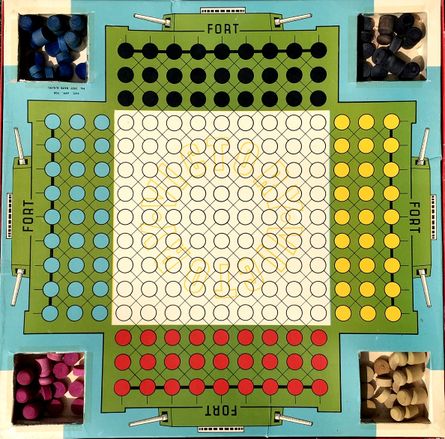
The most fundamental oversight beginners make is treating every square or node on the play area as having equal value throughout the match. In reality, the architecture of the board creates natural pressure points and safe havens.
The Center-Periphery Balance
Many players rush toward the center, assuming it offers the most tactical flexibility. While true in the early game, the center becomes a congested bottleneck by the mid-game phase.
- Early Game: Control the outer rings to secure resource generation.
- Mid Game: Pivot inward only when you hold a distinct tempo advantage.
- Late Game: Use peripheral nodes to trap opponent expansions.
By mapping out the lines of sight across these zones, you can spot diagonal anomalies where traditional defenses fail. These geometric blind spots are where championships are won.
Temporal Sequences and Rhythm
Beyond spatial awareness, time management within the turn cycle dictates success. Victor's board operates on a strict cyclical rhythm that rewards anticipation rather than reaction.
Video: Every Chess Tactic You Need to Know — Advanced Patterns Most Players Miss

Most players react defensively to whatever their opponent just did. Elite players, however, synchronize their actions with the board's internal cadence. Notice how certain tiles activate in alternating sequences? If you align your resource spending with these alternating pulses, you effectively gain a hidden half-turn of advantage every single round.
Reading the Flow State
To master this temporal rhythm, track the board states across three distinct phases:
- The Setup Phase: Identify which corners or zones are heavily starved of initial pieces. These vacuum areas will naturally draw aggressive play later.
- The Transition Phase: Watch for the moment the board shifts from expansion to consolidation. This is when the hidden symmetry breaks, revealing asymmetric scoring opportunities.
- The Endgame Sprint: Calculate the exact threshold where defensive play becomes obsolete, requiring an all-out offensive push through the board's weak channels.
Common Psychological Traps
Human psychology plays a massive role in how we interact with game boards. We are hardwired to look for symmetry and linear progression. Game designers frequently use this tendency against us.
When you study the board, ask yourself: 'Am I making this move because it's optimal, or because it looks balanced?' Often, the winning configuration looks visually awkward and chaotic. Embracing asymmetry is often the final hurdle standing between average performance and mastery.
Conclusion: Putting the Strategy into Practice
Mastering a complex game requires patience, acute observation, and a willingness to unlearn bad habits. By shifting your perspective away from reactive tactics and toward the spatial and temporal truths of the layout, you will start seeing the game in a completely new light. Take these concepts into your next session, look deeper than your opponent, and use these hidden advantages to claim your victory.