Unraveling Hunter Thompson’s Bio: His Voice
When people think of twentieth-century American literature, few figures command the same electric, chaotic fascination as Dr. Hunter S. Thompson. Creator of the infamous Gonzo journalism style, Thompson blurred the lines between objective reporting and wild, drug-fueled fiction. But to truly understand his frantic dispatches from the dark side of the American Dream, you have to look deeper. Unraveling Hunter Thompson’s bio is the key to understanding how a disgruntled kid from Louisville, Kentucky, engineered one of the most unforgettable voices in literary history.

The Early Years: Outlaw in the Making
Born in 1937, Hunter Stockton Thompson grew up in a middle-class Louisville family. However, his youth was marked by tragedy and nonconformity. His father died when Hunter was just fourteen, leaving his mother to struggle financially. Young Hunter was rebellious, intellectual, and thoroughly unimpressed by traditional authority.
He joined a literary club called the Athenaeum Literary Association, which honed his writing skills, but his defiant streak got him into trouble. Following a minor arrest for robbery as a teenager, Thompson was given a choice by a judge: enlist in the military or go to jail. He chose the United States Air Force in 1956.
Military Disobedience and Early Writing
Thompson’s time in the Air Force did little to cure his rebellious nature. Stationed at Eglin Air Force Base in Florida, he spent much of his time writing sports articles for the base newspaper, *The Command Courier*. His editors eventually complained about his insubordination, and his commanding officer recommended an early honorable discharge, noting that Thompson possessed a rebellious attitude and a disdain for rules.
This early friction laid the foundation for his worldview. Thompson realized that the system was rigged, absurd, and ripe for satire. He hit the road as a nomadic freelance writer, taking odd jobs and writing for various publications across the Caribbean, South America, and New York.
The Birth of Gonzo Journalism
The defining moment of Thompson’s career occurred in 1970. On assignment for *Scanlan’s Monthly*, he was sent to cover the Kentucky Derby. Suffering from a combination of writer's block and exhaustion, Thompson began tearing pages out of his notebook and mailing them directly to the magazine's editors.
Rather than covering the horse race from the press box, he turned the story inward, focusing on the decadent, rotting underbelly of the southern gentry and his own mental disintegration. The result was "The Kentucky Derby Is Decadent and Depraved." It was the first true piece of Gonzo journalism—a style where the reporter becomes the central figure and driving force of the narrative.
Video: Hunter S. Thompson You Never Knew! The Scandalous Secrets Behind His Gonzo Legacy!

Key elements of this literary movement included:
- Total immersion of the journalist in the story.
- The abandonment of traditional journalistic objectivity.
- A subjective, heavily stylized first-person narrative voice.
- The use of satire, dark humor, and exaggerated personal experiences.
Unraveling Hunter Thompson’s Bio to Find His Voice
If you want to know where that ferocious, poetic, and paranoid voice came from, you have to examine his literary influences and daily habits. Thompson wasn't just an eccentric who typed while high; he was a meticulous craftsman.
He famously re-typed entire novels by F.Scott Fitzgerald (*The Great Gatsby*) and Ernest Hemingway (*A Farewell to Arms*) just to feel what it was like to write a masterwork sentence by sentence. This obsessive study of rhythm, cadence, and tone shaped his prose into a high-octane freight train of words.
The Myth vs. The Reality
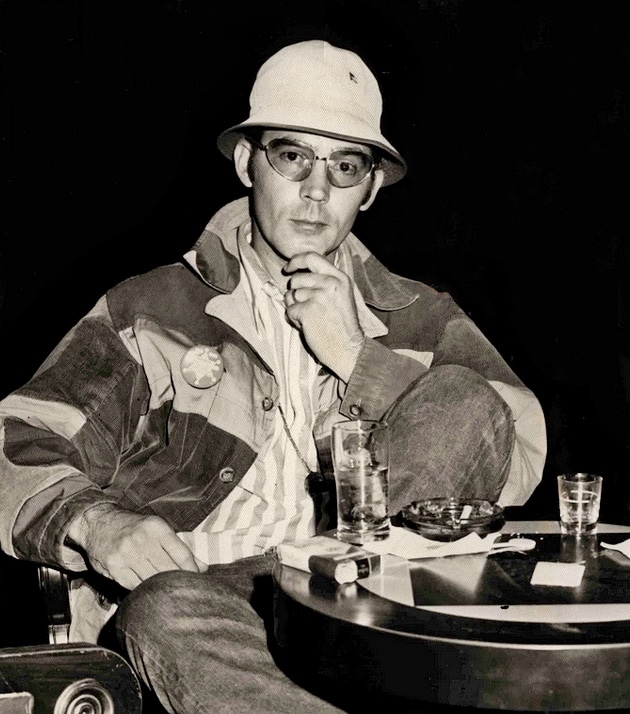
Pop culture often reduces Thompson to a caricature: a wild-eyed man wearing aviator sunglasses, smoking a cigarette through a long holder, and perpetually clutching a bottle of Wild Turkey. While much of this persona was authentic, it overshadowed his brilliant political insights.
His 1972 masterpiece, *Fear and Loathing on the Campaign Trail '72*, remains one of the sharpest books ever written about American politics. Thompson didn't just report on Richard Nixon and George McGovern; he diagnosed the moral decay of the political establishment. His voice was vulgar, poetic, angry, and relentlessly honest all at once.
The Legacy of the Fear and Loathing Icon
Thompson’s life came to a tragic end when he died by suicide in 2005 at his fortified compound in Woody Creek, Colorado, known as Owl Farm. True to form, his funeral was a massive, expensive spectacle funded by his friend Johnny Depp, culminating in his ashes being blasted out of a cannon.
Ultimately, unraveling Hunter Thompson’s bio reveals a man who used his own flaws, neuroses, and immense intellect to hold a mirror up to a dysfunctional society. He proved that journalism could be an art form, and that personal truth often matters more than sterile objectivity. His unmistakable voice continues to inspire writers, rebels, and seekers of truth today.