UPS Careers CDL: Requirements, Pay, and Hiring Guide
In the commercial trucking world, few positions carry the prestige, compensation, and long-term security of a union driving job with United Parcel Service. Exploring ups careers cdl opportunities is often the ultimate goal for professional Class A drivers who want to trade irregular regional freight or low-paying over-the-road (OTR) mileage for stable, high-paying work. Behind the brown delivery vans is a massive linehaul network powered by thousands of tractor-trailer operators known within the company as “Feeder Drivers.”
Whether you are a seasoned driver with millions of accident-free miles or someone planning your long-term commercial driving trajectory, landing a feeder driving job can dramatically change your financial future. This guide details what the job entails, what the pay and benefits look like under the Teamsters contract, and how to navigate the hiring process.
What Is a UPS Feeder Driver?
While the drivers handling local residential deliveries operate standard package cars (often requiring only a standard driver's license or Class B depending on vehicle weight), feeder drivers operate heavy tractor-trailers. Their primary mission is moving bulk freight between UPS distribution hubs, sort centers, rail yards, and major customer distribution facilities.
The vast majority of UPS feeder operations fall into three categories:
- Hub-to-Hub Linehaul: Driving single, tandem, or triple trailers along designated corridors between major processing centers, usually returning to the home terminal at the end of a shift.
- Sleeper Teams: Long-haul routes running cross-country where team drivers alternate driving and resting in a sleeper cab to keep freight moving continuously.
- Shifter / Yard Work: Moving trailers within the hub yard, staging them at dock doors, and coupling/uncoupling equipment.
One major advantage of feeder driving compared to typical general freight carriers is that feeder work is primarily drop-and-hook. Drivers rarely touch freight, which significantly reduces the physical toll on the body compared to package delivery or flatbed work.
Pay and Benefits: The Gold Standard in Trucking
The primary reason commercial drivers aggressively pursue these positions is total compensation. UPS Feeder Drivers are represented by the International Brotherhood of Teamsters under the National Master United Parcel Service Agreement, which provides some of the highest wage scales and benefit packages in the transportation sector.
Hourly Wages and Wage Progression
Unlike most OTR motor carriers that pay by the mile, UPS feeder drivers are paid an hourly rate for all on-duty time, including pretrip inspections, fueling, waiting at rail ramps, and traffic delays. Under the current national contract, feeder drivers move through a wage progression over several years until they reach the “top rate.”
As drivers advance to the top of the progression, hourly wages exceed $44 to $49 per hour, with annual scheduled increases. Overtime is typically paid after eight hours per day or 40 hours per week, allowing drivers on steady runs to regularly earn six-figure annual incomes without living on the road for months at a time.
The Teamsters Benefit Advantage
Beyond base wages, the benefit package sets UPS apart from virtually every non-union motor carrier:
- Zero-Premium Health Care: In most regions, drivers and their families receive comprehensive medical, dental, and vision coverage funded entirely by company contributions, requiring zero monthly payroll deductions.
- Defined-Benefit Pension: Drivers earn service credits toward a traditional pension plan, securing predictable retirement income alongside personal 401(k) savings.
- Paid Time Off: Robust allotments of paid vacation, option weeks, sick days, and paid holidays that scale up with years of service.
Key Requirements for UPS Careers CDL Roles

Because the role involves high equipment values and strict safety compliance, qualification standards are uncompromising. Meeting the baseline requirements is non-negotiable before submitting an application.
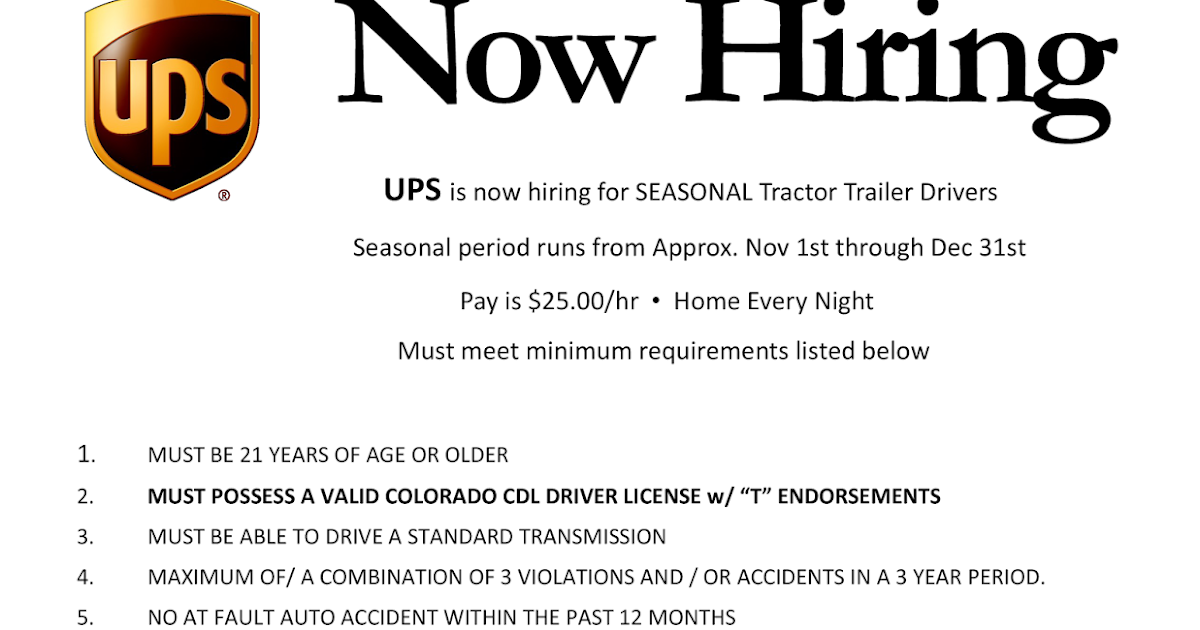
- Commercial Driver's License: A valid, unexpired Class A CDL issued by your state of residence.
- Endorsements: Doubles/Triples (T endorsement) is mandatory in almost all locations, as pulling pup trailers is a standard operational practice. A Tanker endorsement is sometimes requested depending on the local hub.
- DOT Physical & Medical Examiner's Certificate: Ability to pass a Department of Transportation physical exam and drug screening.
- Clean Motor Vehicle Record (MVR): No serious moving violations, DUIs/DWIs, or reckless driving charges. UPS heavily vets an applicant’s driving history across both personal and commercial vehicles.
- Experience: Requirements vary by market. Outside hires typically need at least one to two years of verifiable Class A driving experience in tractor-trailer combinations, preferably in varied weather and traffic conditions.
The Two Paths: Internal Seniority vs. Outside Hires
Securing a feeder driving seat depends largely on where you enter the company structure. UPS uses two primary pipelines to fill CDL positions.
1. The Internal Promotion Path (Seniority)
Historically, the standard route to a feeder position starts inside the building. An employee begins by working as a part-time package handler inside a hub, advances to a package delivery car driver, and eventually signs the “feeder bid list.” When open spots occur, bids are awarded strictly by company seniority. In competitive hubs, waiting for a feeder bid can take years, but it guarantees that drivers know the company culture and operating rules.
2. Direct Off-the-Street (OTS) Hiring
Because freight volumes have grown faster than internal candidate pools in many regions, UPS frequently hires qualified Class A drivers directly “off the street.” Under union rules, a fixed ratio typically governs how many outside candidates can be hired relative to internal promotions (for example, one outside hire for every six inside promotions, depending on the local supplemental agreement).
Outside hires are especially common during the late summer and early autumn when terminals prepare for peak holiday volume. Starting as a seasonal or temporary feeder driver is one of the most reliable ways to demonstrate skill and earn a permanent, full-time spot on the local seniority list.
What to Expect: Road Tests, Probation, and Seniority Life
If your application passes initial screening, the hiring process moves quickly. You will be scheduled for an extensive road test with a UPS driver safety supervisor. This evaluation tests precision vehicle handling, pretrip inspections, coupling and uncoupling sets of doubles, and adherence to defensive driving techniques—specifically the proprietary “Smith System” space-management principles UPS emphasizes.
Upon hire, drivers enter a probationary qualification period (typically 30 working days). During this window, you must maintain clean safety performance, follow all hub protocols, and demonstrate reliable attendance to achieve full union seniority.
Life as a low-seniority feeder driver requires flexibility. New drivers usually start on the “extra board,” covering vacations, unscheduled freight spikes, and night shifts. You may work varied start times and haul late-night relays between distant hubs. As your seniority builds, you can bid on dedicated daytime routes, specific equipment types, and preferred days off.
How to Apply for UPS CDL Jobs
- Monitor the Official Portal: Visit the official UPS jobs site (upsjobs.com) and filter searches using keywords like “Tractor-Trailer Driver,” “Feeder Driver,” or “Class A Driver.”
- Set Up Job Alerts: Feeder positions fill rapidly once posted. Setting notifications for your target geographic hubs ensures you can submit your application within hours of an opening going live.
- Prepare Your Documents: Have your CDL number, Medical Examiner’s Certificate, ten-year employment history, and clean MVR ready for verification.
- Practice Defensive Driving Standards: Review fundamental Class A pretrip routines and spatial safety principles thoroughly before your road evaluation.
A feeder driving position at UPS demands discipline, vigilance, and patience as you work your way up the seniority list. For drivers who want top-tier hourly compensation, robust retirement security, and unmatched union protections, it remains one of the most rewarding career choices in commercial transportation.