US Army Age Waiver Guide: Limits, Rules & Process
Deciding to join the military later in life is a major commitment, and many prospective applicants wonder if they have missed their window of opportunity. Fortunately, the United States military provides mechanisms for older candidates to serve. If you are past the standard cutoff, securing a US Army age waiver might be your pathway to putting on the uniform.

Military recruitment standards change frequently to meet end-strength goals and force readiness requirements. Understanding how age limits work, what waivers are available, and how to successfully navigate the paperwork can make the difference between an enlistment contract and a closed door.
Current US Army Age Limits Explained
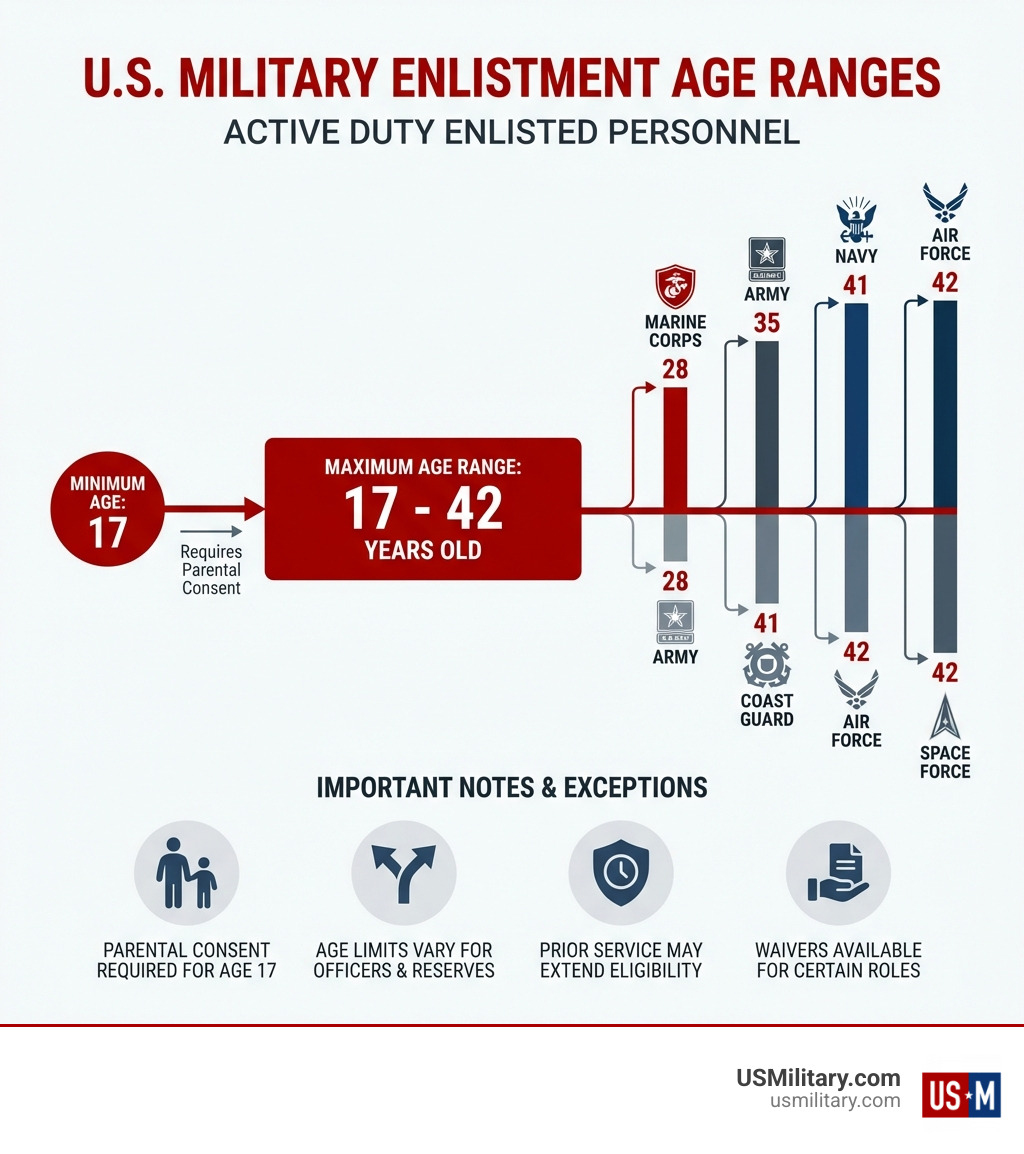
Before looking into a waiver, it helps to know the baseline rules. The standard enlistment age for the active-duty US Army is between 17 and 39 years old. Applicants who are 17 require parental consent, while those 18 and older can enlist independently.
For the Army National Guard and the US Army Reserve, the upper age limit traditionally sat at 39 as well, though specific policies fluctuate depending on congressional authorizations and recruiting needs. However, any applicant who reaches their 40th birthday before shipping to Basic Combat Training (BCT) generally crosses the hard threshold that requires special administrative approval.
Understanding the US Army Age Waiver Policy
An age waiver is essentially an official exception to policy. It allows individuals who exceed the maximum standard enlistment age to join the armed forces. The feasibility of obtaining a US Army age waiver depends heavily on two main factors: whether you have prior military service and your overall physical and mental health.
Non-Prior Service Applicants
For civilians with no prior military experience, getting an age waiver is notoriously difficult. The Army invests significant resources into training brand-new recruits, expecting a return on investment through a multi-year service obligation. Consequently, age waivers for absolute beginners are rare and usually only granted during periods of extreme recruiting shortfalls or for individuals with highly specialized, critical professional skills—such as medical professionals or cyber specialists entering via direct commission programs.
Video: What is the new Army Recruitment Age Requirement: Enlist at 42 | GOARMY
Prior Service Applicants
If you previously served in any branch of the U.S. Armed Forces (Army, Navy, Air Force, Marine Corps, Coast Guard, or Space Force), your chances of getting an age waiver increase dramatically. The Army values prior service because these applicants require less foundational training and bring operational experience to the force.
To calculate your adjusted age for prior service waivers, the Army often uses a "age minus active service" formula (often referred to as active federal service subtraction). For example, if you are 42 years old but have four years of prior active-duty service, your subtractable service may bring your effective enlistment age back within acceptable parameters.
Requirements for Securing a Waiver
Passing the age threshold is only part of the battle. If your recruiter submits a US Army age waiver packet on your behalf, you must prove that you are an exceptional candidate in all other areas. The command reviewing your waiver will look closely at several qualifying metrics:
- Physical Fitness: You must easily pass the Army Combat Fitness Test (ACFT) standards and meet height and weight requirements without exception.
- Medical History: Older applicants undergo rigorous medical screenings at the Military Entrance Processing Station (MEPS). Pre-existing conditions that worsen with age will face strict scrutiny.
- ASVAB Scores: High scores on the Armed Services Vocational Aptitude Battery demonstrate cognitive readiness and adaptability, making your waiver packet much more attractive to decision-makers.
- Moral Character: A clean legal record is vital. Candidates with a history of major civil infractions or felony convictions face an uphill battle, as waivers for age rarely bundle smoothly with heavy moral or criminal waivers.
Step-by-Step Process to Apply
You cannot apply for a US Army age waiver on your own. The process must go through official military recruiting channels.
- Contact a Recruiter: Reach out to your local US Army recruiter and be completely transparent about your exact date of birth and service history.
- Complete Initial Screening: Take a practice ASVAB and undergo a preliminary physical and background screening to ensure no other disqualifying factors exist.
- Build the Packet: If your recruiter determines a waiver is viable, they will compile your personal statements, birth certificate, prior service records (DD-214), and any civilian education or professional credentials.
- Chain of Command Review: The waiver packet travels up the chain of command, often requiring approval from the battalion commander or higher-level headquarters depending on how far past the age limit you are.
- Enlistment and Ship Date: Once approved, you select your Military Occupational Specialty (MOS) and swear into the Delayed Entry Program (DEP) or secure an immediate ship date for Basic Training.
Tips for Older Enlistees
Entering basic training alongside 18-year-olds presents unique physical and mental hurdles. If your age waiver is approved, focus on injury prevention. Joint health, proper nutrition, and targeted cardiovascular conditioning will keep you resilient during the high-impact phases of initial entry training. Lean on your life experience, remain humble, and embrace the team-oriented culture of the United States Army to set yourself up for a successful second career.