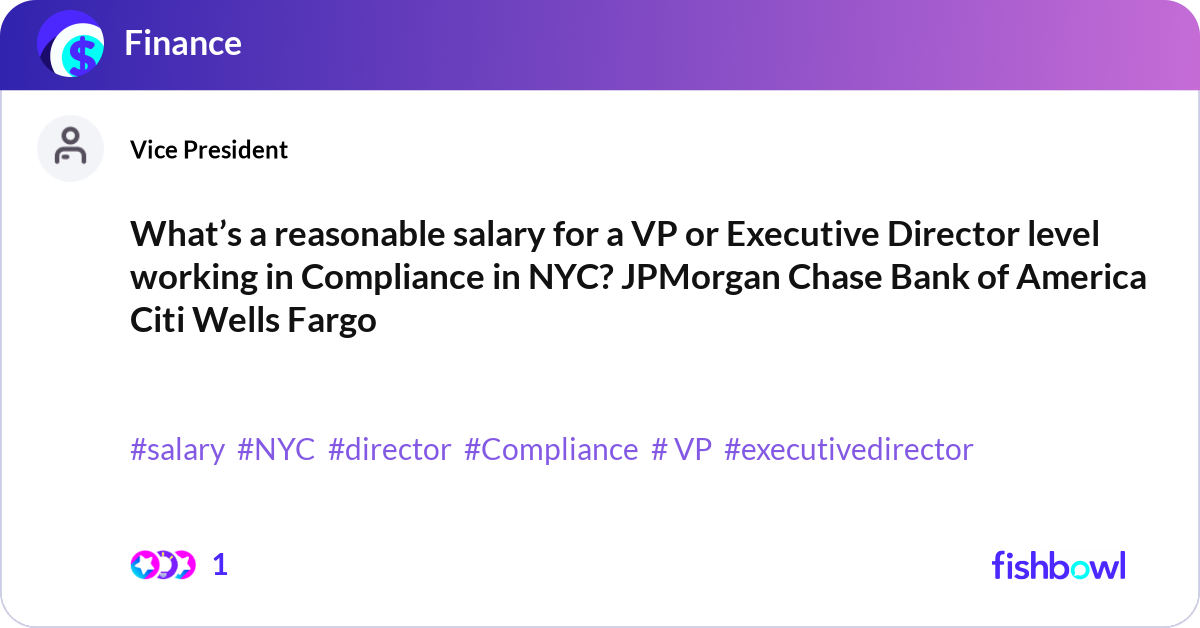
Vice President Compliance Salary Guide: What to Expect
Stepping into a leadership role within regulatory risk management is a major career milestone. For senior professionals evaluating executive-level opportunities, understanding the typical vice president compliance salary is essential for career planning and salary negotiation. Compliance VPs shoulder immense responsibility, protecting financial institutions, healthcare providers, and technology corporations from regulatory penalties, legal liabilities, and reputational damage.

Because the cost of non-compliance can run into the billions, organizations are willing to pay top dollar for experienced leadership. However, compensation varies dramatically depending on the industry, geographic location, company size, and the individual's specific background.
Understanding the Vice President Compliance Salary Range
In the United States, the average total compensation for a Vice President of Compliance generally falls between $180,000 and $300,000 per year. While base salary makes up the bulk of this figure, total compensation packages often include performance bonuses, equity grants, and comprehensive benefits that can push total earnings much higher.
Base Salary vs. Total Compensation
When analyzing executive offers, it is vital to distinguish between base pay and total compensation. The base salary typically ranges from $160,000 to $230,000. However, VPs in heavily regulated sectors often receive annual cash bonuses ranging from 15% to 40% of their base salary.
In industries like investment banking and FinTech, performance bonuses and stock options can rival or even exceed the base salary. Therefore, evaluating the entire compensation structure is crucial when comparing job offers.
Key Factors Influencing Compliance VP Pay
No two compliance roles are identical. Several distinct variables dictate where a specific professional falls on the salary spectrum.
1. Industry Sector
The industry in which you operate is perhaps the single largest determinant of your earning potential. Highly scrutinized sectors command higher budgets for risk management:

- Banking and Financial Services: Financial institutions—particularly investment banks, asset management firms, and global commercial banks—typically offer the highest salaries and most lucrative bonus structures.
- Healthcare and Pharmaceuticals: Driven by strict FDA regulations, HIPAA, and billing compliance, healthcare organizations offer competitive compensation, though cash bonuses are often slightly lower than in Wall Street firms.
- Technology and SaaS: As data privacy laws (such as GDPR and CCPA) proliferate, tech companies are investing heavily in compliance. VPs in this sector often receive substantial equity packages alongside strong base salaries.
- Manufacturing and Energy: These sectors focus heavily on environmental, health, and safety (EHS) compliance, alongside anti-corruption and trade compliance, offering stable mid-to-high executive pay.
2. Geographic Location
Where your employer is physically located heavily influences salary bands due to local cost of living and regional talent pools.
- Major Financial Hubs: New York City, San Francisco, Boston, and Chicago routinely offer the highest base salaries and bonuses to offset the local cost of living and intense market competition.
- Secondary Markets: Cities like Austin, Denver, Atlanta, and Charlotte offer strong compliance salaries, often paired with a more favorable cost of living.
- Remote Work: The rise of remote and hybrid work has complicated geographic pay scales. Many companies base remote salaries on the employee's home location, though some national employers offer standardized bands for senior leadership.
3. Experience and Certifications
Employers value proven track records in navigating complex regulatory environments. VPs with 10 to 15-plus years of experience command top-tier compensation. Additionally, holding recognized industry certifications can significantly boost your market value:
- Certified Regulatory Compliance Manager (CRCM)
- Certified Compliance and Ethics Professional (CCEP)
- Certified Information Privacy Professional (CIPP)
- Juris Doctor (JD) degrees are also highly prized, particularly for VPs overseeing legal and regulatory alignment.
Comparing Compliance VPs to Other Risk Roles
To put a vice president compliance salary in perspective, it helps to compare it to adjacent risk management and legal titles within an enterprise.
- Director of Compliance: Typically serves as a stepping stone to the VP level, with average salaries ranging from $140,000 to $190,000.
- Chief Compliance Officer (CCO): The ultimate compliance leadership role. CCOs at large enterprises often earn total compensation packages exceeding $400,000 to $700,000-plus.
- VP of Internal Audit: Commands a comparable salary range to compliance VPs, usually hovering between $170,000 and $260,000.
- General Counsel: Legal department leaders generally outearn compliance VPs, particularly in corporations where the legal and compliance functions are partially siloed.
Tips for Negotiating a Compliance VP Offer
If you are preparing to negotiate a new compensation package, keep these strategies in mind to maximize your earning potential:
- Benchmark the Market: Use up-to-date salary surveys and job board data specific to your industry and location to establish a realistic baseline.
- Focus on the Bonus Structure: If the employer has rigid constraints on base salary, negotiate for a higher guaranteed bonus minimum or a larger equity allotment.
- Highlight Niche Expertise: Emphasize rare specializations, such as expertise in cryptocurrency compliance, AI governance, or cross-border data privacy, which give you strong leverage.
- Negotiate Non-Monetary Perks: Signing bonuses, relocation assistance, extra vacation days, and professional development stipends can add substantial value to your offer.
Conclusion
A vice president compliance salary reflects the high stakes, deep regulatory knowledge, and strategic leadership required to manage corporate risk effectively. While base pay provides a solid foundation, total compensation is heavily influenced by your chosen industry, geographic market, and ability to negotiate bonuses and equity. By staying informed on current market trends and highlighting your specialized credentials, you can successfully position yourself for top-tier executive compensation in the compliance field.