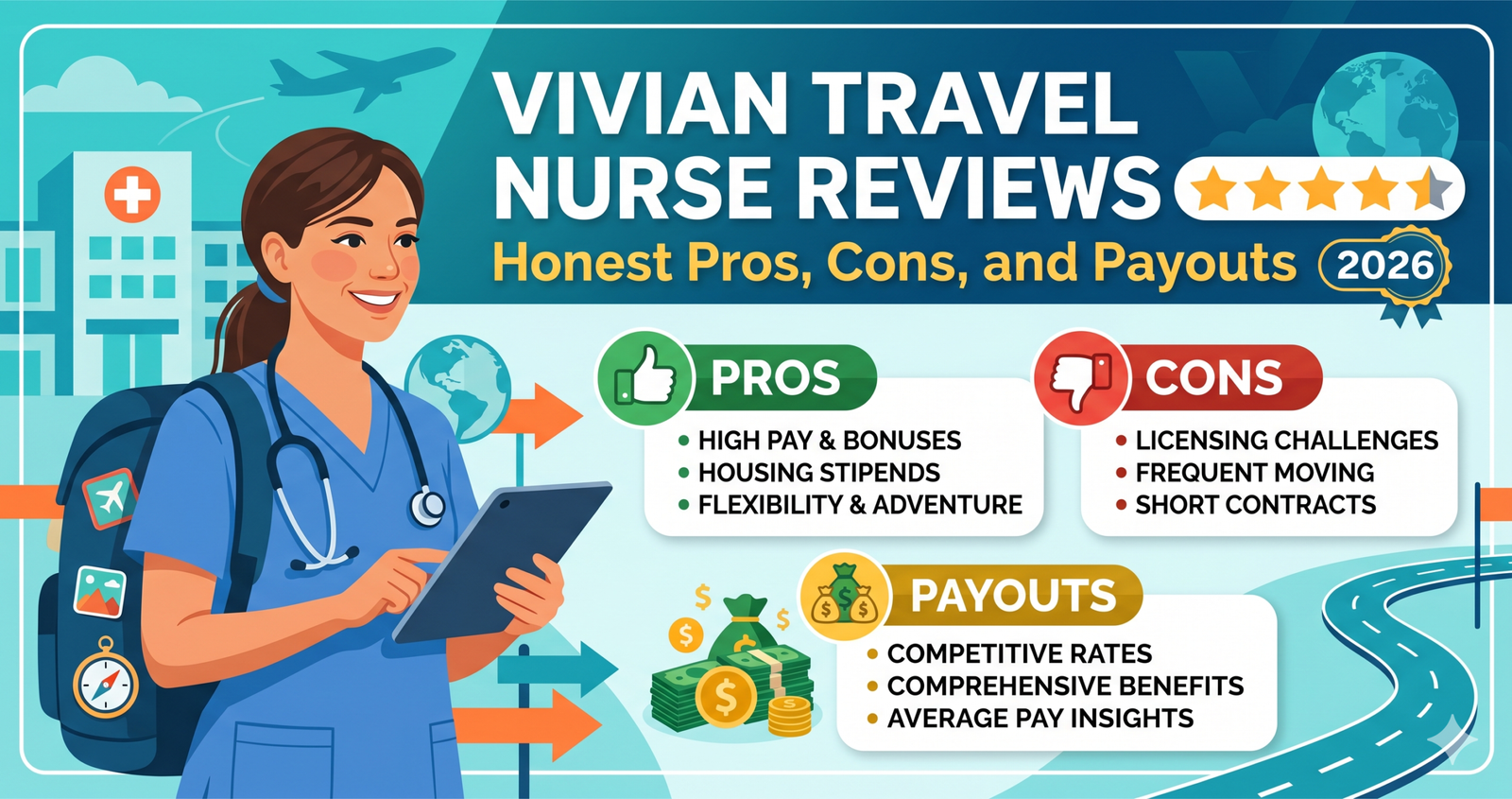
Vivian Nurse Contracts: Complete Guide & Pay Tips
For modern travel nurses, locating high-paying assignments with transparent pay packages used to require calling dozens of recruiters individually. Today, platforms like Vivian Health have transformed the search process. Navigating vivian nurse contracts gives clinicians access to thousands of travel, local contract, and per diem jobs across hundreds of agencies in one centralized marketplace.

However, because Vivian is an employment marketplace rather than a direct staffing agency, many nurses are unsure how the contracting process actually works. This guide breaks down what these contracts entail, how pay packages are structured, and how to land the best assignments while avoiding common pitfalls.
What Are Vivian Nurse Contracts?
Vivian Health (originally founded as NurseFly) does not employ nurses directly. Instead, it functions as a transparent job board and recruiter marketplace. When you review travel nurse jobs on the platform, you are looking at positions posted by partnered third-party staffing agencies—such as Host Healthcare, Medical Solutions, TNAA, and dozens of boutique firms—as well as direct healthcare systems.
A contract found through Vivian becomes an official agreement between you and the specific staffing agency that holds the contract with the host hospital. Vivian provides the platform to compare rates, chat directly with recruiters, and maintain a universal clinical profile, but your paycheck, benefits, and clinical onboarding will flow through the agency you choose to sign with.
Understanding Vivian Nurse Contracts and Pay Packages
The primary reason nurses use Vivian is transparent compensation. Before Vivian, agencies rarely posted pay upfront. On Vivian, every job card features a weekly gross pay figure. To evaluate these numbers accurately, you must understand how travel nurse compensation is calculated.
1. Taxable Hourly Base
This is the hourly wage subject to state and federal income taxes. In travel contracts, base rates are often kept relatively low (for example, $20 to $35 per hour) to maximize the proportion of tax-free stipends. However, this base must remain legally defensible under IRS guidelines for your specialty and geographic region.
2. Non-Taxable Stipends (GSA Per Diem)
If you maintain a legitimate tax home and duplicate living expenses while on assignment, you qualify for non-taxable stipends covering lodging, meals, and incidentals. Vivian typically rolls these stipends into the total gross weekly pay estimate. While higher stipends mean higher take-home pay, an abnormally low taxable base paired with an inflated stipend can trigger an IRS audit.
Video: WARNING: 90% Of Nursing Jobs On Vivian Are FAKE!

3. Total Gross Weekly Pay
This is the prominent number displayed on Vivian contract cards. It represents the total weekly earnings before taxes, assuming you work all contracted hours (usually 36 or 48 hours per week). It includes your base pay plus non-taxable stipends, but excludes overtime, on-call pay, or travel reimbursements unless specifically stated.
How to Evaluate Vivian Nurse Contracts Before Applying
Because multiple agencies often post the exact same hospital opening on Vivian, pay rates and contract terms can vary widely for identical positions. Here is what to evaluate before hitting "Apply":
- Compare Identical Job Postings: If a hospital in San Diego posts an ICU opening, you might see three different agencies advertising it on Vivian. One agency might offer $2,650/week while another offers $2,850/week for the exact same unit and shift. Vivian lets you compare these packages side-by-side.
- Review the Stipend-to-Taxable Ratio: Ensure the agency is not artificially lowering your taxable hourly rate below minimum prevailing wage standards just to display a high net payout.
- Check Agency Benefits: A contract offering $100 less per week might include comprehensive Day-1 health insurance, 401(k) matching, and CEU reimbursements, which could save you more money in the long run than a bare-bones agency offering slightly higher gross pay.
- Cancellation Policies and Guaranteed Hours: Always confirm whether the contract guarantees 36 or 48 hours per week. If a hospital can call you off for one shift per bi-weekly pay period without pay, that significantly reduces your actual realized earnings.
Step-by-Step: Securing a Contract via Vivian
- Build Out Your Universal Profile: Fill out your work history, licenses, certifications, and skills checklists. Having a 100% complete profile allows recruiters to submit your packet to hospital vendor management systems (VMS) quickly.
- Set Custom Search Filters: Filter by your specialty (e.g., Med-Surg, ER, OR), preferred shift (days vs. nights), contract length (standard 13 weeks vs. rapid response), and minimum weekly take-home target.
- Message Multiple Recruiters: When you express interest in a position, a direct chat opens with that agency's recruiter. Ask clarifying questions regarding the unit's nurse-to-patient ratios, floating requirements, and scheduling flexibility before agreeing to be submitted.
- Lock In Your Submission: Instruct the recruiter to submit your profile to the facility. Important rule: Never let two different agencies submit your profile to the same hospital for the same contract. Double-submissions typically result in the facility auto-rejecting your application.
- Interview and Review the Official Agreement: Once the facility interviews you and makes an offer, review the formal contract issued by the staffing agency—not just the Vivian job card. Ensure the hours, pay rate, requested time off (RTO), and unit match what was advertised.
Common Pitfalls and Red Flags to Avoid
While Vivian has improved transparency in healthcare staffing, travelers should remain vigilant regarding certain industry practices:
- Bait-and-Switch Postings: Occasionally, an agency may keep an outdated, high-paying listing active to generate leads. When you message the recruiter, they might inform you that the specific job just closed, but offer you lower-paying alternatives. If a recruiter repeatedly pulls this tactic, discontinue working with them.
- Unvetted Auto-Submissions: Some overeager recruiters might submit your profile to hospitals without explicit permission once you connect on the platform. Clearly state in your messages: "Do not submit my profile to any facility without my written confirmation."
- Unrealistic Float Requirements: Check whether the contract lists your home unit specifically or classifies you as a facility-wide float nurse. If floating policies are not spelled out, you may find yourself pulled to unfamiliar units every shift.
Maximizing Your Leverage on Vivian
Vivian gives travel nurses unprecedented leverage by removing information asymmetry. You no longer have to wonder if a recruiter is offering a fair cut of the facility's bill rate; you can see what competing agencies are paying for the exact same job in real time.
Use this transparency constructively. If your preferred recruiter works for an agency paying $150 less per week than a competitor listed on Vivian, show them the listing and ask if they can adjust their margin to match it. Because recruiters want to close placements, many will negotiate to keep your business.
By treating Vivian as a research and connection engine while performing your due diligence on the underlying staffing agencies, you can consistently secure nurse contracts that align with your financial goals, clinical skills, and lifestyle preferences.