Wake County Court Schedules: A Beginner's Guide
Finding yourself needing to appear before a judge can feel overwhelming, especially if it is your first time navigating the legal system. Whether you are dealing with a traffic ticket, a civil dispute, or a family law matter, knowing how to look up and interpret Wake County court schedules: a beginner's guide is the essential first step to ensuring you arrive on time and prepared.

Wake County, located in North Carolina and encompassing cities like Raleigh, Cary, and Apex, handles thousands of cases every week. Because the docket is vast, the court system provides online tools and public resources to help residents track their required appearances. This guide will walk you through finding your specific date, understanding the terminology, and knowing what to expect on the day of your hearing.
Where to Find Wake County Court Schedules Online
The easiest way to check a court date in Wake County is through the official online resources provided by the North Carolina Judicial Branch. Rather than guessing or waiting for a physical notice in the mail, you can search active calendars directly from your computer or smartphone.
Using the Official NCAOC Calendars
The North Carolina Administrative Office of the Courts (NCAOC) hosts public court calendars online. To find a specific listing:
- Navigate to the official North Carolina court calendar search page.
- Select 'Wake' as the county from the dropdown menu.
- Choose the specific court type (District or Superior) and filter by courtroom, date range, or lawyer/defendant name.
Keep in mind that online searches require exact spelling. If your last name is hyphenated or commonly misspelled, try searching by your first name and date of birth, or look up your specific case number if you have received paperwork from the clerk of superior court.
Checking Traffic and Misdemeanor Dockets
For minor traffic infractions and certain misdemeanor charges, Wake County updates its dockets regularly. If you received a speeding ticket on I-40 or the Beltline, your citation number is your best key to tracking the exact courtroom and time assigned to your case.
Understanding the Types of Wake County Courts
Before looking at your schedule, it helps to know which division of the court system is handling your matter. Wake County operates several distinct courts, each with its own scheduling rules and courtroom locations.

District Court vs. Superior Court
District Court handles civil cases involving smaller monetary claims (usually under $25,000), misdemeanor criminal offenses, juvenile cases, and family law matters such as divorce and child custody. District Court judges preside over trials without juries.
Superior Court handles felony criminal cases, civil cases involving larger financial disputes, and appeals from District Court. Many Superior Court trials involve a jury.
Specialized Courts
Wake County also utilizes specialized sessions, including Drug Treatment Court and DWI Court. These programs operate on strict, recurring schedules that require frequent, mandatory check-ins with a specialized judge.
How to Read a Court Calendar
When you pull up a Wake County court calendar, you will see a grid of information. Knowing how to read these columns prevents confusion on the morning of your hearing.
- Case Number: A unique alphanumeric code assigned to your legal file.
- Defendant/Party Name: The names of the individuals or entities involved in the lawsuit or criminal charge.
- Charge or Cause of Action: The specific legal violation or civil claim being addressed.
- Time: Most dockets are scheduled in blocks (such as 9:00 AM or 2:00 PM). Note that this is the time court *begins*, not necessarily the exact minute your specific case will be called.
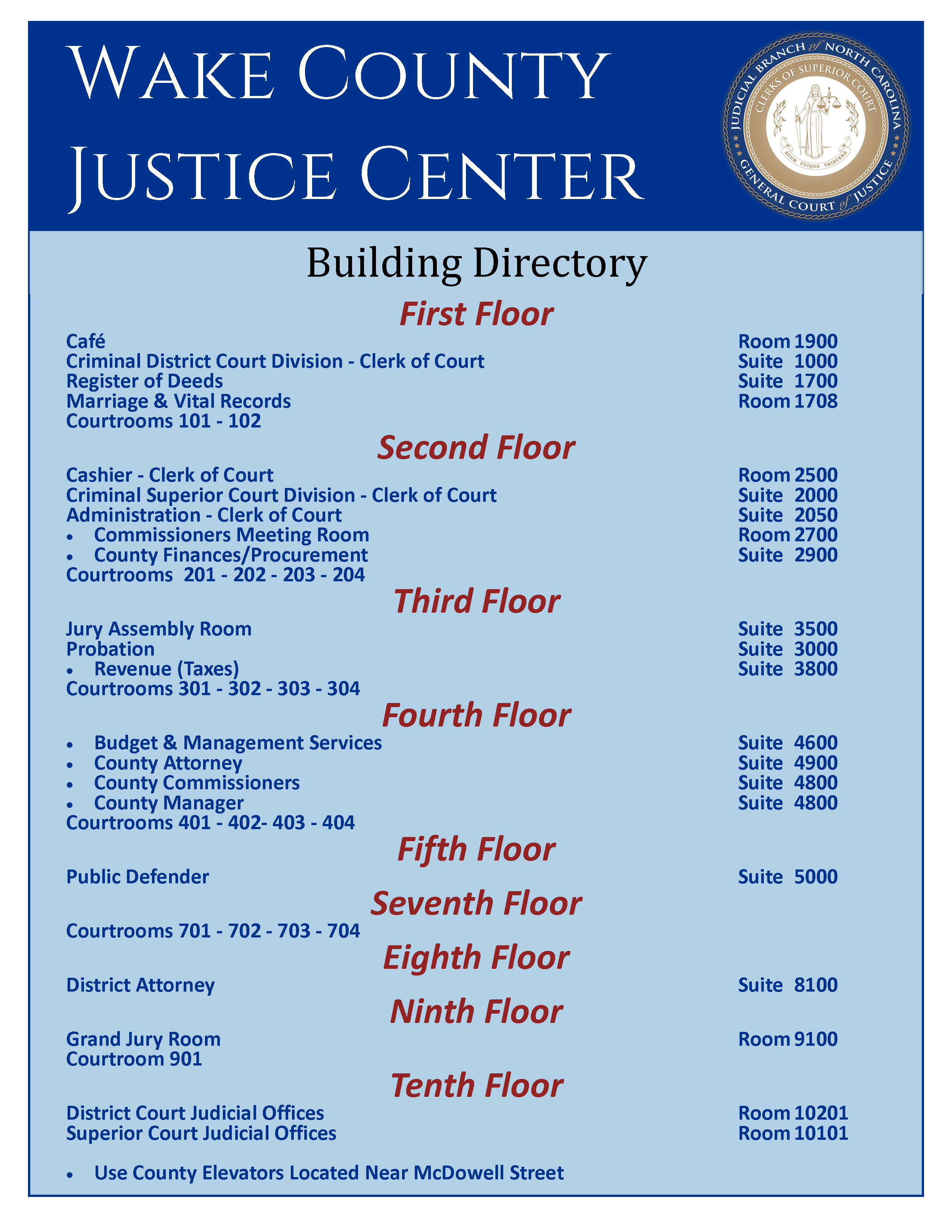
- Courtroom: The physical room number inside the Wake County Justice Center where you must report.
Tips for Your Court Day in Wake County
Once you have located your appearance on the schedule, proper preparation will make the process go smoothly. Here are a few practical tips for attending court in downtown Raleigh:
- Arrive Early: Security lines at the Wake County Justice Center can be long during peak morning hours. Give yourself at least 30 minutes before your scheduled docket time to clear security and find your courtroom.
- Dress Appropriately: Dress conservatively and respectfully. Avoid hats, sunglasses, and clothing with offensive graphics or slogans.
- Silence Your Phone: Electronic devices must be turned off or silenced before entering any courtroom. Taking calls or recording video inside the courtroom is strictly prohibited.
- Check In with Officials: When you enter the courtroom, look for the District Attorney, courtroom clerk, or a bailiff to announce your presence so they know you have arrived.
Navigating the legal system is rarely fun, but utilizing online lookup tools and understanding how Wake County court schedules operate will keep you organized, punctual, and prepared for whatever your hearing entails.