Walgreens Store Closing List by State (2025)
If you rely on your local corner pharmacy for daily prescriptions, household goods, or emergency over-the-counter medicine, you may be consulting the latest walgreens store closing list by state to see if your neighborhood branch is slated to shut down. Over the past year, Walgreens Boots Alliance announced an aggressive footprint reduction plan that will shutter approximately 1,200 underperforming locations across the United States through fiscal year 2027, with roughly 500 closures targeted for fiscal 2025 alone.

This massive retail restructuring represents about 14% of the chain’s roughly 8,600 domestic locations. Below, we break down why these closures are happening, which states are seeing the heaviest impact, and how you can protect your medical records and prescription refills if your local store turns off its lights for good.
Why Is Walgreens Closing 1,200 Stores?
The decision to pare down Walgreens' nationwide footprint comes after several consecutive quarters of compressed retail margins, changing consumer shopping patterns, and shifts in the healthcare sector. Chief Executive Officer Tim Wentworth announced the strategic turnaround plan to eliminate cash-draining retail units and redeploy capital toward more profitable, core pharmacy operations.
The primary drivers behind the mass closures include:
- Pharmacy Reimbursement Pressures: Pharmacy Benefit Managers (PBMs) have steadily lowered reimbursement rates paid to retail pharmacies for filling prescription drugs, squeezing profitability on core pharmaceutical sales.
- Shifting Consumer Spending: High inflation has led everyday shoppers to trade down to discount retailers like Walmart, Target, and dollar chains for personal care, snacks, and seasonal items.
- E-Commerce & Delivery Growth: More consumers now order routine prescriptions via mail-order services and purchase toiletries through online retailers such as Amazon.
- Retail Theft and High Operating Costs: Certain urban locations have struggled with persistent shrinkage, elevated commercial lease rates, and rising security costs, rendering individual storefronts unprofitable.
- Redundant Real Estate: Following the 2018 purchase of 1,932 Rite Aid stores, Walgreens found itself with competing storefronts operating within blocks of each other in dozens of suburban and metropolitan markets.
Walgreens Store Closing List by State: Regional Breakdown
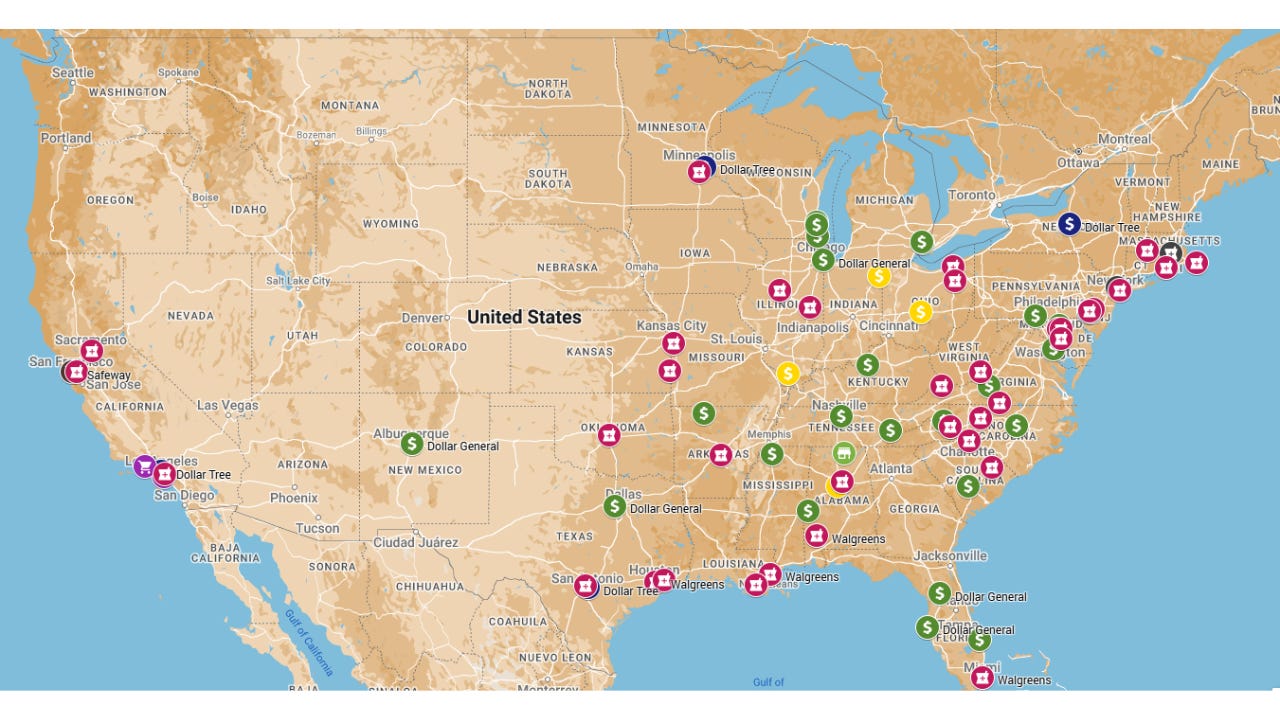
Walgreens has opted not to release a single, consolidated national spreadsheet of all 1,200 future shuttered stores in advance. Instead, the company assesses each lease expiration individually and notifies local staff and customers roughly 30 days before closing a store's doors. However, specific states and metropolitan centers have experienced heavy concentrations of confirmed closures due to real estate density and performance reviews.
California
California continues to see a significant number of Walgreens closures, particularly in major urban centers. Dozens of stores have closed across San Francisco, Oakland, Los Angeles, and the East Bay area. High commercial rent, combined with retail theft and elevated minimum wage operating costs, made underperforming metropolitan locations prime candidates for consolidation.
Illinois
Despite being the home state of Walgreens' corporate headquarters in Deerfield, Illinois has absorbed several rounds of closures. The greater Chicago area—including neighborhoods in the South Side, West Side, and downtown loop—has seen numerous locations close, along with suburban locations where overlapping stores sat less than one mile apart.
New York
New York has experienced closures spanning New York City (Manhattan, Brooklyn, Queens, and the Bronx) to upstate markets like Rochester, Albany, and Buffalo. In dense urban neighborhoods, pharmacy customers often have another Walgreens or Duane Reade (a Walgreens subsidiary) a few blocks away, making consolidation financially sensible for the parent company.
Florida
Florida represents one of Walgreens' highest-volume regional footprints due to its large retiree demographic. Even so, redundant locations in saturated markets like Tampa, Orlando, and South Florida (Miami-Dade and Broward counties) have faced closure as the chain streamlines overlapping real estate.
Texas
Rapid growth in the Dallas-Fort Worth, Houston, and San Antonio metros led to heavy Walgreens expansion over the past two decades. As consumer traffic patterns shifted toward suburban periphery centers, older urban and strip-mall branches in Texas have been progressively phased out upon lease expiration.

Pennsylvania and Massachusetts
The Northeast corridor holds many former Rite Aid locations acquired by Walgreens. In markets across Philadelphia, Pittsburgh, Boston, and Worcester, overlapping branches have been methodically shut down, consolidating patient prescription files into single, high-traffic regional anchor stores.
Other States with Documented Closures
Closures are not limited to coastal states. Documented branch shutdowns have occurred or are scheduled across:
- Midwest: Michigan, Ohio, Wisconsin, Indiana, and Missouri.
- South: Georgia, North Carolina, Tennessee, and Alabama.
- West & Mountain: Arizona, Colorado, Oregon, and Washington state.
How to Check If Your Local Walgreens Is Shutting Down
Because Walgreens rolls out closures on a rolling 30-day notification timeline, proactive checking is the best way to avoid disruptions. Here is how to verify the status of your neighborhood store:
- Use the Walgreens Official Store Locator: Search your ZIP code on walgreens.com/storelocator. Stores scheduled to shut down generally display updated operating hours, closing announcements, or warnings directing customers to neighboring locations.
- Watch for Physical Signage: Federal regulations and corporate policy mandate in-store signage at the pharmacy counter and entrance doors at least 14 to 30 days prior to closure.
- Check Your Mail and Email: If you are an active Walgreens Pharmacy patient, HIPAA-mandated notices are mailed to your address on file, specifying the closing date and where your records are being routed.
- Call Your Local Pharmacy Team: If you hear rumors about your local branch, call the pharmacy counter directly and ask the staff. They can confirm the store's operating status and timeline.
What Happens to Your Prescriptions When a Store Closes?
The most pressing concern for customers is maintaining uninterrupted access to maintenance medications. Fortunately, pharmacy transitions follow structured regulatory guidelines:
Automatic Prescription Transfers
In almost all cases, Walgreens automatically transfers your active prescription files, refill history, and insurance billing profiles to the nearest remaining Walgreens location. You do not need to take any manual action if you are comfortable using the newly assigned store.
Transferring to a Different Pharmacy Chain
If the designated receiving Walgreens is inconvenient, you have the right to transfer your prescriptions to another pharmacy of your choice, such as CVS, Walmart, a grocery chain pharmacy, or an independent pharmacy. To initiate a transfer:
- Contact your new pharmacy of choice.
- Provide them with your current prescription numbers, the closing Walgreens store number, and your insurance information.
- Allow the new pharmacy to contact Walgreens electronically or via phone to pull the prescription file directly.
Note: Schedule II controlled substances (such as certain pain medications or ADHD treatments) cannot simply be transferred between pharmacies under federal law; your prescribing physician will need to send a fresh electronic prescription to your new pharmacy location.
The Broader Impact: Pharmacy Deserts and Solutions
While closing underperforming stores helps corporate balance sheets, it creates real challenges for local communities. When chain drugstores leave low-income or rural neighborhoods, they often leave behind "pharmacy deserts"—areas where residents must travel more than one to two miles to fill life-saving medications.
If your local pharmacy has closed and transportation is a challenge, consider these options:
- Walgreens Mail Order & Delivery: Walgreens offers same-day prescription delivery in eligible areas, as well as 1- to 2-day home delivery options for non-controlled maintenance drugs.
- Insurance Home Delivery Services: Many health insurance plans (like OptumRx, Express Scripts, or Caremark) offer 90-day supply home delivery with lower copays.
- Independent Local Pharmacies: Independent pharmacies frequently provide free local home delivery and personalized customer service that large national chains struggle to match.
By staying informed about your store's status and knowing your transfer options in advance, you can navigate local Walgreens closures without missing a single dose of your necessary medication.