Was Julius Caesar No. 1 Richest in Ancient Rome?
Introduction: The Myth of the Ultimate Roman Billionaire
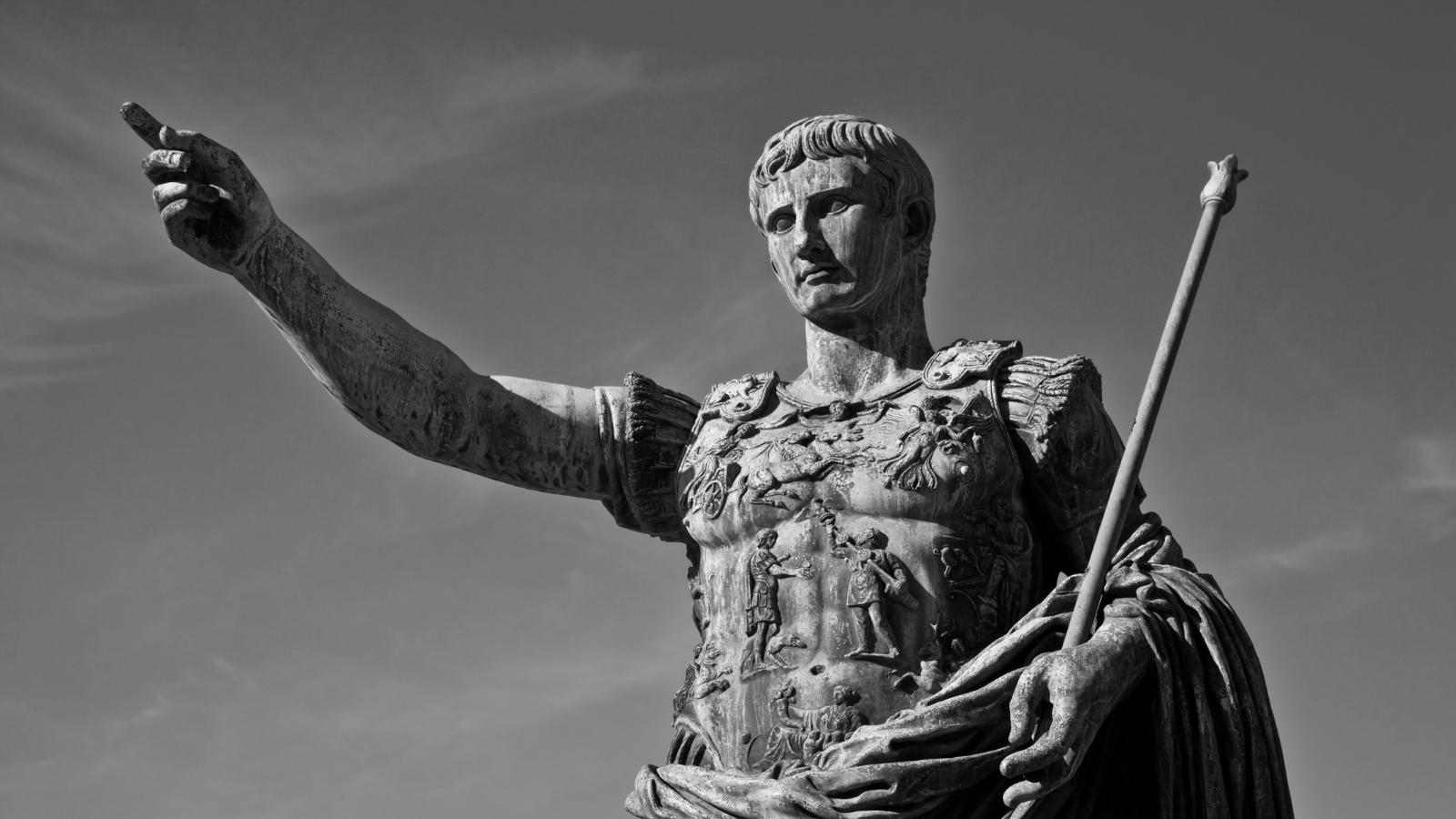
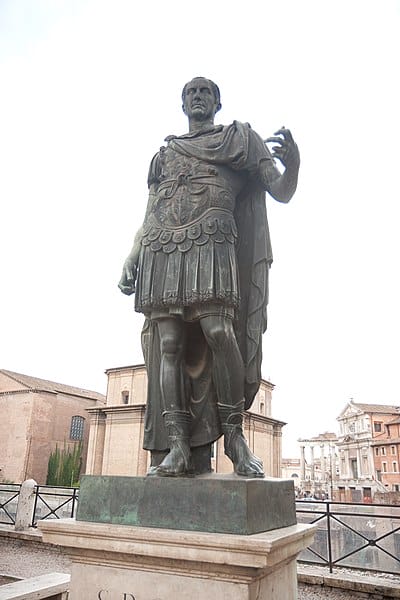
When people think of power and wealth in the ancient world, Julius Caesar is often the first name that comes to mind. As the general who conquered Gaul, reformed the calendar, and laid the groundwork for the Roman Empire, he symbolises supreme authority. Naturally, many assume he sat comfortably at the top of the financial pyramid. But when historians dig into the ledger books of antiquity, the question of how much was Julius Caesar No. 1 richest in Ancient Rome? The surprising answer is a definitive no.
While Caesar certainly accumulated staggering amounts of wealth during his military campaigns, he operated in a financial league overshadowed by others—and he was frequently drowning in crushing personal debt. Understanding Caesar's true financial standing requires a journey into the complex, volatile economy of the late Roman Republic, where fortunes were made and lost on the battlefield and in the Senate.
How Much Was Caesar Actually Worth?
Putting a modern dollar figure on an ancient fortune is notoriously difficult. Gross Domestic Product (GDP) comparisons fail because the Roman economy functioned on entirely different mechanisms—driven heavily by agriculture, plunder, slave labor, and tribute rather than industrial output.
However, we can measure Caesar's wealth through his acquisitions:
- Plunder from Gaul: During his campaigns in Gaul (58–50 BC), Caesar acquired immense quantities of gold, silver, and valuable commodities. He famously sent so much gold back to Rome that the price of the precious metal dropped by roughly 16% locally due to sudden oversupply.
- Real Estate and Land Grants: Caesar used his wealth to buy vast tracts of land, both in Italy and in the provinces, which he distributed to his veteran soldiers and supporters to secure political loyalty.
- Personal Estates: He owned luxurious villas across the Mediterranean, including famous properties in Campania and a lavish estate outside Rome.
Despite these massive inflows of capital, Caesar's net worth fluctuated wildly throughout his life. He viewed money purely as a political tool rather than an end in itself, famously spending lavishly to win the favor of the Roman public.
The Real No. 1: Marcus Licinius Crassus
If Julius Caesar was not the wealthiest man in Rome, who held the title? That distinction belonged to his contemporary and political ally-turned-rival, Marcus Licinius Crassus.
Crassus is famously remembered as the man who defeated Spartacus and crushed the Third Servile War. However, his true genius lay in real estate and ruthless capitalism. Crassus built his fortune through several shrewd enterprises:
- Rome’s First Fire Brigade: Crassus organized a private fire brigade of 500 slaves. When a building caught fire, his men would show up and negotiate a low price with the panicked owner before lifting a finger. If the owner refused, Crassus simply let the building burn to the ground, then bought the charred plot for pennies.
- Silver Mines and Farmland: He acquired massive silver mines and vast agricultural estates worked by thousands of enslaved people.
- Moneylending: Crassus operated as a high-society banker, lending enormous sums to desperate senators and patricians—including Julius Caesar.
Pliny the Elder and other ancient historians estimated Crassus's net worth at around 200 million sesterces. To put that in perspective, Crassus once remarked that no man could be considered rich unless he could maintain an entire private army out of his own annual income. By any modern or ancient metric, Crassus blew past Caesar in pure asset accumulation.
Video: How rich was Julius Caesar?

Caesar’s Chronic Debt Struggles
The most surprising aspect of Julius Caesar’s financial history is that for the first half of his public life, he was practically bankrupt. To understand his path to power, one must look at how deeply in debt he was before conquering Gaul.
Roman politics were shockingly expensive. To run for office, host public games, and bribe voters (a standard practice at the time), ambitious politicians had to spend astronomical sums of their own money. Caesar borrowed heavily to fund his early career trajectory, securing massive loans from wealthy financiers.
- The 62 BC Crisis: Before taking up his governorship in Spain, Caesar’s creditors were breathing down his neck. He reportedly needed 25 million sesterces just to clear his debts and leave Rome.
- The Crassus Bailout: It was Marcus Licinius Crassus who stepped in to guarantee Caesar’s debts, allowing him to leave for Spain. Crassus did this not out of charity, but as a calculated political investment; he needed Caesar’s growing popularity to counter the influence of Pompey the Great.
Without Crassus's financial rescue, Caesar likely would have faced public bankruptcy, ruining his political career before it ever truly peaked.
How Caesar Used Money as a Weapon
Caesar’s relationship with wealth was fundamentally different from that of Crassus. Crassus hoarded and multiplied wealth as a status symbol. Caesar, conversely, treated money as fluid leverage.
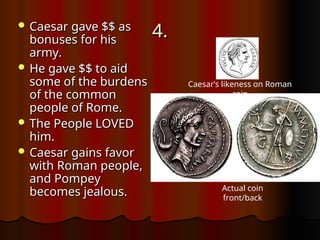
When the Gallic spoils finally rolled into Rome, Caesar did not lock them away in a vault. He distributed massive cash bonuses to his legionaries, ensuring fanatical loyalty that would later prove vital when he crossed the Rubicon. He also funded public works, built the *Forum Julium*, and hosted magnificent gladiatorial games and feasts for the Roman citizens.
By redistributing his wealth, Caesar bought something far more valuable than gold: political immortality and the absolute devotion of the Roman plebeians.
Conclusion: Wealth Measured in Power
So, was Julius Caesar No. 1 richest in Ancient Rome? Strictly speaking, the answer is no. Marcus Licinius Crassus held that crown by a wide margin, and other patricians like Pompey also possessed vastly superior liquid assets for much of their lives. Furthermore, Caesar spent decades wallowing in astronomical debt to finance his political ambitions.
Ultimately, Caesar’s legacy is not defined by the size of his bank account, but by how effectively he converted borrowed money and military plunder into absolute political dominance. While Crassus died obsessed with his physical gold, Caesar traded his wealth for something much greater: an empire that bore his name for millennia.