Was Justice Served? The Travis Alexander Murder Case
Introduction to a Modern True Crime Phenomenon

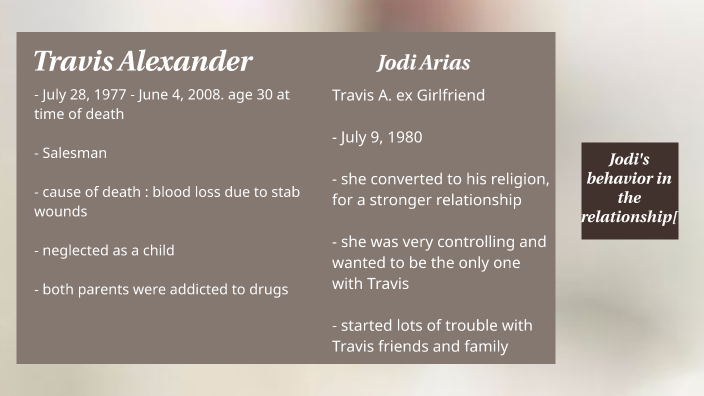
On June 4, 2008, the life of 30-year-old motivational speaker and salesman Travis Alexander was brutally ended inside his Mesa, Arizona home. What followed was one of the most sensationalized, media-saturated murder trials in American history. When Jodi Arias, Alexander’s ex-girlfriend, was charged with his murder, the case immediately captured the public's imagination, fueled by explicit testimony, dueling psychological narratives, and the advent of 24-hour legal commentary.
Years after the final gavel fell, the question still echoes across true crime forums, legal classrooms, and living rooms alike: Was Justice Served? The Lingering Questions of the Travis Alexander Murder continue to divide observers. While Arias was ultimately convicted of first-degree murder and sentenced to life in prison without the possibility of parole, the path to that verdict left a legacy of legal controversy, ethical debates, and lingering doubt.
The Relationship and the Crime Scene
To understand the complexity of the trial, one must examine the tumultuous relationship between Alexander and Arias. They met in 2006 at a motivational speaking conference and quickly entered an intense, on-again, off-again romance. Their relationship was heavily rooted in their shared faith as members of The Church of Jesus Christ of Latter-day Saints, though it was also plagued by accusations of jealousy, infidelity, and emotional volatility.
When Alexander's friends discovered his body in his shower, the crime scene was nothing short of horrific. He had been stabbed nearly 30 times, his throat was slit from ear to ear, and he had sustained a gunshot wound to the head. The physical evidence pointed to a frenzied, highly personal attack. For investigators, the timeline and digital footprints quickly pointed toward Arias, who initially lied to the police about her whereabouts before changing her story multiple times.
The Defense Strategy: Self-Defense and Battered Woman Syndrome
One of the most polarizing aspects of the trial was the defense strategy deployed by Arias’s legal team. After initially claiming she was not in Arizona at the time of the murder, Arias altered her narrative once again, testifying that she killed Alexander in self-defense.
The Evolution of Jodi Arias's Story
Arias claimed that Alexander had a dark, abusive side and that he had physically and sexually abused her during their relationship. According to her testimony on the stand, Alexander attacked her in a fit of rage after she accidentally dropped his digital camera, forcing her to grab a pocketknife from his closet to save her own life. She testified that she suffered from memory loss due to the trauma of the event, which explained her shifting stories to law enforcement.
The Role of Expert Testimony
The defense brought in psychological experts to diagnose Arias with Post-Traumatic Stress Disorder (PTSD) and Battered Woman Syndrome. However, the prosecution systematically dismantled these claims. Prosecutors presented a mountain of circumstantial and forensic evidence—including a stolen gun, rental cars, disguises, and a recovered digital camera containing deleted photos of Alexander and Arias taken on the day of the murder—to prove that the killing was premeditated.
The Circus of Public Opinion and Media Coverage
The trial of Jodi Arias was unprecedented in its media saturation. Broadcast live to millions of viewers daily, the courtroom became a theater. Viewers analyzed every facial expression, tear, and courtroom sketch. This relentless media coverage introduced unique pressures into the judicial process.
The intense spotlight raised critical questions about the fairness of the trial:

- Did the circus-like atmosphere compromise the objectivity of the judicial proceedings?
- How did the relentless public scrutiny impact the jury's ability to deliberate fairly?
- Did the public's desire for a dramatic narrative overshadow the dispassionate application of the law?
These elements turned a tragic homicide into a cultural touchstone, blurring the line between legal accountability and entertainment.
Sentencing and the Legal Hurdles
Reaching a final legal conclusion was a protracted and agonizing process. The jury convicted Arias of first-degree murder in 2013, but they deadlocked on the penalty phase, unable to agree on whether she should receive the death penalty or life imprisonment. This necessitated a second sentencing trial.
During the retrial, the defense continued to emphasize Arias’s troubled background and alleged abuse, while the prosecution focused on the brutal nature of the crime and the total lack of remorse displayed by the defendant. Once again, the second jury deadlocked on the death penalty in 2015.
As a result, the presiding judge took the death penalty off the table and sentenced Arias to life in prison without the possibility of release. While this ensured she would never walk free, the inability of two separate juries to reach a unanimous decision on capital punishment left many feeling that closure was incomplete.
Unanswered Questions That Persist Today
Even with Arias safely behind bars, numerous questions continue to haunt those close to the case and legal analysts alike. The debate often centers on the balance between mental health claims and accountability for violent actions.
Was Premeditation Proven Beyond a Reasonable Doubt?
While the state convinced the jury of premeditation, skeptics still debate whether the crime was a meticulously planned execution or a sudden, explosive escalation of domestic violence. The distinction matters deeply in the annals of criminal jurisprudence, even if the practical sentencing outcome remains the same.
The Treatment of the Victim and the Defendant
Another lingering discussion involves how the character of Travis Alexander was scrutinized during the trial. Defense attorneys dug deeply into his private life and personal communications, a tactic that many critics argued unfairly victimized him posthumously. Conversely, advocates for domestic violence victims watched closely to see how claims of abuse by female defendants are received and evaluated within the American justice system.
Conclusion: A Complex Legacy
The murder of Travis Alexander remains a profound tragedy that robbed a young man of his future and left his family and friends to pick up the pieces. When evaluating whether justice was ultimately served, most legal experts point to the verdict: a first-degree murder conviction resulting in a life sentence with no chance of parole guarantees that Jodi Arias will spend the rest of her days incarcerated.
However, the journey to that verdict exposed vulnerabilities in how high-profile trials are conducted, media-managed, and adjudicated. While the legal system ultimately functioned to remove a dangerous individual from society, the emotional scars, ethical debates, and lingering questions of the Travis Alexander murder ensure that this case will be studied, debated, and remembered for generations to come.