Water Temperature in Seaside Heights, NJ: Ocean Guide
Planning a trip to the iconic Jersey Shore often revolves around boardwalk rides, slice-sized pizza, and sun-soaked afternoons on the sand. However, if your itinerary includes swimming, bodysurfing, or paddling, knowing the coastal ocean conditions is crucial. Checking the water temperature seaside heights nj experiences throughout the year will help you pack the right gear and decide the best time to dive into the Atlantic.

Ocean temperatures off the coast of Ocean County vary dramatically between mid-winter freezes and late-summer peaks. Below is a comprehensive seasonal and monthly breakdown of water temperatures in Seaside Heights, alongside safety considerations and the science behind sudden summer temperature plunges.
Water Temperature Seaside Heights NJ: Month-by-Month Breakdown
The Atlantic Ocean off Seaside Heights warms up much slower than the air in spring, holds onto heat through early autumn, and plunges during the winter months. Here is what you can generally expect throughout the calendar year:
- January (39°F – 43°F / 4°C – 6°C): Frigid. Swimming requires thick, hooded cold-water wetsuits, primarily used by dedicated local winter surfers.
- February (37°F – 41°F / 3°C – 5°C): Historically the coldest ocean month of the year. Ice slush can occasionally develop in nearby Barnegat Bay during extreme cold snaps.
- March (40°F – 45°F / 4°C – 7°C): Air temperatures begin to rise, but the ocean remains numbingly cold. Polar bear plunges are popular, but extended exposure without thermal protection is dangerous.
- April (46°F – 52°F / 8°C – 11°C): The ocean begins a slow thaw. Full wetsuits (4/3mm) and booties are standard gear for water sports enthusiasts.
- May (53°F – 60°F / 12°C – 16°C): Memorial Day weekend officially kicks off the beach season. While sunny days can bring 75°F air, the ocean remains crisp and brisk. Only brief dips are comfortable for most swimmers.
- June (62°F – 69°F / 17°C – 21°C): As summer arrives, the water steadily improves. Early June often still requires acclimation, but by late June, casual swimming becomes far more inviting.
- July (70°F – 75°F / 21°C – 24°C): Prime swimming season. Waters are comfortable for all ages, though coastal wind patterns can cause sudden, brief drops.
- August (73°F – 77°F / 23°C – 25°C): The ocean reaches its annual peak temperature. Late August generally provides the warmest, most tropical-feeling water of the entire year.
- September (69°F – 74°F / 21°C – 23°C): Known by locals as "Local Summer." The crowds thin, yet the ocean remains warm and comfortable well past Labor Day.
- October (60°F – 66°F / 16°C – 19°C): Temperatures drop quickly as autumn storms roll in. Surfers typically switch back to 3/2mm wetsuits.
- November (52°F – 58°F / 11°C – 14°C): Brisk autumn conditions settle in. Extended swimming without neoprene risks hypothermia.
- December (44°F – 50°F / 7°C – 10°C): The ocean returns to its winter baseline, closing out the swimming season for all but winter athletes.
The Summer Upwelling Phenomenon: Why the Water Suddenly Drops
One of the most surprising experiences for visitors to Seaside Heights is walking into the ocean on a 90°F afternoon in July or August, only to find the water feels like melted ice. This sudden cooling is caused by a meteorological and oceanographic event known as coastal upwelling.
How Coastal Upwelling Works
When sustained winds blow from the south or southwest parallel to the New Jersey coastline for several days, the surface layer of ocean water is pushed offshore due to the rotation of the Earth (the Coriolis effect, or Ekman transport).
Video: Rip currents, big waves prevent swimming in Seaside Heights despite heat
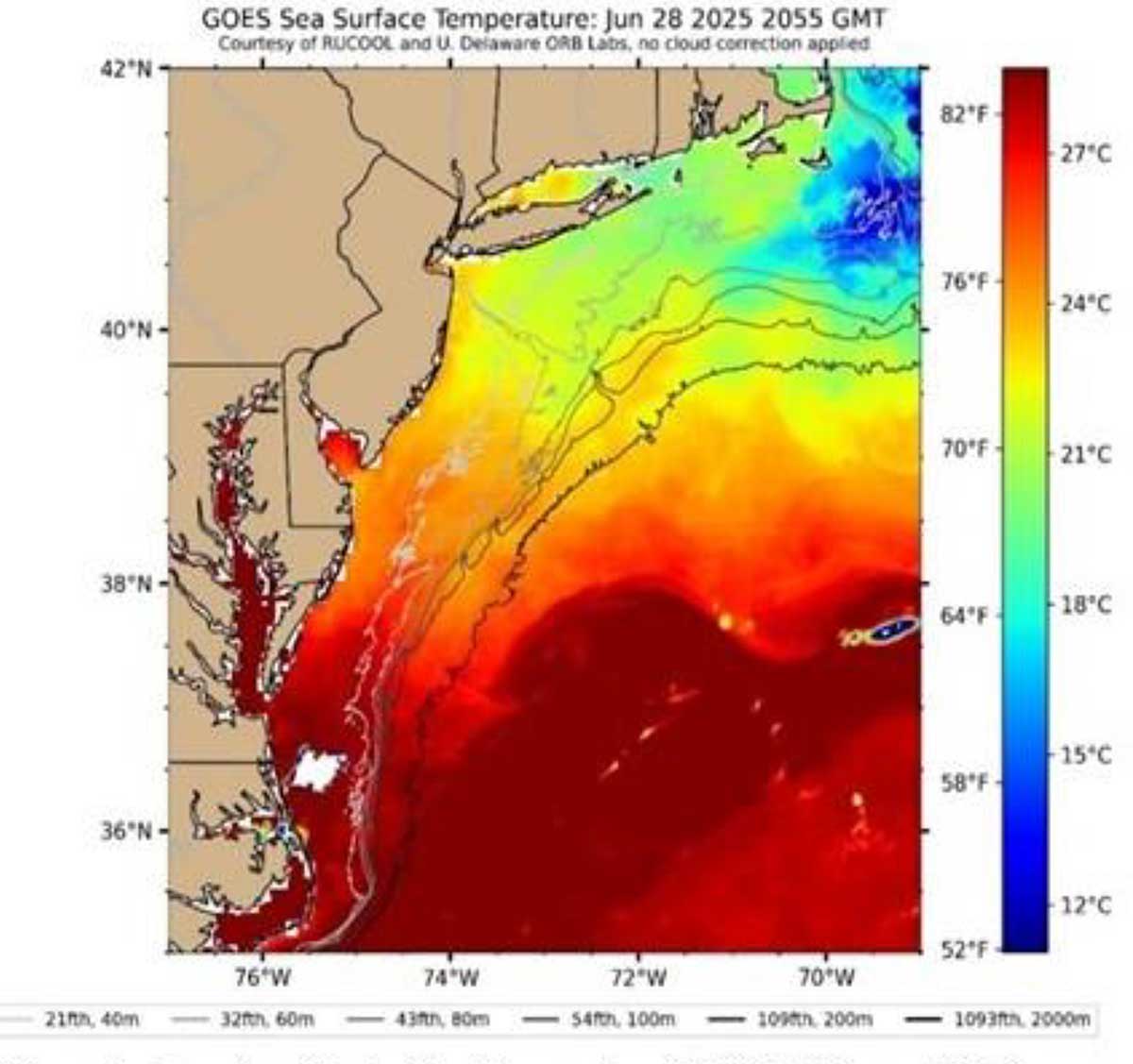
As the warm surface water moves out to sea, cold, nutrient-dense water from the ocean floor rises to replace it. Within a span of 24 to 48 hours, upwelling can plunge the water temperature in Seaside Heights from a comfortable 74°F down to an eye-watering 58°F. Once the wind shifts to an onshore direction (from the east or northeast), the warm surface water is pushed back toward the sand, and normal temperatures return within a day or two.
When Is the Best Time for Swimming in Seaside Heights?
If your goal is comfortable swimming without needing a wetsuit, the optimal window runs from early July through late September.
- Peak Comfort: Late July through August offers the most reliable conditions. Water temperatures routinely hover in the mid-70s, making it pleasant for toddlers, casual waders, and distance swimmers alike.
- The Insider Secret: September offers some of the best ocean conditions on the Barnegat Peninsula. Ocean temperatures often stay above 70°F during the first three weeks of the month, while air temperatures are comfortable and boardwalk foot traffic drops significantly.
Water Temperature Safety Guidelines
Water conducts heat away from the body roughly 25 times faster than air. Being mindful of water temperatures ensures a safe beach outing:
- Above 70°F (21°C): Safe and comfortable for almost everyone to swim without thermal protection for extended periods.
- 60°F to 69°F (16°C – 20°C): Refreshing, but can feel chilly initially. Young children and older adults may begin shivering after 20 to 30 minutes.
- 50°F to 59°F (10°C – 15°C): Causes initial cold shock upon entry, leading to involuntary gasping. Swimming ability drops quickly without a wetsuit.
- Below 50°F (<10°C): Dangerous. Risk of rapid hypothermia. Only enter with suitable exposure suits (4/3mm or 5/4mm wetsuits with boots and gloves).
Always swim near an active lifeguard stand. The Seaside Heights Beach Patrol monitors conditions, rip currents, and aquatic hazards throughout the summer season.
How to Check Live Ocean Temperatures Before You Go
Because ocean conditions can shift with tides, currents, and winds, checking real-time data before packing your beach bag is always smart. Reliable sources for live water temperatures around Seaside Heights include:
- NOAA National Data Buoy Center (NDBC): Station 44091 (Barnegat Light) and Station 44065 (New York Harbor Entrance) provide real-time offshore readings.
- USGS & Stevens Institute of Technology Coastal Monitoring: Monitors coastal surf zones and back-bay temperatures along the Jersey Shore.
- Local Surf Reports: Surf cam sites frequently update surf zone temperatures measured directly off the Seaside Heights beach or Casino Pier.